
Explore the country and target locations of the investment opportunity.
Country
Thailand
Region
- Countrywide
- Countrywide
- Countrywide
Situate the investment opportunity within sustainability focused sector, subsector and industry classifications.
Sector
Food and Beverage
Development needs
Plastic is an inexpensive and convenient material used by both food companies and street vendors, but ineffective waste management and recycling system made plastic food packaging, especially single-use plastic, unsustainable with 2.88 million tons of plastic being discarded in 2018 (1).
Policy priority
Many of Thailand's national policies, such as Thailand 4.0 (2), 13th National Economic and Social Development Plan (3), and Bio, Circular and Green Economy Model (4) aim to improve the livelihood of farmers through technology integration, and good production planning and management.
Gender inequalities and marginalization issues
Gender-specific consumption patterns show that women are mostly responsible for household products, food, etc. (5), while men are responsible for more durable items like cars. Hence, women have more impact in creating plastic waste through unsustainable consumption patterns.
Investment opportunities
Packaging accounts for more than 2.3M tons or 44% of the total plastic end-use in 2018 (1). Conversely, this presents good investment opportunities for sustainable packaging. 65% of Thai consumers living in urban areas are willing to pay extra for products that can help reduce plastic use (3).
Key bottlenecks
There are insufficient regulations to penalize the use of traditional plastics. Thus, businesses and consumers are responsible for the additional costs of replacing conventional plastics with more sustainable alternatives (4).
Sub Sector
Food and Agriculture
Development need
Agricultural waste/byproducts are often disposed by open burning, causing air pollution and health risks (6). In addition, Thailand has been ranked as the 6th largest polluter of marine plastic in the world with 80% of the marine plastic debris originating from mismanaged waste on land (7). This threatens marine ecosystems and poses health risks to consumers ingesting microplastics.
Policy priority
The Roadmap on Plastic Waste Management (2018–2030) will ban four types of single-use plastic by 2022 including plastic bags less than 36 microns thick, styrofoam food containers, plastic cups, and plastic straws, all of which can be replaced with sustainable food packaging. The Roadmap also targets to achieve 100% reusable plastic waste by 2027 (8).
Gender inequalities and marginalization issues
The high cost of compostable packaging relative to single-use plastic or styrofoam is limiting the choice for the low-income group to make green decisions. Therefore, making green packaging affordable and widely accessible is important for all groups in the society to participate in opting for eco-friendly choices.
Investment opportunities
The market share of eco-friendly packaging is 1-2% of the total packaging industry in 2020, and is valued at USD 70 - 80 million (THB 2.1 - 2.4 billion) representing a 25% increase from 2019 (9). Thailand has abundant agricultural waste/byproducts that can be used for producing sustainable packagings, such as sugarcane bagasse, rice straw, and fruit peels.
Key bottlenecks
There are limited incentives for sustainable packaging made from agricultural waste/byproducts. Current government incentives are mainly for producing bioplastics, which need high investment capital and are generally only available to large businesses (4). Under the current waste management situation, however, bioplastics create additional costs for recycling from looking similar to normal plastics, which makes it hard to completely separate them from each other and can cause disruption in the recycling process.
Industry
Agricultural Products
Discover the investment opportunity and its corresponding business model.
Investment Opportunity Area
Sustainable Packaging
From Agricultural Byproducts and Wastes
Business Model
Through B2B and B2C models, companies can buy agricultural waste/byproducts from farmers as raw materials that will be processed into sustainable packaging and generate revenue from sales of products to other businesses and consumers. This IOA will help generate additional income for farmers from selling the agricultural waste/byproducts as raw materials,
And reduce marine plastic pollution from replacement of plastic packaging, reduce air pollution from reduced open burning of agricultural waste/byproduct, and. Moreover, replacing plastic packaging will also help decrease health risks for consumers from reduced exposure to contaminants in plastics. Investors can invest money in companies that produce and sell sustainable packaging. Examples of companies active in this space are:
Gracz has produced compostable food packaging and containers since 2009 that are made from agricultural byproducts/wastes such as sugarcane bagasse, rice straw, water hyacinth, corn stalk, etc. Gracz also supports farmers with preprocessing the raw materials to become suppliers for Gracz, and generate income (1).
Reusable food and beverage containers made from rice straw are now readily available many shops in Thailand, more than 70 percent export to Europe and Asia. Local businesses and university labs are using natural materials such as banana leaves, or coconut to create sustainable containers and packaging (10).
Learn about the investment opportunity’s business metrics and market risks.
Market Size and Environment
Market Size (USD)
USD 50 million - USD 100 million
In 2020, the market share of eco-friendly packaging was valued at USD 70 - 80 million (THB 2.1 - 2.4 billion) or 1 - 2% of the total packaging industry (2).
Indicative Return
GPM
> 25%
From expert interviews, it is expected that the annual sales will reach THB 3 billion in 2023-2025. Production capacity is 2 million pieces per day or 730 million pieces per year. The cost of producing one piece of eco-friendly packaging (e.g. lunch box) is around 2.5 THB per piece. Hence, a gross profit margin above 25%.
Cost of goods sold (COGS) = THB 2.5 * 730 million pieces = THB 1.825 bilion per year. Gross profit margin = (Sales - COGS)/(Sales) * 100% = (3 -1.825)/3 * 100% = 39%
Investment Timeframe
Timeframe
Short Term (0–5 years)
According to an interview with an expert, it took at least 6 years to achieve payback as a market pioneer. The expert interviewed is now a big player in the industry, but in the past there was a very small market and low public awareness.
According to expert interviews, at present, there is a much higher level of public awareness about environmental issues, consumers have a higher willingness to pay for sustainable packaging, and better technology to reduce costs. Therefore, the investment timeframe is expected to be shorter than in the past at less than 5 years.
Ticket Size
Average Ticket Size (USD)
USD 1 million - USD 10 million
Market Risks & Scale Obstacles
Business - Supply Chain Constraints
Logistics costs involved with collecting and transporting the agricultural waste/byproducts used as raw materials of sustainable packaging make up a huge portion of the production cost. Therefore, pre-processing of the agricultural waste/byproducts such as cutting and drying will reduce the volume while increasing the weight of the agricultural waste/byproducts. This will help help reduce logistics cost by reducing load volume and number of trips, and also help the farmers sell at higher prices from performing additional pre-processing.
Market - Volatile
Supply of agricultural waste/byproducts fluctuate depending on seasonal cycles of crop production. Diversifying the types of agricultural waste/byproducts to be used as raw materials in making sustainable packaging is key to limit raw material shortages, prevent disruption in production, and prevent negative financial impacts from product shortages.
Read about impact metrics and social and environmental risks of the investment opportunity.
Sustainable Development Need
Lack of effective waste management and recycling lead to 2.88 million tons of plastic being discarded in 2018 (3), and it was estimated in 2016 that 51,000 tons/year of plastic waste ended up in Thai waters (4). Plastic pollution harms marine life and humans when they become microplastics (5).
As food delivery and e-commerce surged during the pandemic, single-use plastic for food packaging and product packing also increased. In 2019, there were over 140 million pieces of plastic waste from food deliveries in Thailand, and the amount doubled to 280 million pieces in 2020 (11).
Agricultural waste/byproducts are often disposed of with open burning by farmers, this was estimated to account for over 30% of the PM 2.5 pollution in Thailand causing serious air pollution (8).
Gender & Marginalisation
Gender-specific consumption patterns show that women are mostly responsible for household products, food, etc. Although both gender have equal responsibility to protecting the environment, women can have more impact in creating plastic waste, such as buying disposable products like tampons, sanitary pads and diapers, buying cosmetics with microbeads, etc. (6).
By comparison, men are normally responsible for agricultural work that is mechanized or associated with greater income-generating potential. On the other hand, influenced by cultural traditions and gender stereotypes, women are almost exclusively responsible for unpaid household activities and post-harvesting activities such as processing of the agricultural wastes and products (12). These unpaid activities responsible for by women should be paid for in order to give women access to income-generating potential.
Expected Development Outcome
Sustainable packaging made from agricultural waste/byproducts are compostable in normal environment and contributes to reducing marine plastic pollution. This will help circumvent the ineffective waste management system, and reduce problems from recycling of traditional plastics.
Food deliveries and e-commerce use a large volume of plastic that can be replaced with sustainable packaging made from agricultural waste/byproducts, which are compostable under normal landfill conditions. This will circumvent the ineffective waste management system, and does not disrupt recycling.
By using agricultural waste/byproducts to make sustainable packaging, farmers have an incentive to not burn and rather sell the agricultural waste/byproducts for extra income, benefitting local communities, the waste management system, and air quality.
Gender & Marginalisation
Although men have the same responsibility as women in reducing plastic waste, due to gender specific consumption patterns mentioned earlier in 10.2, women have more potential to create higher impact than men from shifting to buy products with sustainable packaging, such as household and food products with sustainable packaging that can be produced by the IOA (6).
Buying the processed agricultural wastes as raw materials, the IOA helps transform unpaid manual work that are almost exclusively performed by women, including post-harvesting and processing activities, into an income-generating activites that will help empower these women.
Primary SDGs addressed
3 - Good Health and Well-Being
3.9.1 Mortality rate attributed to household and ambient air pollution
Current Value
Environmental Benefits Mapping and Analysis Program (BenMAP) showed that PM 2.5 concentration in Bangkok contributes to 4,240 non-accidental, 1,317 cardiopulmonary, and 370 lung cancer mortalities annually (7). 32,200 deaths attributable to ambient PM2.5, and 40,900 deaths attributable to air pollution in 2019 (8).
Target Value
Target levels in 2030 are not available. But, further analysis in BenMAP showed that attaining PM 2.5 levels from the National Ambient Air Quality Standards (NAAQSs) and World Health Organization (WHO) guidelines would reduce annual premature mortality in Bangkok by 33% and 75%, respectively (7).
11 - Sustainable Cities and Communities
11.6.1 Proportion of municipal solid waste collected and managed in controlled facilities out of total municipal waste generated, by cities
Current Value
In 2019, only 36% of the total municipal solid waste is being properly disposed (13).
Target Value
Target levels in 2030 are not available. According to the National Waste Management Master Plan (2016-2021), more than 75% of municipal solid waste should be properly disposed by 2021 (14).
14 - Life Below Water
14.1.1 (a) Index of coastal eutrophication; and (b) plastic debris density
Current Value
On average 804,727 items of plastic beach litter per square kilometer in 2018 (18).
Target Value
Data not available
Secondary SDGs addressed
12 - Responsible Consumption and Production
Directly impacted stakeholders
People
Farmers and communities can generate income from selling the agricultrual waste/byproducts to the packaging producers. Reduction in air pollution provides health benefits for people.
Gender inequality and/or marginalization
The IOA can empower female farmers from giving them additional income, as female farmers are generally in charge of pre-processing or processing of agricultural wastes/byproducts that can be sold as raw materials to make the sustainable packaging.
Planet
Reduction in marine plastic pollution from replacing plastic with compostable packaging. Reduction in greenhouse gas emissions from the plastic production process and reducing the open burning of agricultural waste/byproduct.
Corporates
Sustainable packaging from agricultural waste/byproduct producers. Logistics companies to transport the raw materials. Plastic producers.
Indirectly impacted stakeholders
Public sector
Municipalities can save waste management costs and achieve plastic reduction targets. Help farmers achieve a higher income.
Outcome Risks
Sustainable packaging can have unintended greenhouse gas emissions from production process and improper composting, which can emit potent greenhouse gases such as methane. To limit these unintended risks, lifecycle analysis and effective waste management should be implemented.
Despite using agricultural waste as a supply, unsustainable agricultural practice can create negative impacts in other dimensions outside of marine plastic pollution, such as water shortage, pesticide use, and land use change. Thus, sustainable agricultural practice should be emphasized along side.
Impact Risks
Execution risk: Consumers can be discouraged from buying sustainable packaging due to a higher price than traditional plastic.
Efficiency risk: Obtaining certifications and standard labels have a high cost that can become barriers for small businesses.
Stakeholder participation risk: To achieve the economy of scale and decrease transport costs, farmers should preprocess the agricultural waste/byproducts, which require an investment in machines.
External risk: Low public awareness and knowledge of the different types of packaging can confuse consumers between sustainable and unsustainable packaging and limit the positive impact.
Gender inequality and/or marginalization risk: Women can have limited access to resource (e.g. material inputs, technology) and information and knowledge (e.g. training courses) that limit their potential to increase effectiveness of post-harvesting work. (12)
Impact Classification
C—Contribute to Solutions
What
Sustainable packaging from agricultural waste/byproducts can help reduce plastic use, marine plastic pollution, and air pollution from open burning in agriculture.
Who
Producers benefit from an increase demand from food delivery and logistics, while farmers can generate income from supplying the agricultural waste/byproducts as value-added products.
Risk
To achieve the highest impact, risks in the entire packaging value chain must be taken into account from the upstream agricultural practice to public awareness and consumer knowledge.
Contribution
Additional contribution is likely much better than base case due to large untapped market opportunities and abundant raw materials in Thailand.
How Much
High growth potential of market share of eco-friendly packaging which currently accounts for 1 - 2% of the total packaging industry market value (2). Depth: 280 million pieces of plastic packaging from food delivery in 2020 could be replaced with sustain
Impact Thesis
Sustainable packaging from agricultural waste/byproducts provide alternatives to plastics that can reduce marine plastic pollution and air pollution, while also providing income to farmers.
Explore policy, regulatory and financial factors relevant for the investment opportunity.
Policy Environment
Thailand 4.0 Policy: Aims to support use of technology, and increase innovation in many economic sectors (9). This policy encourages the IOA by promoting biochemical and biotechnology industry, which can create new innovation for transforming agricultural waste/byproducts into sustainable packaging.
BCG Model (Bio, Circular and Green Economy): Aims to promote sustainable packaging through green procurement, lifecycle analysis, and raising public awareness. BCG Model also aims to support R&D in biochemicals, and develop waste management infrastructure and systems (15). This policy supports the IOA by creating incentives for producing and using sustianable packaging.
The Roadmap on Plastic Waste Management (2018–2030): Ban four types of single-use plastic by 2022, including plastic bags less than 36 microns thick, styrofoam food containers, plastic cups, and plastic straws, and sets a target for all plastic waste being reusable by 2027 (19). This policy supports the IOA by discouraging the production and use of plastics that can be substituted by sustainable packaging.
Financial Environment
Financial incentives: Government agencies often give research funding and grants for developing sustainable packaging. However, there are no financial incentives for investing in the business.
Fiscal incentives: Board of Investment Promotion offers 5 - 8 years or more of corporate income tax exemptions, import duty exemptions on machinery, raw materials, and other non-tax incentives for manufacturing eco-friendly polymers or derived products, and paper articles (17).
Other incentives: Environment Fund was established under the Enhancement and Conservation of National Environmental Quality Act (1992) to provide interested stakeholders funding of up to USD 166,667 for projects within the focus areas, including turning agricultural waste/byproducts for other use to reduce open burning (25).
Regulatory Environment
Currently, Thailand has no regulation to control the use of traditional plastic and bioplastic, or regulation to control the advertising claims for packaging products. Unfortunately, this is a major obstacle to the IOA as there is no incentive for sustainale packaging for both producers and consumers.
Existing regulations on packaging are mostly focused on food safety for packaging and containers. Food Act (1979) regulates quality, standard, and types of materials that can be used as food packaging and containers (16). This regulation will promote the IOA by controlling quality and standard of packaging, as sustainable packaging are often safe for consumers, but this regulation does not incentivze the production of sustainable packaging as certain plastic packaging and sustainable packaging are both considered as safe for consumers.
Notification of the Ministry of Public Health No. 295 (2005) regulates the qualities or standards for containers made from plastic (20). This regulation is an obstacle for the IOA and sustainable packaging as there is no disincentive for plastic packaging.
The Green Label is an eco-label given to products overseen by the Thai Industrial Standard Institute (government) and the Thai Environment Institute (non-profit) (21). This is standard supports the IOA by certifying the quality, safety and sustainability of sustainable packaging, which will help increase awareness, demand and confidence of consumers.
There is no regulation for packaging labels. Producers often obtain certifications from American Society for Testing and Materials (ASTM), International Organization for Standardization (ISO), European Committee for Standardization (CEN), or make self-claims based on testing. This is an obstacle for the IOA as there is no penalty for false claims of packaging products, and there is no financial support for obtaining international certifications.
Discover examples of public and private stakeholders active in this investment opportunity that were identified through secondary research and consultations.
Private Sector
Gracz, SCG Packaging. Small businesses that make sustainable packaging from natural materials including networks or communities (i.e. Regen Districts). Corporate venture capitalists (i.e. AddVentures by SCG).
Government
National Science and Technology Development Agency, National Center for Genetic Engineering and Biotechnology, National Innovation Agency, Board of Investments, Eastern Economic Corridor (EEC) Office
Multilaterals
Asian Development Bank (ADB), International Finance Corporation (IFC)
Non-Profit
Academic institutions (i.e. Chulalongkorn University, Mahihol University, and Kasetsart University), Thailand Environment Institute, Plastic Institute of Thailand, Thai Bioplastics Industry Association.
Public-Private Partnership
Thailand Institute of Packaging and Recycling Management for Sustainable Environment (TIPMSE)
See what country regions are most suitable for the investment opportunity. All references to Kosovo shall be understood to be in the context of the Security Council Resolution 1244 (1999)
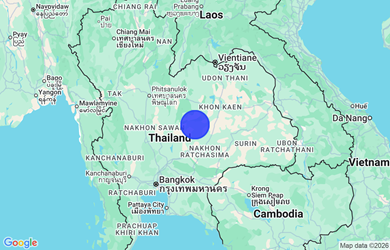
Urban
Countrywide
Research labs in universities located in semi-urban and urban areas can also produce packaging made from different types of natural fibers that have high potential to become commercialized. Large businesses can invest in factories in the EEC to mass-produce sustainable packaging.
Semi-urban
Countrywide
Research labs in universities located in semi-urban and urban areas can also produce packaging made from different types of natural fibers that have high potential to become commercialized. Large businesses can invest in factories in the EEC to mass-produce sustainable packaging.
Rural
Countrywide
Sustainable packaging from agricultural waste/byproduct can be manufactured anywhere by businesses of various sizes. For example, small businesses in rural areas can produce compostable plates made from banana leaves with the help of simple machinery.
Sector Sources
2) http://stiic.sti.or.th/wp-content/uploads/2018/10/BCG_Final1.pdf
4) https://www.sei.org/featured/microplastics-from-ocean-to-table/
5) https://www.oecd.org/env/GFE-Gender-Issues-Note-Session-5.pdf
8) https://thailand.prd.go.th/1700/ewt/thailand/ewt_news.php?nid=7831&filename=index
9) https://kasikornresearch.com/en/analysis/k-econ/business/Pages/z3137-Packaging.aspx
IOA Sources
1) https://www.voicetv.co.th/read/107396"
2) https://kasikornresearch.com/en/analysis/k-econ/business/Pages/z3137-Packaging.aspx"
4) https://oceanconference.un.org/commitments/?id=18208"
5) https://www.sei.org/featured/microplastics-from-ocean-to-table/"
6) https://www.oecd.org/env/GFE-Gender-Issues-Note-Session-5.pdf"
7) https://www.mdpi.com/1660-4601/17/19/7298/html"
10) https://www.salika.co/2019/11/08/3-container-models-from-natural/"
11) https://tdri.or.th/2020/05/plastic-waste-from-food-delivery-services-in-covid-19-lockdown/"
12) https://www.fao.org/3/ae538e/ae538e06.htm"
13) https://www.pcd.go.th/publication/14745/"
14) http://infofile.pcd.go.th/waste/WasteMasterPlan.pdf?CFID=1614347&CFTOKEN=55860890"
15) http://stiic.sti.or.th/wp-content/uploads/2018/10/BCG_Final1.pdf"
17) https://www.boi.go.th/upload/content/BOI-A%20Guide_EN.pdf"
18) https://ourworldindata.org/grapher/beach-litter?tab=table&country=RUS~BRB~MAR~GHA"
19) https://thailand.prd.go.th/1700/ewt/thailand/ewt_news.php?nid=7831&filename=index"
21) http://www.tei.or.th/greenlabel/en/about.html"
24) http://envfund.onep.go.th/backoffice/uploads/detail/meuns_left/details/file_id_29_2020-01-24.pdf"