
Explore the country and target locations of the investment opportunity.
Country
Lao PDR
Region
- Vientiane Province
- Oudomxay Province
- Savannakhet Province
- Champasak Province
- Phongsaly Province
Situate the investment opportunity within sustainability focused sector, subsector and industry classifications.
Sector
Health Care
Lao PDR is ranked 135th (out of 195) in the 2019 Global Health Security Index [1]. High maternal and child mortality rates, malnutrition, and communicable diseases [2] are significant challenges. To improve public health outcomes, Lao PDR needs to strengthen healthcare infrastructure, enhance access to quality healthcare services, and invest in capacity building for healthcare professionals [3].
Policy priority
Lao PDR's policy priorities focus on achieving universal healthcare, improving access and quality of services, strengthening healthcare infrastructure, capacity building for healthcare professionals, and expanding health insurance coverage [4]. Additionally, reducing maternal and child mortality rates, addressing communicable diseases, and promoting health literacy
Gender inequalities and marginalization issues
Women in Lao PDR face disparities in accessing healthcare services. Maternal mortality remains high at 46 per thousand live births[5]. In the healthcare workforce, women make up 38.5% of physicians[5]. These gender gaps are amplified in rural areas, where cultural norms, limited health literacy, and inadequate infrastructure further hinder women’s access to healthcare[6].
Investment opportunities
Lao PDR's healthcare sector presents opportunities in API manufacturing and healthcare retail. Growing demand for pharmaceuticals supports local production while expanding healthcare retail increases access to essential medicines, particularly in underserved rural areas.
Key bottlenecks introduced include shortage and maldistribution of health workers and inadequate infrastructure [7]. Health financing is characterized by low government spending, reliance on out-of-pocket expenditure, and dependency on external aid [8]. Efforts to achieve Universal Health Coverage for vulnerable groups face hurdles due to these bottlenecks and the country's diverse, rural population [9].
Sub Sector
Health Care Retail
Development need
Only a small fraction of the population has access to essential medicines, with rural areas particularly underserved. The country's healthcare spending is low, with only 2.5% of GDP allocated to health as of 2018. The lack of access to medicines is further exacerbated by the high out-of-pocket health expenditure, which accounts for 40% of total health expenditure.[10,11]
Policy priority
The Government of Lao PDR is committed to achieving Universal Health Coverage (UHC) by 2025, ensuring equitable access to quality health services for all, with a focus on the most vulnerable groups. [12]
Gender inequalities
Gender disparities are evident in Lao PDR's healthcare sector, with women constituting only 38.5% of physicians. These disparities are more pronounced in rural areas, where cultural norms and limited health literacy exacerbate the challenges women face in accessing healthcare. [12]
Investment opportunities
The growing demand for pharmaceuticals supports local production and the expansion of healthcare retail, which can increase access to essential medicines, particularly in underserved rural areas. [13]
Key bottlenecks
The healthcare sector in Lao PDR faces challenges such as a shortage and maldistribution of health workers, inadequate infrastructure, and low government spending. [14]
Industry
Drug Retailers
Discover the investment opportunity and its corresponding business model.
Investment Opportunity Area
Retail Outlets For Pharmaceutical Products
Business Model
A B2C (Business to Consumer) business model whereby retailers Open retail outlets for pharmaceutical products to improve availability and access to basic pharmaceutical products by Lao population. Illustrative examples of companies operating in this space are:
Sokdy Pharma is a pharmaceutical company in Lao PDR that operates both wholesale and retail businesses, providing a wide range of medicines to meet the healthcare needs of the local population
Saysaath Pharmacy is a local pharmacy in Lao PDR that provides a variety of pharmaceutical products. It has been steadily growing and has become one of the key players in the local pharmaceutical retail market.
DKSH is a Swiss-based company that operates in various sectors, including healthcare. It acts as a key link between clients and customers, managing products and market information.
Learn about the investment opportunity’s business metrics and market risks.
Market Size and Environment
Market Size (USD)
< USD 50 million
CAGR
10% - 15%
Critical IOA Unit
68$ per capita expenditure on healthcare in 2022 in Lao PDR (2.3% of annual income). [17]
Lao PDR imported USD 37.5 million of medicine in 2022. Assuming 80% of the medicine is imported, the market size of healthcare retail will be 30 million USD
Indicative Return
GPM
> 25%
The gross profit margin for generic drugs is 50-60%.
Investment Timeframe
Timeframe
Short Term (0–5 years)
The out-of-pocket expenditure on healthcare has been increasing in Lao. The high margins in healthcare retail and the government's priority towards universal healthcare justify a short-term return.
Ticket Size
Average Ticket Size (USD)
USD 1 million - USD 10 million
Market Risks & Scale Obstacles
Market - High Level of Competition
Increased pharmacy consolidation and vertical integration: This can lead to a highly competitive market, making it difficult for new entrants to gain a foothold
Business - Supply Chain Constraints
Dependence on foreign manufacturers of drug ingredients and finished products: This can lead to supply chain vulnerabilities, as seen during the COVID-19 pandemic
Read about impact metrics and social and environmental risks of the investment opportunity.
Sustainable Development Need
23% of Lao PDRs population live below the poverty line. The IOA addresses access to affordable healthcare in Lao PDR where many struggle due to high medical costs. [23]
Inadequate waste management in rural Lao PDR, with only 10% access to basic services, exacerbates health risks, increasing the demand for medicine.
Gender & Marginalisation
Only 13% of women give birth with a skilled birth attendant, and maternal mortality is high at 197 per 100,000 live births. Additionally, only 30% of women use modern contraception. [24]
Ethnic groups such as the Hmong and Khmu face language and cultural barriers when accessing healthcare, leading to inadequate treatment and lower health outcomes.[25]
Expected Development Outcome
Increased availability of affordable medicines will directly contribute to improved health outcomes across the population, especially for those living in poverty or remote areas.
Increased distribution channels through increased retail outlets will ensure reliable access to healthcare products.
Gender & Marginalisation
Gender Equality: The IOA aims to reduce the gender gap in financial inclusion by expanding insurance coverage to women, particularly in rural areas.
Rural Inclusion: The IOA seeks to reduce financial exclusion in rural areas, including among ethnic minorities, by expanding access to insurance services.
Primary SDGs addressed
3 - Good Health and Well-Being
3.8.1 Coverage of essential health services
Current Value
Lao PDR aimed for universal health coverage by 2020. However, the pandemic has risked achieving targets, with lower rates of routine childhood immunizations noted.
Target Value
Full implementation of sustainable health strategies, focusing on improving routine childhood immunizations and achieving universal health services coverage.
5 - Gender Equality
5.6.1 Proportion of women aged 15–49 years who make their own informed decisions regarding sexual relations, contraceptive use and reproductive health care
Current Value
32.7% of women aged 20-24 were married or in a union before age 18. The adolescent birth rate was 83.4 per 1,000 women aged 15-19 in 2016. [16]
Target Value
Reduction in the percentage of women married or in a union before age 18 and a further decrease in the adolescent birth rate.
10 - Reduced Inequalities
10.2.1 Proportion of people living below 50 per cent of median income, by sex, age and persons with disabilities
Current Value
The poverty rate fell from 46% in 1993 to 18% in 2019, reflecting rapid GDP growth and rising farm incomes.
Target Value
The poverty rate fell from 46% in 1993 to 18% in 2019, reflecting rapid GDP growth and rising farm incomes.
Secondary SDGs addressed
8 - Decent Work and Economic Growth
9 - Industry, Innovation and Infrastructure
Directly impacted stakeholders
People
Customers of healthcare retail outlets, including men, women, and children of all ages, will have improved access to healthcare products and services.
Gender inequality and/or marginalization
Women and marginalized groups, who may have improved access to healthcare and potential employment opportunities in the healthcare retail sector.
Corporates
Companies and entrepreneurs in the healthcare retail sector may experience increased business opportunities and growth.
Public sector
Government at all levels may see improved health outcomes and economic development due to the growth of the healthcare retail sector.
Indirectly impacted stakeholders
People
Healthy workers
Corporates
The private sector will benefit from improved productivity due to improved health outcomes in the workforce.
Public sector
Bilateral and multilateral development partners, community organizations, etc., may see improved health outcomes and economic development due to the growth of the healthcare retail sector.
Outcome Risks
Quality risk: If not managed properly, the focus on expanding healthcare retail could compromise the quality of healthcare products and services.
Affordability risk: There's a risk that healthcare products and services may become unaffordable for some, particularly low-income individuals and families.
Impact Risks
Execution risk: There is a risk that activities are not delivered as planned. This could be due to operational challenges, lack of adequate skills among the team, or unforeseen obstacles.
Impact Classification
C—Contribute to Solutions
What
The IOA, through its healthcare retail model, aims to improve access to healthcare products and services, thereby improving health outcomes and contributing to economic development.
Who
Customers of healthcare retail outlets, employees in the sector, and the government.
Risk
Risks include accessibility, quality, and affordability of healthcare products and services, as well as employment and gender inequality risks.
Contribution
The IOA's healthcare retail model is expected to enhance the availability and accessibility of healthcare products and services.
How Much
2.3% of annual income goes towards healthcare costs in 2022. By increasing accessibility and affordability to medicine, the IOA aims to reduce this cost. [17]
Impact Thesis
IOA enhances healthcare accessibility and economic growth through its retail model, promoting better health outcomes and job creation.
Explore policy, regulatory and financial factors relevant for the investment opportunity.
Policy Environment
"National Health Policy" - This policy provides a comprehensive framework for providing healthcare services in the country, including promoting healthcare retail.
"Employment Policy in Healthcare Sector" - This policy outlines the guidelines for employment in the healthcare sector, including retail.
"Policy document: "Healthcare Investment Scheme" - This policy provides incentives for investment in the healthcare sector, including retail.
Financial Environment
"Healthcare Sector Tax Incentives" - These incentives provide tax breaks for investments in the healthcare sector, including retail.
Article 4: Government policies on investment promotion: The Government promotes investment in all sectors and business and all areas throughout the country, except areas and business operations which are related to national security; and seriously harmful to the environment either in the short run or long term; have negative effects on public health; and the national culture
BAF provides matching grants and business assistance to businesses operating in Lao PDR.
Regulatory Environment
"Healthcare Retail Regulation" - This regulation provides guidelines for operating healthcare retail outlets, ensuring quality and safety.
"Quality Assurance Regulation for Healthcare Products" - This regulation ensures the quality of healthcare products sold in retail outlets.
"Employment Regulation in Healthcare Sector"- This regulation provides guidelines for employment in the healthcare sector, including retail.
Discover examples of public and private stakeholders active in this investment opportunity that were identified through secondary research and consultations.
Private Sector
The Lao National Chamber of Commerce and Industry (LNCCI) is a key private sector actor in the healthcare retail space in Lao PDR. They work closely with the government and the United Nations to accelerate recovery from COVID-19 and improve the business environment.
Government
The Ministry of Health and the Ministry of Foreign Affairs are among the key government agencies responsible for overseeing the healthcare retail sector in Lao PDR. They are committed to increasing government spending on health and improving the quality of health services.
Multilaterals
The World Health Organization (WHO) is a key multilateral actor in the healthcare retail space in Lao PDR. They partner with various governmental and non-governmental actors to respond to regional health challenges.
Non-Profit
Non-profit organizations such as the United Nations Development Programme (UNDP) and the Asian Development Bank (ADB) are among the actors that are directly relevant to the healthcare retail space in Lao PDR.
Public-Private Partnership
The Government of Lao PDR has a Public-Private Partnership Policy that aims to improve the country's public infrastructure and services.
See what country regions are most suitable for the investment opportunity. All references to Kosovo shall be understood to be in the context of the Security Council Resolution 1244 (1999)
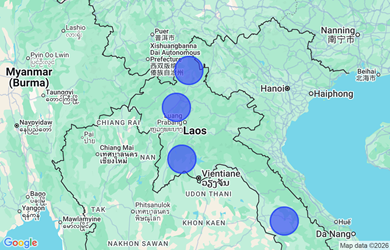
Semi-urban
Vientiane Province
The healthcare retail sector can benefit from the existing infrastructure and the proximity to the capital. The development of healthcare retail can improve access to healthcare products and services for the local population, and potentially create jobs.
Rural
Oudomxay Province
The development of healthcare retail in this province can significantly improve access to healthcare products and services for the local population. It can also create employment opportunities and contribute to the local economy.
Rural
Savannakhet Province
Savanakhet, the largest province in Lao PDR, is strategically located on the border with Vietnam. This province's development of healthcare retail can improve access to healthcare products and services, create jobs, and support the local supply chain.
Semi-urban
Champasak Province
The healthcare retail sector can benefit from the existing infrastructure and the proximity to the capital. The development of healthcare retail can improve access to healthcare products and services for the local population, and potentially create jobs.
Rural
Phongsaly Province
Phongsaly is a rural province where healthcare services might be limited. The development of healthcare retail in this province can significantly improve access to healthcare products and services for the local population.
(1) Global Health Security (GHS) Index (October 2019)." ReliefWeb, Johns Hopkins University, 9 Jul. 2020, https://reliefweb.int/report/world/global-health-security-ghs-index-october-2019.
(2) "May 2021 MATERNAL, NEWBORN AND CHILD HEALTH." World Health Organization, https://pmnch.who.int/docs/librariesprovider9/meeting-reports/mnch-brief---june-2021.pdf.
(3) "Sustainable Financing for Primary Health Care and Universal Health." World Health Organization, https://www.who.int/about/accountability/results/who-results-report-2020-mtr/country-story/2021/lao-pdr.
(4)"Research Provides Evidence for Health Policy in Lao PDR." PMC, https://www.ncbi.nlm.nih.gov/pmc/articles/PMC7480484/.
(5) "UNFPA Lao People's Democratic Republic | National Maternal Death." UNFPA, https://lao.unfpa.org/en/news/national-maternal-death-surveillance-and-response-meeting-reaching-zero-preventable-maternal.
(6)"Gender Assessment Steers Implementation of the Health and Nutrition." World Bank, https://www.worldbank.org/en/country/lao/brief/gender-assessment-steers-implementation-of-the-health-and-nutrition-services-access-project-in-lao-pdr.
(7) "Challenges for Strengthening the Health Workforce in the Lao People's." Human Resources for Health, https://human-resources-health.biomedcentral.com/articles/10.1186/s12960-016-0167-y.
(8) "Sustainable Financing for PHC and UHC in Lao People's Democratic Republic." World Health Organization, https://www.who.int/news-room/feature-stories/detail/lao-PDR.
(9) "Country Office Annual Report 2022 Lao People's Democratic Republic." UNICEF, https://www.unicef.org/media/136021/file/Lao-Peoples-Democratic-Republic-2022-COAR.pdf.
(10) "Current Health Expenditure (% of GDP) - Lao PDR." The World Bank, https://data.worldbank.org/indicator/SH.XPD.CHEX.GD.ZS?locations=LA.
(11) "Out-of-Pocket Expenditure (% of Current Health Expenditure) - Lao PDR." The World Bank, https://data.worldbank.org/indicator/SH.XPD.OOPC.CH.ZS?locations=LA.
(12) "Progress towards Universal Health Coverage in the Lao People's Democratic Republic." World Health Organization, https://www.who.int/publications-detail-redirect/9789290620037.
(13) "Exploring the Gender Dimensions of Unpaid Care Work in the Lao People's Democratic Republic." Asian Development Bank, https://www.adb.org/publications/gender-dimensions-unpaid-care-work-lao-pdr.
(14) "Lao PDR Aims to Achieve Universal Health Coverage with New Global Fund Investment." World Bank, https://www.worldbank.org/en/news/press-release/2020/11/17/lao-pdr-aims-to-achieve-universal-health-coverage-with-new-global-fund-government-of-australia-and-world-bank-investment.
(15) "Challenges for Strengthening the Health Workforce in the Lao People's Democratic Republic." Human Resources for Health, https://human-resources-health.biomedcentral.com/articles/10.1186/s12960-016-0167-y.
(16) https://data.unwomen.org/country/lao-peoples-democratic-republic
(17) https://data.worldbank.org/indicator/SH.XPD.CHEX.PC.CD?locations=LA