
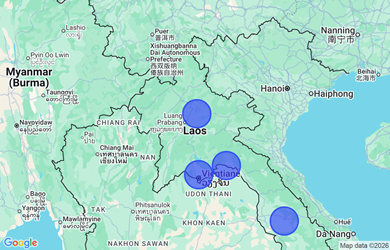
Explore the country and target locations of the investment opportunity.
Country
Lao PDR
Region
- Luang Prabang Province
- Savannakhet Province
- Champasak Province
- Bolikhamxay Province
- Vientiane Capital
Situate the investment opportunity within sustainability focused sector, subsector and industry classifications.
Sector
Renewable Resources and Alternative Energy
Development need
Lao PDR, with 18.7 million hectares of forested land, loses 1.4% of such land annually due to deforestation. The untapped potential of regenerative materials, particularly 500,000 hectares of bamboo, can address deforestation, providing sustainable solutions for the construction sector and enhancing environmental conservation efforts (1) (2) (3).
Policy priority
Lao PDR's Forestry Strategy 2020 requires a strong alignment with the need for using sustainable materials. The strategy aims to increase forest cover to 70% of the total land area and encourages the sustainable use of non-timber forest products, including bamboo and other regenerative materials (4).
Gender inequalities and marginalization issues
Women in rural areas, despite being significant contributors to forest resource management, face economic disparities earning only 73% of male wages. Their inclusion in the value chain of regenerative materials can provide economic upliftment opportunities and foster gender equality. (5)
Investment opportunities
The global regenerative materials market, with a projected CAGR of 10.3% from 2021-2026, presents significant investment opportunities. Lao PDR can leverage this trend to develop its regenerative materials sector, focusing on abundant bamboo resources, potentially driving economic growth and sustainability. (6)
Key bottlenecks
Unsustainable extraction practices threaten biodiversity, with 80% of Lao's population reliant on natural resources. Also, rural producers face challenges like limited technical knowledge of regenerative materials production and inadequate market access, hampering the growth of this industry. (7)
Sub Sector
Forestry and Paper
Development need
Lao PDR's forestry sector, the source of livelihood for 80% of its population, faces challenges of deforestation and over-extraction. The development needs lies in promoting sustainable practices and utilizing non-timber forest resources, such as bamboo, for regenerative construction materials . (8),(9)
Policy priority
The government's Forestry Strategy 2020 emphasizes sustainable forest management and promotes the use of non-timber forest products, directly aligning with the development of a regenerative materials subsector. (10)
Gender inequalities and marginalization issues
Women in rural areas, integral to forest resource management, face significant wage gaps and lack of representation. Promoting gender inclusivity in the value chain of regenerative materials can contribute to reducing these inequalities.(11)
Investment opportunities
Global demand for sustainable construction materials is growing, and Lao PDR's untapped bamboo resources present an opportunity for investment in regenerative materials production, in line with the global market's projected growth. (12)
Key bottlenecks
In Lao PDR, unsustainable extraction practices pose significant challenges, alongside the limited technical knowledge of regenerative material production and limited access to markets for rural producers. (13)
Industry
Pulp and Paper Products
Discover the investment opportunity and its corresponding business model.
Investment Opportunity Area
Regenerative Construction Materials
Sustainable Production and Utilization of construction materials
Business Model
Establishing sustainable forestry practices to harvest non-timber forest products such as bamboo. Business model may include processing these materials locally, to manufacture regenerative construction materials for both local and international markets.
An illustrative example of enterprises active in this space is: Burapha Agro Forestry is a Lao-Swedish company that focuses on rural development and sustainable agroforestry. According to online sources, the company was founded in 1990, and has addressed forest landscape restoration, managing approximately 6,000 hectares of private land in cooperation with local farmers and villages. Specializing in eucalyptus plantations, Burapha's operations use a community based approach.
Learn about the investment opportunity’s business metrics and market risks.
Market Size and Environment
Market Size (USD)
< USD 50 million
CAGR
15% - 20%
Critical IOA Unit
261,800 hectares of forests lost to deforestation every year in Lao PDR.
The value of the production of wood and rattan furniture was $ 25.7 million in 2022. The market observed a 20% growth in production from 2021-2022.
Indicative Return
GPM
> 25%
Companies in similar sectors, such as bamboo-based construction materials, have seen gross profit margins of around 35% . (4)
Investment Timeframe
Timeframe
Medium Term (5–10 years)
Bamboo Technologies, for instance, saw positive returns six years after its establishment, following its successful market penetration in the Asia-Pacific region. Similarly, BioMason, a company that bio-fabricates bricks, began seeing returns approximately five years after its launch. (5)(6)
Ticket Size
Average Ticket Size (USD)
USD 500,000 - USD 1 million
Market Risks & Scale Obstacles
Business - Business Model Unproven
The regenerative construction materials industry is still emerging. For instance, companies like BioMason- a company that uses microorganisms to grow sustainable structural cement materials and Ecovative Design - a company that uses mycelium materials are breaking new ground with innovative technologies. However, these models are yet to be widely adopted. (7),(8)
Business - Supply Chain Constraints
The sector relies heavily on the availability of specific raw materials, some of which may be region-specific. For example, Bamboo Technologies faced challenges in sourcing quality bamboo. (9)
Capital - CapEx Intensive
Startups in this field often require significant upfront investment for R&D, machinery, and scaling production. BioMason - a company that uses microorganisms to grow sustainable structural cement materials, for example, needed substantial investment to perfect its bio-fabrication process. (10)
Read about impact metrics and social and environmental risks of the investment opportunity.
Sustainable Development Need
Climate Change Mitigation: The construction sector is responsible for nearly 40% of global CO2 emissions. Regenerative construction materials can significantly reduce these emissions, addressing a key aspect of climate change mitigation. For Lao PDR, investments in this space also lead to contributions to its NDC commitments whereby it commits to reduce emissions by 60% (unconditional) by 2030, compared to the baseline scenario, with 2030 conditional targets set for land use, energy, agriculture, and waste sectors.(15) (20)
Resource Efficiency: Traditional construction materials, like cement and steel, are resource-intensive. Bio-based materials are typically more resource-efficient and promote circular economy. (15)
Gender & Marginalisation
Job Opportunities: 79% of households in rural areas are farm households and have significant dependence on sustainable land use for their livelihoods and incomes.(18)
Expected Development Outcome
CO2 Emission Reduction: The use of regenerative construction materials can potentially reduce CO2 emissions in the construction sector by up to 40%, contributing significantly to global climate change mitigation efforts and to Lao PDR's NDC commitments. (15)
Resource Efficiency Improvement: The switch to bio-based materials can lead to a 30% improvement in resource efficiency in the construction sector, promoting the circular economy and reducing environmental impact. (15)
Gender & Marginalisation
Job Creation: The business models under this IOA have the potential to create numerous jobs in the production and use of regenerative construction materials, contributing to economic equality, including for marginalized groups.
Primary SDGs addressed
9 - Industry, Innovation and Infrastructure
9.4.1 CO2 emission per unit of value added
Current Value
As of 2020, Laos' carbon dioxide emissions were approximately 2.6 metric tons per capita, which is relatively low compared to the global average but has been gradually increasing over the years [16]
Target Value
No current targets
11 - Sustainable Cities and Communities
11.3.2 Proportion of cities with a direct participation structure of civil society in urban planning and management that operate regularly and democratically
Current Value
As per the United Nations' data, Laos has limited urban planning structures with participation in civil society. However, there are increasing efforts towards involving civil society in urban development decisions [20]
Target Value
Laos aims to have 100% of its cities with direct participation structures of civil society in urban planning and management by 2030 [20]
13 - Climate Action
13.2.1 Number of countries with nationally determined contributions, long-term strategies, national adaptation plans, strategies as reported in adaptation communications and national communications
Current Value
Laos is one of the 189 countries that have communicated their first nationally determined contributions (NDCs) and is currently working on its updated version [19]
Target Value
Unconditional emission reduction target of 60% by 2030 [19]
Secondary SDGs addressed
1 - No Poverty

4 - Quality Education
8 - Decent Work and Economic Growth
Directly impacted stakeholders
People
Local communities, including workforce participants in the forestry and construction sector, will be directly involved and impacted through job opportunities and income generation.
Gender inequality and/or marginalization
Women in rural areas will benefit from the increased employment opportunities provided by this IOA. However, gender considerations should be woven into investment and business model considerations.
Planet
Sustainable forestry practices that promote biodiversity and reduce deforestation will directly impact the local environment positively. However, the relevant policy and regulatory levers will need to be enacted to ensure minimization of negative impacts.
Corporates
The shift towards regenerative materials will directly affect local construction companies and those in the sustainable material supply chain.
Public sector
Government entities involved in environmental, industrial, and social policies would directly interact with this business model, potentially necessitating policy adjustments.
Indirectly impacted stakeholders
People
The general population, especially future generations, can benefit from the reduced negative environmental impact of construction practices and improved sustainability related integration into this industry.
Gender inequality and/or marginalization
Improved economic outcomes at a household level due to employment opportunities provided by this IOA can potentially have impact on the practice of child labor in rural areas.
Planet
The broader environment and ecosystems could benefit indirectly through reduced demand for timber and other non-sustainable construction materials.
Corporates
Businesses outside the construction industry may be indirectly influenced by the shift towards sustainability, potentially adopting similar practices in their sectors.
Public sector
National and regional government bodies may be indirectly impacted by changes in environmental outcomes and the need for policy adjustments to support sustainability.
Outcome Risks
Economic risk: If the demand for regenerative construction materials does not meet expectations, this could negatively impact local economies reliant on this industry.
Environmental risk: Despite sustainable forestry practices, there could still be potential harm to local ecosystems due to increased human activity in these areas.
Social risk: There could be resistance from traditional construction sectors, leading to social tensions or job displacement.
Market risk: The prices of regenerative construction materials may not be competitive with traditional materials, leading to lower adoption than expected.
Gender inequality and/or marginalization risk: If government policy and corporate action on integrating gender considerations is not enforced, IOA could inadvertently reinforce gender inequalities by primarily benefiting male workers.
Impact Risks
Environmental impact risk: The expected positive impact on the environment may not occur if sustainable forestry practices are not strictly adhered to.
Social impact risk: The intended socio-economic benefits may not reach all community members, particularly marginalized groups if the model is not inclusive.
Market impact risk: The shift towards regenerative materials may not influence the wider construction industry as expected, limiting the intended broader impact.
Policy impact risk: Lack of supportive government policies and regulations could limit the expected impact on sustainability and local economic development.
Gender inequality and/or marginalization risk: The expected benefits for women and marginalized communities may not materialize if existing barriers to inclusion are not addressed.
Impact Classification
B—Benefit Stakeholders
What
The IOA aims to improve sustainable forest management and the use of regenerative construction materials, contributing to both local economic growth and environmental sustainability.
Who
This impacts local communities involved in the harvesting and processing of non-timber forest products, and the wider society benefiting from sustainable construction practices.
Risk
If government policies are not enforced, protected forests might come under risk of exploitation.
Contribution
Lao PDR faces a high dependency on imported medicines, with a growing demand for affordable options. Developing local capacity for generic drug production can address this need.
How Much
281,600 hectares of land lost to deforestation every year. The IOA can promote sustainable agroforestry practices and reduce the amount of land lost to deforestation.
Impact Thesis
The IOA advances sustainable development in Lao PDR via eco-friendly forestry and regenerative construction, benefiting communities and nature.
Explore policy, regulatory and financial factors relevant for the investment opportunity.
Policy Environment
A Policy Snapshot of Health and Nutrition in Lao PDR - provides a snapshot of government health spending, maternal and child expenditure, health care workers, and the status of nutrition. (28)
Health Sector Reform Strategy and Framework till 2025 - provides a legal and action framework for implementing the Health Sector Reform Strategy with a policy and strategic planning matrix. (29)
Policy Environment
"Lao PDR Forestry Strategy to the Year 2020": This document guides the country's forestry sector, emphasizing sustainable use of forest resources, including non-timber products like bamboo.
"Lao PDR's 9th National Socio-Economic Development Plan (NSEDP 2021-2025)": This document supports green growth, sustainable infrastructure, and job creation, which aligns with the IOA's objectives.
Financial Environment
The "Lao PDR Investment Promotion Law (2016)" provides tax exemptions and reductions for investments in specific sectors, including sustainable forestry and green construction
The "Lao PDR Green Growth Strategy (2019)" offers concessional loans for projects that align with green growth principles, which could include the IOA's activities
The government, through the Ministry of Agriculture and Forestry, provides land-use rights for sustainable forestry activities under the "Lao PDR Forestry Law (2007)"
Regulatory Environment
"Lao PDR Forestry Law (2007)" regulates forest resource use and promotes sustainable forestry practices.
"Lao PDR Environmental Protection Law (2012)" requires environmental impact assessments for projects, including those in the forestry sector.
"Lao PDR Investment Promotion Law (2016)" encourages sustainable investments, potentially benefiting the IOA.
Discover examples of public and private stakeholders active in this investment opportunity that were identified through secondary research and consultations.
Private Sector
Mekong Timber Plantations, a company focusing on sustainable plantation management in Lao PDR, Furniture Wai Lao, focuses on building furniture using regenerative materials.
Government
The Ministry of Agriculture and Forestry oversees forestry management and issues regulations for sustainable use of forest resources
Multilaterals
The World Bank, through the Forest Investment Program, supports sustainable forest management and livelihood improvement in Lao PDR
Non-Profit
The World Wide Fund for Nature (WWF) works on sustainable forestry and biodiversity conservation in Lao PDR
Public-Private Partnership
The Sustainable Forestry for Rural Development Project (SUFORD), a joint initiative by the Lao PDR government and the World Bank, supports sustainable forest management
See what country regions are most suitable for the investment opportunity. All references to Kosovo shall be understood to be in the context of the Security Council Resolution 1244 (1999)
Rural
Luang Prabang Province
This region, known for its rich forests, will benefit from the investments in the business model proposed under this opportunity area promoting sustainable forestry, and aiding biodiversity conservation while supporting local communities who depend on these resources for livelihoods.
Rural
Savannakhet Province
Predominantly an agricultural province, introducing sustainable timber plantations through focused investments in this area will diversify the local economy, provide sustainable employment, and offer an environmentally friendly alternative for construction materials.
Rural
Champasak Province
This area is characterized by significant biodiversity. The IOA's focus on sustainable forestry can help preserve unique flora and fauna while generating economic benefits for the local community through sustainable timber production.
Rural
Bolikhamxay Province
With dense forest cover, Bolikhamxay can benefit from the IOA's emphasis on sustainable logging practices, balancing economic growth with environmental preservation, and providing a model for sustainable forestry in Lao PDR.
Urban
Vientiane Capital
As an urban centre undergoing rapid development, Vientiane can benefit from the IOA's promotion of sustainable construction materials. This can reduce the environmental footprint of urban expansion while contributing to a greener, more sustainable cityscape.
(1) Food and Agriculture Organization of the United Nations. (2020). "Global Forest Resources Assessment 2020 – Country Report Lao People's Democratic Republic."
(2) Global Forest Watch. (2021). "Country Profiles: Lao PDR."
(3) International Network for Bamboo and Rattan. (2019). "Bamboo and Rattan Development Programme: Lao PDR."
(4) Ministry of Agriculture and Forestry, Lao PDR. (2005). "Forestry Strategy 2020."
(5) World Bank. (2019). "Lao PDR Economic Monitor: Structural transformation for poverty reduction."
(6) MarketsandMarkets. (2021). "Regenerative Materials Market by Form, Application, Region - Global Forecast to 2026."
(7) United Nations Development Programme. (2017). "Strengthening sustainable management and promoting the use of biodiversity."
(8) World Bank. “Lao PDR Forest Note: Toward Sustainable Forest Landscapes for Green Growth, Jobs, and Resilience.” World Bank Group, 2019, openknowledge.worldbank.org/bitstream/handle/10986/34094/Lao-PDR-Forest-Note-Toward-Sustainable-Forest-Landscapes-for-Green-Growth-Jobs-and-Resilience.pdf?sequence=4.
(9) World Bank. “Greener Growth through Good Wood: Sustaining Forest Landscapes and Local Livelihoods in Lao PDR.” World Bank Group, 2018, www.worldbank.org/en/country/lao/publication/greener-growth-through-good-wood-sustaining-forest-landscapes-and-local-livelihoods-in-lao-pdr.
(10)“Forestry Strategy 2020.” Ministry of Agriculture and Forestry. Government of Laos, 2020. 2023. : Kozak, Robert A., and John Innes. “Modelling Non-timber Forest Products for Forest Management Planning in British Columbia.” Small-Scale Forestry 19.4 (2020): 427-443. Web. : “Non-Timber Forest Products and the Bioeconomy.” Forests 12.6 (2021): n. pag. Web.
(11) Gender in Value Chains - Practical Toolkit to Integrate a Gender … (https://www.fao.org/sustainable-food-value-chains/training-and-learning-center/details-materials/en/c/277079/)
(12) “Bamboo: Green Construction Material - Asia-Pacific Network for Global …”. Asia-Pacific Network for Global Change Research. 2020. https://www.apn-gcr.org/wp-content/uploads/2020/09/1654f846a58279adea4aeb44a881321b.pdf.
(13)“Decarbonization in Lao PDR: the options and challenges”. ClimateWorks Australia. 2021. https://www.climateworkscentre.org/wp-content/uploads/2022/02/Lao-PDR-Report-Phase-1_Sept-21.pdf.
(14) https://biomason.com/about
(15) https://www.unep.org/resources/publication/2022-global-status-report-buildings-and-construction
(16) https://data.worldbank.org/indicator/EN.ATM.CO2E.PC?locations=LA
(17) The 3rd Lao census for Agriculture, 2019/2020.
(18) https://climatepromise.undp.org/what-we-do/where-we-work/lao-pdr
(19) https://kostat-sdg-kor.github.io/sdg-indicators/en/11-3-2/
20) https://ndcpartnership.org/country/lao#:~:text=The%20government%20of%20Lao%20People,mtCO2e%20by%202030.