
Explore the country and target locations of the investment opportunity.
Country
Indonesia
Region
- Countrywide
- Countrywide
Situate the investment opportunity within sustainability focused sector, subsector and industry classifications.
Sector
Food and Beverage
Development need
In 2020, 28.77% agricultural producers across 3 provinces were small-scale farm owners (>0.16 hectares) and earned >USD 1044.17 PPP. Indonesia's food commodity markets is impacted by food price anomalies (IFPA) which increased from 0.21 in 2019 to 0.43 in 2020.
Various regions also fell in the moderately high and abnormally high categories of IFPA (1) due to uncertainty in climate seasons or availability of production infrastructure. This is seen in rice commodities, where price fluctuations average at ~0.6% per month. (2)
Policy
Medium-Term National Development Plan (RPJMN) 2020-2024 policy objectives towards increasing the sustainable productivity and competitiveness of human resources in the agriculture sector, market certainty, as well as increased value-added employment per agricultural worker, under its agenda of strengthening economic resilience for quality and equitable growth (2)
Gender inequalities and marginalization issues
As of 2020, 40% of smallholder farmers are women. (3) Even though women farmers participate in various agricultural roles, they still face disparity in access to financing, inputs or training, and land ownership. Land certificates are distributed disproportionately to men, and existing land inheritance norms are still biased towards men. (4)
In the palm oil supply chain, women's role is reserved for secondary, non-essential tasks, such as maintenance. This limits women's opportunities to partake in decision-making. Women also lack access to collateral for loans (lack of land-ownership), resources and inputs, creating unequal barriers in supply chain participation and innovation. (5)
Investment opportunities
Population, income and change in food preferences impact food demand. Demand grew by 105% for wheat and 61% for vegetables (2000-2015). With an expected growth in population of 10%, GDP and per capita GDP at 140% and 79%, respectively (Between 2015 to 2030), food demand is expected to show a sharp growth over the next 30 years. (6)
Key bottlenecks
Inadequate logistics (distribution channels) and supply-chain management, low productivity of key crops, poor infrastructure and national food reserves, and climate change, adversely impact the achievement of food security and nutrition targets. (7)
Underdeveloped and unequal distribution of logistics and food distribution infrastructure across regions hinder the empowerment of Indonesia's small-scale farmers.(1)
Sub Sector
Food and Agriculture
Development need
Indonesia primarily has small-scale farmers (~0.6 hectare farmlands), with limited access to modern farming technology, seed varieties and information services, and who are at a high risk of poverty. (1) Domestic price of rice in 2017 exceeded global prices, creating food accessibility and availability problems, especially for the poor and vulnerable.
Such instability is largely linked to inefficiencies and suboptimal developments of food value chains, asymmetric information on markets, and a lack of competitiveness within market structures. In turn, such structures also generate another substantial problem: food loss and waste, with the largest generation of food loss & waste (FLW) coming from the food crops sector, at 12-21 mn tons/year. (6)
Policy
Under Medium-Term Agricultural Strategies for 2020-24, GoI sets to undertake a direction of agricultural development that includes strengthening food reserve systems at both local government and community levels, and develop a national food logistics system.
Further, GoI encourages the role of private business actors alongside of State-owned Enterprises (BUMN) to improve the food supply chain for agricultural commodities. (2)
Gender inequalities and marginalization issues
In 2018, 24% of 25.4 mn farmers were women (most are farm laborers). (8) Women are often allocated to menial or secondary roles in the value chain, where more elevated roles (marketing) are dominated by men.
Women farmers also disproportionately face barriers in receiving loans for agricultural expansion, as they do not hold land ownership rights or houses for collateral. (9) Poor families and those with limited access to health-care are especially vulnerable to slow food production growth, caused by inefficiencies in the supply chain.
This is demonstrated through their high share of food expenses, i.e. 76% total household expenditure. Poor families still experience malnutrition. 48% children under five from the poorest quintile of the population were stunted compared to 29% in the richest quintile. (10)
Investment opportunities
High value crops (such as fruits and vegetables) grew substantially from 2000 to 2015 at 117.9% and 61.3%, and annual growth rates of 4.32% and 3.75%, respectively. With expected growth in population (10%) and per capita GDP (79%), demand for said commodities is likely to rise over the next 30 years. (6)
In 2020, Indonesia ranked 65/113 countries in the Global Food Security Index with high food insecurity and poor nutrition across regions. (7) However, the growth of AgriTech business presents opportunities for increased food availability in the country, where the AgriTech market raised >USD 165 mn in 2020. (10)
AgriTech plays a key role in improving sustainability and efficiency of supply chains, eliminating waste along the way. (11)
Key bottlenecks
Substantial effort (money and time) is required for educating farmers or hawker partners to use the platform, which determines the success of such models in achieving economies of scale.
Industry
Agricultural Products
Discover the investment opportunity and its corresponding business model.
Investment Opportunity Area
Output side digital platforms for farmers
Efficient supply chain management assistance and connecting farmers with end consumers
Business Model
Invest in B2B / B2B2C AgriTech models offering: - Effective post-harvest supply chain solutions to ease the process of connecting farmers to end-customers, and vice-versa, including farm-to-table fresh produce distribution - Improved market access through online and offline marketplaces for effective whole-sale and retail-sale of farm produce Examples of companies active in this space are:
TaniHub Group, founded in 2016, is a B2B platform connecting farmers with businesses that use or sell their products. It provides crowdlending support and assists farmers in selling their products to the end consumers. It has raised ~USD 94 mn, including USD 65.5 mn in Series B from MDI Ventures, Add Ventures and others investors, which brought its valuation to > USD 200 mn. (12)(13)
Vasham, founded in 2013 (wholly owned subsidiary of PT Japfa Comfeed Tbk), aims to optimize the value chain of agriculture by connecting and creating synergies and efficiencies that in return empower producers and customers alike, enabling farmers in Indonesia with the tools and finance to start with agriculture. In 2016, it raised an undisclosed amount from Patamar Capita. (14)
PT. Eden Pangan Indonesia (Eden Farm), founded in 2017, is an AgriTech company engaged in supplying food ingredients to culinary businesses in major cities and working with local producers across the country to stabilize food prices in Indonesia. Till 2021, it has raised USD 20.9 mn, including USD 19 mn in Series A round from appWorks Ventures Co., Ltd. and AC Ventures.
Kedai Sayur, founded in 2018, operates an online platform that builds networks of daily produce distribution and open the access for local vegetable hawkers. Till 2019, it raised USD 5.3 mn, including USD 4 mn in a Venture round from East Ventures Pte. Ltd.; PT Triputra Investindo Arya; PT. Prerkasa Multi Persada; SMD Ventures.
SayurBox PT, founded in 2016, sells organic, hydroponic, pesticide-free, and chemical-free produce in various categories, such as vegetables, fruits, grains, herbs and seasonings, protein food, and ready to consume, through farm-to-table concept. Till 2021, it raised USD 5.35 mn, including an undisclosed amount in Series B funding from Syngenta Ventures and PT Astra Digital International.
Learn about the investment opportunity’s business metrics and market risks.
Market Size and Environment
Market Size (USD)
> USD 1 billion
CAGR
Indonesia's market is growing at ~12.93% per quarter (QoQ) (13)
Critical IOA Unit
Employed labor - 1/3 or ~40.5 mn (15) 33.4 mn farmers (13) 93% are smallholder farmers (16)
In 2022, the real GDP growth of the agriculture sector was ~2.8%, and its exports are expected to contract in the next years. (17) Indonesia’s e-grocery (gross merchandise value of ~ USD 500 mn in 2019) market (valued at ~USD 1 bn) is expected to reach USD 6 bn by 2025 – spurred on by Covid-19 and its repercussions. Such growth requires ~5% market penetration (Indonesia-0.5%). (18)
In 2020, AgriTech startups raised more than USD 165 mn across 26 deals. (16) Eden Farms operates across various locations and is within a radius of 5 km from customers so that delivery is faster and more efficient. (13)
Indicative Return
IRR
Return for Agri-models depends on geographic reach, number of farmers and fintech capability.
ROI
KedaiSayur claims to have achieved 24x business growth yoy through the KedaiMart application (19)
GPM
> 25%
TaniHub partners with >45,000 farmers and 350,000 buyers (businesses and consumers). In 2020, it grew its business by ~639% yoy (21) with increased demand for online groceries. (12) Share of returns for projects crowdfunded through TaniFund: > farmers & investors - 40% > TaniFund - 20% (15)
Eden Farm serves 53,000 customers and partners with >2000 farmers in Java. To support the supply chain, they also operate 5 Eden Fulfillment Centers in strategic locations, supported by 400 product availability supplier partners. (13)
Private Equity firms target 20-25% IRRs on their investment. Returns depend on stage of investment and the valuation at the time of exit. Example: Seed fund investors will earn a better return if they hold their investment, than the investors who enter at a later stage.
Investment Timeframe
Timeframe
Short Term (0–5 years)
KedaiSayur, after 9 months of its operations, reported growth of its partner (hawkers) by 520%. Its GMV grew by ~600%. (22)
SayurBox, since 2016, grew by 3-4x each year. Its B2B segment has grown by 30% month on month, with positive EBITDA margins (20)
TaniHub started in 2016 and grew its business by ~639% yoy in 2020. (21)
Ticket Size
Average Ticket Size (USD)
USD 1 million - USD 10 million
Market Risks & Scale Obstacles
Business - Supply Chain Constraints
Scalability of such models depends on additional investment to enter new markets as cost of setting up collection points, warehousing space and logistic services are substantial. Moreover, since the products are perishable, cost of spoilage is also borne by the operators.
Business - Supply Chain Constraints
Infrastructure, crop cultivation, and logistics and distribution are challenges for the agriculture sector. Different regions produce different crops depending on local conditions, and these need to be distributed domestically, which is a challenge given that Indonesia is a large archipelago. (10)
Market - High Level of Competition
Substantial effort is spent in acquiring more farmer or hawker partners on the platform, which determines the success of such models in achieving economies of scale.
Read about impact metrics and social and environmental risks of the investment opportunity.
Sustainable Development Need
Reduce wastage of resources and losses incurred due to food spoilage. ~25–45% of produce spoilage is due to poor packing, inadequate cooling and long transportation time (15)
Digital agriculture solutions have the potential to: (16) > improve millions of farmers’ livelihoods by reducing production costs and increase in farm income (23); > elevate productivity in rural communities; and > significantly transform Indonesia’s agricultural sector.
Reduce inefficiencies along the supply chain (post-harvest stage, processing, packaging) that directly contribute to food waste (increased from 39% in 2000 to 55% in 2019). Optimizing funding for adequate infrastructure/facilities to manage food loss & waste (FLW) to mitigate of such spillovers. (1)
Gender & Marginalisation
Address the gap in ICT skill to empower all sections of society to ensure hawkers or farmers (platform partners) are able to reap fair benefits. Proportion of adults (aged 15-59 years) with information and communications technology (ICT) skills: Female - 60.60; Male - 67.88 (24)
Expected Development Outcome
Implementing the hierarchy of management in food loss and waste consistently at each stage of the food life cycle to prevent and minimize the amount of food loss and waste. (25)
Increase the contribution of agriculture sector to Indonesia's GDP by reducing wastage and promoting the economic growth of local communities.
Improve the agriculture value chain and enable the farmers to access the end-consumer easily.
Gender & Marginalisation
Ensure farmers obtain fair prices for their produce to increase their income. Eden Farms helped farmers increase their income by >200% after joining the platform. (26) East Bali Company helped cashew farmers of Bali raise their income from USD 0.63 to USD 0.98 per kg. (27)
Create an inclusive environment to ensure an equal opportunity (for farmers, hawkers, etc.) to derive benefits of their trade. KedaiSayur has enabled their hawker-partners to increase their purchase value by ~2x in the first 6 months of joining. (22)
Ensure women empowerment (~40% smallholder farmers are women) through their inclusion in business models designed for farmers. SayurBox promotes the involvement in farmer communities to empower farmer partners, farmer communities and local producers to get better access to market. (28)
Primary SDGs addressed
2 - Zero Hunger
2.3.1 Volume of production per labour unit by classes of farming/pastoral/forestry enterprise size
2.3.2 Average income of small-scale food producers, by sex and indigenous status
2.4.1 Proportion of agricultural area under productive and sustainable agriculture
2.c.1 Indicator of food price anomalies
Current Value
West Java - 43.58 East Java - 28.52 West Nusa Tenggara - 20.15 Average value of 3 provinces - 36.30 (24)
West Java - 683.37 East Java - 573.83 West Nusa Tenggara - 466.73 Average value of 3 provinces - 641.87 (24)
West Java - 13.52 East Java - 8.33 West Nusa Tenggara - 1.57 Average value of 3 provinces - 1.28 (24)
2019 - 0.21 2020 - 0.43 (24)
Target Value
Not available as on January-2022
Not available as on January-2022
Not available as on January-2022
Not available as on January-2022
Not available as on January-2022
5 - Gender Equality
Current Value
(b) Share of women among owners or rights-bearers of agricultural land, by type of tenure, 2020 - 18.95 (average) West Java - 13.54 East Java - 24.28 West Nusa Tenggara - 21.24 (24)
Target Value
Not available as on January-2022
Secondary SDGs addressed

3 - Good Health and Well-Being
10 - Reduced Inequalities
12 - Responsible Consumption and Production
Directly impacted stakeholders
People
Farmers/Hawkers benefit from obtaining fair prices for their produce; Consumers benefit from obtaining high quality produce.
Gender inequality and/or marginalization
Women benefit from their inclusion in business models designed for farmers.
Planet
Output side models to simplify supply chains contribute towards more efficient, timely and sustainable food systems, thus helping to avoid potential food loss and waste (FLW) pollution, conserve biodiversity resources, as well as reduce methane/CO2-based waste emissions. (29)
Corporates
Wholesalers and retailers benefit from procuring better quality and consistent produce at fair prices and on a regular basis. Corporates also benefit from lower price fluctuations with such output focused business models.
Public sector
Government benefits with improved food security systems and decreased environmental degradation through the use of sustainable agriculture practices.
Indirectly impacted stakeholders
Gender inequality and/or marginalization
Population benefits from equitable distribution of resources through upliftment of rural communities / industries
Planet
Digital connectivity with customers will reduce the requirement for travel, thereby reducing the level of CO2 emissions.
Public sector
Such business models also contribute to the government's priorities in increasing farmer's income by 5% p.a. and value-added, as established under the RPJMN 2020-24. (2)
Outcome Risks
Efficiency of operations would be impacted in case of a conflict or fraudulent activities by existing players (middlemen) in the market.
Farmers in some regions may concentrate their production on the same product, resulting in excess supply of one crop and scarcity of others.
Gender inequality and/or marginalization risk: In the absence of sufficient regulations / controls, farmers maybe exposed to exploitation. Inability of business model to include women as part of the product/service design may exclude a significant proportion of smallholder farmers.
Impact Risks
Struggling farmers are forced to borrow money from local middlemen to expand their business and increase yields, which forces them to sell their harvest at very low prices, resulting in losses. (15)
If the benefits of the model do not expand across Indonesia, it will deepen regional and income disparities in the country.
Gender inequality and/or marginalization risk: Absence of gender centric project design may marginalize women further.
Impact Classification
C—Contribute to Solutions
What
Tech-enabled solutions to resolve the supply-chain issues at post-harvest stage that hinder the growth of agriculture sector in Indonesia
Who
Underserved; Farmers/Hawkers benefit from obtaining fair prices for their products and the ease of accessibility to the end-consumer.
Risk
Substantial cost is incurred in setting up collection points, warehousing space, transportation facilities, etc. to expand operations to new markets/region.
Contribution
SayurBox helps in reducing carbon footprint arising from total distributed materials from 5% to 2%. (30) TaniHub removes intermediaries, and helps boost fair trade and prices. (31)
How Much
Agriculture employs 1/3 of total workforce in Indonesia or ~40.5 mn people. (15) Out of 33.4 mn farmers (13), 93% are smallholder farmers.(16)
Impact Thesis
Output side AgriTech based e-commerce platforms to improve farm to consumer market access, reduce losses incurred due to waste of resources and farm produce, and uplift smallholder farmers in Indonesia.
Explore policy, regulatory and financial factors relevant for the investment opportunity.
Policy Environment
Regulation No.17/2015 on Food Security and Nutrition includes: Food Reserves of Government and Regional Government; Food Diversification and Community Nutrition Improvement; Food Crisis Preparedness and Response; Food Distribution, Food Trade, and Food Aid and Supervision. (32)
Ministry of Agriculture Regulation No.6/2012 on Guidance for Agriculture Research & Development Cooperation aims to increase the capacity of agricultural research resources, and accelerate the use of technology. (33)
It covers areas of domestic and foreign cooperation that include acceleration of agricultural technology innovations and use of science-based technology, improvement of services to parties in need, and invitation of participation of cooperation partners for agricultural R&D. (33)
Presidential Regulation no.154/2014 on the Agricultural, Fishery, and Forestry Institutional Extension concerns with learning and development processes of assisting businesses in accessing market information, technology, capital and other resources. (34)
It invites private sector participation in the implementation of and increasing the capacity of extension services for said beneficiaries to improve productivity, business efficiencies, income and welfare, and increase awareness to preserve environmental life and functions. (34)
Financial Environment
Financial incentives: BKPM Regulation No. 5/2020 provides an Income Tax Facility through six-year net income reduction of 5% annually or 30% of the investment value in the form of tangible fixed assets including land, used for main business activities. (40)
Fiscal incentives: Law No. 22/2019 on the Sustainable Agriculture Cultivation System regulates environmental sustainability aspects including in harvest and post-harvest losses, including setting base prices of national strategic agricultural cultivation produces. (41)
Other incentives: Regulation No.25/2014 states incentives including local tax and levy reliefs, improving horticultural infrastructure, funding assistance for certificate issuance, relief from issuance of land rights certificates, facilities assistance, and rewards. (42)
Regulatory Environment
Ministry of Agriculture Regulation No.3/2021 facilitates the Implementation of Smallholder Business Credits (KUR); providing KUR at certain rates to expand access to financing, boost competitiveness of micro and small agricultural businesses, and encourage economic growth. (35)
Ministry of Trade Regulation No.57/2017 concerning the stipulation of rice ceiling prices (maximum prices) aims to maintain stability of rice prices and affordability of rice for consumers. (36)
Ministry of Agriculture Regulation No.40/2015 establishes the need for the Facilitation of Agricultural Insurance where the majority of agricultural businesses consist of smallholder farmers who are financially unable to sustain their businesses independently. (37)
Minister of Agriculture's Regulation Number 15 Year 2021 regulates Business Activity Standard and Product Standard in the Implementation of Risk Based-Business Licensing for Agriculture Sector. (38)
Minister of Agriculture Regulation No. 41/2021 on Allocation and Highest Retail Price of Subsidized Fertilizer in Agriculture Sector regulates that subsidized fertilizer is intended for farmers or farmers who have joined farmer groups, not for companies. (39)
Discover examples of public and private stakeholders active in this investment opportunity that were identified through secondary research and consultations.
Private Sector
Corporates: PT. Eden Pangan Indonesia, East Bali Cashews, Vasham, Tanihub, PT Kedai Sayur Indonesia, Sayurbox, Pasarnow Investors: Global Founders Capital Management GmbH; Corin Capital LLP; appWorks Ventures Co., Ltd.; AC Ventures; Investible Pty Ltd; Trihill Capital, Y Combinator
Government
Ministry of Agriculture, Ministry of Public Works and Housing, Ministry of Environment and Forestry, Ministry of Trade, Ministry of Finance
Multilaterals
-
Non-Profit
-
Public-Private Partnership
Partnership for Indonesia Sustainable Agriculture (PISAgro), Australia-Indonesia Partnership for Promoting Rural Incomes through Support for Markets in Agriculture (PRISMA)
See what country regions are most suitable for the investment opportunity. All references to Kosovo shall be understood to be in the context of the Security Council Resolution 1244 (1999)
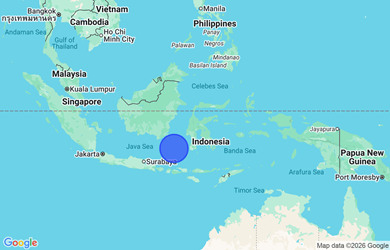
Rural
Countrywide
Operators will have to set-up their collection centers close to the rural areas, i.e. at close proximity to the farmers, and their delivery centers close to semi-urban or urban areas. Collection points will also depend on the crop that the operator wishes to obtain from the farmer.
Rural
Countrywide
Eden Farms aims to strengthen the agriculture supply chain and empower the communities by spreading its operation across various locations and setting up its centers within a radius of 5 km from customers so that delivery is faster and more efficient. (13)
Sector Sources
1) Republic of Indonesia. 2021. Voluntary National Review. https://sdgs.bappenas.go.id/laporan-voluntary-national-review-vnr-indonesia-2021/
2) Republic of Indonesia. 2020. Indonesia's 2020-2024 National Medium-Term Development Plan (RPJMN). https://perpustakaan.bappenas.go.id/e-library/file_upload/koleksi/migrasi-data-publikasi/file/RP_RKP/Narasi-RPJMN-2020-2024-versi-Bahasa-Inggris.pdf.
3) Palladium. 2020. Women in Indonesia are Farmers and Decision Makers: What Businesses Need to Know. https://thepalladiumgroup.com/news/Women-in-Indonesia-are-Farmers-and-Decision-Makers-What-Businesses-Need-to-Know
4) The ASEAN Post. 2019. Indonesia’s female farmers treated unfairly. https://theaseanpost.com/article/indonesias-female-farmers-treated-unfairly
5) United Nations Development Programme (UNDP). New York, 2019. Gender mainstreaming in global agricultural supply chains can accelerate good growth: What works and for whom? https://goodgrowthpartnership.com/wp-content/uploads/Gender-KP-Final-Jan2020.pdf
6) Asian Development Bank (ADB). 2019. Policies to Support Investment Requirements of Indonesia’s Food and Agriculture Development during 2020-2045. https://www.adb.org/sites/default/files/publication/534336/indonesia-food-agri-development-2020-2045.pdf
7) Republic of Indonesia. 2019. Roadmap of SDGs Indonesia Towards 2030. https://www.unicef.org/indonesia/media/1626/file/Roadmap%20of%20SDGs.pdf.
8) Indonesian Centre for Agricultural Socio-economic and Policy Studies of the Ministry of Agriculture. 2021. The Role of Women Farmers During Covid-19 Pandemic. https://pse.litbang.pertanian.go.id/ind/index.php/covid-19/berita-covid19/675-peran-petani-perempuan-pada-masa-pandemi-covid-19#!/ccomment
9) Australian-Indonesian Partnership (PRISMA). 2014. Gender and Social Inclusion: Strategy Report. https://aip-prisma.or.id/data/public/uploaded_file/08.12.16_Final%20Draft%20Gender%20and%20Social%20Inclusion%20PRISMA.pdf
10) AgFunder. 2020. ASEAN Agrifoodtech Investment Report 2020. https://research.agfunder.com/2020/2020-asean-agrifoodtech-investment-report-final.pdf
11) FDI Intelligence. 2021. Indonesia’s agritechs provide vision of a sustainable recovery. https://www.fdiintelligence.com/article/79380
IOA Sources
12) Shu, Catherine. TechCrunch, 2021. Indonesian agritech platform TaniHub Group harvests a $65.5M Series B round. https://techcrunch.com/2021/05/21/indonesian-agritech-platform-tanihub-group-harvests-a-65-5m-series-b-round/
13) DailySocial. 2021. Eden Farm Umumkan Pendanaan Seri A 271 Miliar Rupiah Dipimpin AppWorks dan AC Ventures. https://dailysocial.id/post/pendanaan-seri-a-agritech-eden-farm
14) Tracxn. 2022. Companies: Vasham. https://tracxn.com/d/companies/vasham.co.id
15) CompassList. 2020. Indonesia Agritech Report 2020: Startups, Investors and Outlook. https://www.compasslist.com/reports/indonesia_agritech_report_2020
16) Goh, Lesley and Wu, Kelsey. World Bank Blogs, 2021. Investing in data and innovation ecosystem to transform Indonesia’s agriculture. https://blogs.worldbank.org/eastasiapacific/investing-data-and-innovation-ecosystem-transform-indonesias-agriculture
17) Statista. Real GDP Growth of the Agriculture Sector in Indonesia 2014-2019, with Forecasts for 2020-2022. https://www.statista.com/statistics/710164/indonesia-real-gdp-growth-of-the-agriculture-sector/#:~:text=In%202022%2C%20it%20was%20forecast,contract%20in%20the%20next%20years.
18) Consultancy.asia. 2021. Covid-19 a catalyst for growth in Indonesia's e-grocery market. https://www.consultancy.asia/news/3941/covid-19-a-catalyst-for-growth-in-indonesias-e-grocery-market
19) DailySocial. 2022. KedaiSayur Announces the Latest Funding Worth of 50 Billion Rupiah. https://dailysocial.id/post/kedaisayur-announces-the-latest-funding-worth-of-50-billion-rupiah
20) Deal Street Asia. 2021. How Sayurbox used a bespoke innovative approach to stand out in Indonesia's crowded e-grocery space. https://www.dealstreetasia.com/partner-content/sayurbox-bespoke-approach-e-grocery/
21) IDN Financials. 2021. Tanihub business growth reaches 639% in 2020. https://www.idnfinancials.com/news/37849/tanihub-business-growth-reaches
22) East Ventures. 2019. Kedai Sayur Raises $4 Million Led by East Ventures. https://east.vc/kedai-sayur/kedai-sayur-raise-4-million/
23) Business Call to Action. Member - PT East West Seed Indonesia (EWINDO). https://www.businesscalltoaction.org/member/east-west-seed-indonesia-ewindo
24) Republic of Indonesia. 2021. Voluntary National Review: Annexes. https://sdgs.bappenas.go.id/laporan-voluntary-national-review-vnr-indonesia-2021/
25) Pangan Bijak Nusantara. 2020. Indonesia Sustainable Food System. https://panganbijak.org/wp-content/uploads/2020/10/Strategy-Paper-ISFS-ENG-0510-min.pdf
26) KrAsia. 2021. Indonesian B2B agritech startup Eden Farm raises USD 19 million to empower local farmers. https://kr-asia.com/indonesian-b2b-agritech-startup-eden-farm-raises-usd-19-million-to-empower-local-farmers
27) Budisatrijo, Alice. BBC News, 2014. Bali cashew factory changes villagers' fortunes. https://www.bbc.com/news/business-29751792
28) Patamar Capital. 2018. Impact Investor Patamar makes first investment from women-focused fund in SayurBox. https://patamar.com/impact-investor-patamar-makes-first-investment-women-focused-fund-sayurbox/
29) WWF-UK. 2021. Driven to waste: The Global Impact of Food Loss and Waste on Farms. https://wwfint.awsassets.panda.org/downloads/wwf_uk__driven_to_waste___the_global_impact_of_food_loss_and_waste_on_farms.pdf
30) Hakim, Arief. Liputan6, 2021. Sayurbox Desain Ulang Kemasan untuk Cegah Limbah Plastik. https://www.liputan6.com/tekno/read/4603215/sayurbox-desain-ulang-kemasan-untuk-cegah-limbah-plastik
31) Open Learning Campus of the World Bank Group. 2020. Digital Ag Series: Building sustainable supply chains in agriculture in Indonesia using technology and innovations. https://olc.worldbank.org/content/digital-ag-series-building-sustainable-supply-chains-agriculture-indonesia-using-technology
32) Republic of Indonesia. 2015. Government Regulation (PP) No.17/2015 concerning Food and Nutrition Security. https://www.ecolex.org/details/legislation/government-regulation-of-the-republic-of-indonesia-no-17-of-2015-concerning-food-and-nutrition-security-lex-faoc169453/
33) Ministry of Agriculture of the Republic of Indonesia. 2012. Minister Regulation No.6/2012 on Guidance for Agriculture Research & Development Cooperation. https://www.fao.org/faolex/results/details/en/c/LEX-FAOC119236
34) Republic of Indonesia. 2014. Presidential Regulation (Perpres) no.154/2014 on the Agricultural, Fishery, and Forestry Institutional Extension. https://jdih.maritim.go.id/cfind/source/files/perpres/2011-2015/perpres_154_2014.pdf
35) Ministry of Agriculture of the Republic of Indonesia. 2021. Minister Regulation No.3/2021 on the Facilitation for the Implementation of Smallholder Business Credits (KUR) in the Agriculture Sector. https://jdih.pertanian.go.id/fp/peraturan/detail/476https://jdih.pertanian.go.id/fp/peraturan/detail/476
36) Ministry of Trade of the Republic of Indonesia. 2017. Minister Regulation No.57/2017 concerning the stipulation of maximum rice prices. http://jdih.kemendag.go.id/backendx/image/regulasi/25010739_Permendag_No._57_Tahun_2017.pdf
37) Ministry of Agriculture of the Republic of Indonesia. 2015. Minister Regulation No.40/2015 concerning Facilitation of Agricultural Insurance. https://bppsdmp-ppid.pertanian.go.id/doc/19/PERATURAN%20KEMENTERIAN%20PERTANIAN/Permentan%2040-2015%20Fasilitas%20Asuransi.doc.pdf
38) Ministry of Agriculture of the Republic of Indonesia. 2021. Minister Regulation No.15/2021 concerning Business Activity Standard and Product Standard in the Implementation of Risk Based-Business Licensing for Agriculture Sector. https://keswan.ditjenpkh.pertanian.go.id/?p=3167#:~:text=Peraturan%20Menteri%20Pertanian%20Nomor%2015,Sektor%20Pertanian%20%7C%20Direktorat%20Kesehatan%20Hewan
39) Ministry of Agriculture of the Republic of Indonesia. 2021. Minister Regulation No. 41/2021 concerning Allocation and Highest Retail Price of Subsidized Fertilizer in Agriculture Sector for Fiscal Year 2021. https://jdih.pertanian.go.id/fp/peraturan/detail/1041https://jdih.pertanian.go.id/fp/peraturan/detail/1041
40) Indonesia Investment Coordinating Board (BKPM). 2020. BKPM Regulation No.5/2020, revoking BKPM Regulation No.6/2018, concerning Guidelines of Entity Income Tax Incentives in Certain Industries and/or Regions. https://peraturan.bpk.go.id/Home/Details/169073/peraturan-bkpm-no-5-tahun-2020
41) Republic of Indonesia. 2019. Law (UU) No.22/2019 on the Sustainable Agriculture Cultivation System. https://www.fao.org/faolex/results/details/en/c/LEX-FAOC195060
42) Republic of Indonesia. 2014. Government Regulation (PP) No.25/2014 concerning the Granting of Horticultural (vegetables, fruits, herbal medicines) Business Facilities and Incentives. https://www.fao.org/faolex/results/details/en/c/LEX-FAOC169454
43) Ministry of Agriculture (Kementan) of the Republic of Indonesia. 2020. Ministry of Agriculture 2020-2024 Strategic Plans. https://balitklimat.litbang.pertanian.go.id/wp-content/uploads/2020/05/Draft-Renstra-2020-2024-Final_3.pdf