
Explore the country and target locations of the investment opportunity.
Country
Lao PDR
Region
- Vientiane Capital
- Champasak Province
- Luang Prabang Province
- Khammouane Province
- Luang Namtha Province
Situate the investment opportunity within sustainability focused sector, subsector and industry classifications.
Sector
Services
Development need
In 2019, the service sector accounted for 41.9% of Lao PDR's GDP. This sector contributes significantly to the country's GDP and, thus, plays an essential role in economic diversification and job creation. However, challenges such as limited access to finance and skilled labor shortage need to be addressed to ensure the sector's sustainable growth. (1)
Policy priority
The government of Lao PDR has prioritized sustainable development and the promotion of public-private partnerships in its policy initiatives. The government aims to provide support and incentives for further development of the service sector, aligning with the Lao PDR Vision 2030 and the National Socio-Economic Development Plan. (2)
Gender inequalities and marginalization issues
Despite formal equality, gender inequality persists in Lao PDR, with women facing barriers to entry and advancement in the service sector. Policies and laws do not sufficiently address gender disparities or provide for the specific engagement of women in institutional processes. (3)
Investment opportunities
The service sector in Lao PDR, encompassing areas such as tourism, information technology, and financial services, offers considerable investment potential. As the country continues to diversify its economy away from a traditional agriculture-based model, opportunities for investment in these and other services are expected to grow. (4)
Key bottlenecks
The service sector in Lao PDR faces several bottlenecks that could hinder its growth. Limited access to finance, inadequate infrastructure, and a shortage of skilled labor have been identified as major challenges. Tackling these issues is crucial for the sustainable development of the sector. (5)
Sub Sector
Hospitality and Recreation
Development need
The COVID-19 pandemic has severely affected this subsector in Lao PDR. The sector, which accounted for 9.5% of the country's GDP in 2019 saw a substantial downturn due to travel restrictions and a global economic slowdown. This sector represents 11% of total employment and 22% of employment in urban areas, the pandemic has resulted in widespread job losses. (6)
Policy priority
Policy priority: In response to the COVID-19 crisis, the Lao government, with support from UNDP, has outlined a Tourism COVID-19 Recovery Roadmap for 2021-2025. This strategy prioritizes the revitalization of the hospitality and recreation sector and aims to mitigate the impacts of the pandemic, emphasizing sustainable tourism development. (7)
Gender inequalities and marginalization issues
While the pandemic has impacted everyone, women, who constitute 60% of the workforce in the tourism sector, may be especially vulnerable due to their predominance in low-skilled, low-wage jobs. The recovery strategy must, therefore, consider gender-responsive measures. (8)
Investment opportunities
As the sector recovers from the pandemic, substantial investment opportunities exist. These include eco-tourism, cultural tourism, and adventure tourism, which can help diversify the sector and create more resilient income streams. (9)
Key bottlenecks
Key challenges for the recovery and development of this subsector include inadequate infrastructure, access to finance, and a lack of skilled labor. The pandemic has likely exacerbated these challenges and needs to be factored into any development strategy. (10)
Industry
Hotels and Lodging
Discover the investment opportunity and its corresponding business model.
Investment Opportunity Area
Nature-based Tourism
Business Model
Invest in developing and operating nature-based tourism experiences with an emphasis on sustainability and cultural preservation. Illustrative examples of some enterprises operating in this space are:
The Gibbon Experience in Bokeo Nature Reserve, Laos, provides a nature-based tourism model that combines wildlife conservation with community development. Visitors can explore the reserve through tree-house accommodations and zip-lining experiences while supporting local livelihoods and conservation efforts. (11)
The Nam Nern Night Safari in Nam Et-Phou Louey National Park offers a wildlife-spotting tour that, according to publicly available information, directly supports anti-poaching and wildlife conservation initiatives. The model uses a unique profit-sharing scheme where villagers receive bonus payments for wildlife sightings, incentivizing conservation, (12)
The Eco Bungalow project in Laos, initiated by Kamu Lodge Experience and Fair Trek, offers community-based tourism with an eco-friendly bungalow built by villagers. Visitors can experience the traditional Kamu lifestyle, and accordingly to publicly available information, the revenue from the project is shared with the local community. (13)
Laos Buffalo Dairy offers a unique agritourism model by providing a sustainable dairy alternative to local farmers and tourists can visit the farm to learn about the process and engage in activities such as cheese making and animal feeding. (14)
Green Discovery Laos, an eco-tourism agency, offers various nature-based adventures like trekking, kayaking, and cycling, while promoting local culture and preserving the environment. (15)
Learn about the investment opportunity’s business metrics and market risks.
Market Size and Environment
Market Size (USD)
USD 100 million - USD 1 billion
CAGR
5% - 10%
Critical IOA Unit
1,314 tourist sites in Lao PDR
The tourism sector in Lao PDR has seen a substantial growth over the years. According to the World Travel and Tourism Council, the direct contribution of travel and tourism to Lao PDR's GDP was around $575 million in 2019[16]. It was forecasted to rise by 6.9% per year from 2020-2030. (17)
However, the COVID-19 pandemic has caused a temporary decline in tourism worldwide. As the world recovers from the pandemic, nature-based tourism is expected to play a significant role in the revival of the sector in Lao PDR.
Indicative Return
ROI
> 25%
The number of tourist arrivals in Lao PDR has increased by 100% (approximately 800,000 people) in 2022
Investment Timeframe
Timeframe
Medium Term (5–10 years)
Similar IOAs in Southeast Asia have short to medium-term return justifications. Lao PDR expects to increase the pace of growth of the tourism sector after Covid19.
Ticket Size
Average Ticket Size (USD)
> USD 10 million
Market Risks & Scale Obstacles
Business - Supply Chain Constraints
Supply Chain Constraints: Despite ongoing efforts, infrastructure in Lao PDR, especially in remote natural attractions, may still be lacking. This could pose logistical challenges and limit the scalability of the business model.
Capital - CapEx Intensive
The development of tourism infrastructure, such as eco-friendly accommodations, transportation, and marketing campaigns to attract international tourists, require substantial upfront investment. This could pose a challenge, especially for smaller enterprises or startups.
Read about impact metrics and social and environmental risks of the investment opportunity.
Sustainable Development Need
Lao PDR's biodiversity values under threat due to climate change, illegal logging and wildlife trade.
For 79% of the population in rural areas the main source of income is agriculture.
Gender & Marginalisation
Women and marginalized groups in Lao PDR often have limited economic opportunities and are underrepresented in decision-making processes.
Rural communities face challenges in accessing resources and infrastructure for tourism development.
Expected Development Outcome
Conservation of natural and cultural resources due to increased appreciation and monetization.
Economic development in rural areas through job creation and income diversification.
Gender & Marginalisation
Improved economic opportunities and empowerment for women and marginalized groups via new tourism roles.
Enhanced community participation and leadership, leading to more equitable decision-making.
Primary SDGs addressed
8 - Decent Work and Economic Growth
8.9.1 Tourism direct GDP as a proportion of total GDP and in growth rate
Current Value
Tourism contributed 1.68% to the GDP of Lao PDR
Target Value
The contribution of tourism to GDP before the COVID-19 pandemic was 5%. The current initiatives aim to restore Lao PDR's tourism industry to pre-pandemic levels.
10 - Reduced Inequalities
10.2.1 Proportion of people living below 50 per cent of median income, by sex, age and persons with disabilities
Current Value
The proportion of people in Lao PDR living below 50% of median income was 28.6% in 2017 [17].
Target Value
The NSEDP aims to reduce the proportion of people living below 50% of median income to 20% by 2025 [9].
Secondary SDGs addressed
5 - Gender Equality
10 - Reduced Inequalities
11 - Sustainable Cities and Communities
Directly impacted stakeholders
People
Local communities, especially those who rely on forests for their livelihoods, will be directly impacted.
Gender inequality and/or marginalization
Women will have greater access to employment opportunities in the service sector, thus empowering them economically.
Planet
The conservation efforts will directly impact the local ecosystems, especially forest areas.
Corporates
Local tourism businesses and eco-tourism initiatives will be directly impacted.
Public sector
The local government bodies responsible for land management and conservation will be directly impacted.
Indirectly impacted stakeholders
People
Visitors and tourists attracted to the area due to improved sustainable tourism practices will be indirectly impacted.
Planet
The global environment benefits indirectly from conservation efforts, contributing to global biodiversity and carbon sequestration.
Corporates
Companies in the broader tourism sector will be indirectly impacted.
Public sector
The national government and international conservation organizations may be indirectly impacted.
Outcome Risks
Risk of local communities not embracing sustainable practices due to lack of understanding or immediate economic benefits.
Planet risk: Insufficient conservation efforts lead to continued deforestation and loss of biodiversity.
Gender inequality risk: Inadequate inclusion of women and marginalized groups in decision-making processes and benefit-sharing.
Impact Risks
Evidence risk: Lack of robust data to track progress and measure impacts.
Stakeholder participation risk: Misunderstanding or not accounting for expectations of local communities.
Drop-off risk: Positive impact does not endure due to lack of long-term commitment or resources.
Alignment risk: the project's goals and the community's needs or expectations are misaligned.
Gender inequality and/or marginalization risk: Lack of equal opportunities for marginalized women to participate and benefit from the project, reinforcing gender inequalities.
Impact Classification
C—Contribute to Solutions
What
The project aims to protect and restore local forest ecosystems, contributing to biodiversity conservation and climate mitigation.
Who
The project directly impacts local communities, particularly marginalized women, and indirectly affects global biodiversity and climate change.
Risk
There's risk of local communities not embracing sustainable practices, and potential for unintended negative impacts on people and planet.
Contribution
Over 840,000 people in over 1200 villages are situated within or on the boundary of 23 national biodiversity reserves. The IOA will improve the livelihood of these communities.
How Much
The project aims to restore and protect a significant area of forest land, with potential scale and depth of impact on local communities and biodiversity.
Impact Thesis
Promoting sustainability via forest protection, local livelihood enhancement, and reduced gender inequality.
Explore policy, regulatory and financial factors relevant for the investment opportunity.
Policy Environment
"Forestry Strategy to the Year 2020 of the Lao PDR." Lao People's Democratic Republic Ministry of Agriculture and Forestry, 2005. This strategy aims to develop, manage, and use Lao's forests sustainably and equitably.
"Lao PDR's National Biodiversity Strategy and Action Plan (NBSAP) 2016 - 2025." Ministry of Natural Resources and Environment, 2016. The NBSAP focuses on biodiversity conservation, sustainable use, and equitable benefit sharing.
Financial Environment
"Fiscal incentives under the Investment Promotion Law No. 14/NA." National Assembly of Lao PDR, 2016. Incentives include tax exemptions and reductions for sectors promoting sustainable development.
Regulatory Environment
"Law on Forestry No. 06/NA." National Assembly of Lao PDR, 2007. This law regulates forest management, utilization, protection, and restoration.
"Environmental Protection Law No. 29/NA." National Assembly of Lao PDR, 2012. This law stipulates principles, regulations, and environmental management, monitoring, and protection measures.
"Investment Promotion Law No. 14/NA." National Assembly of Lao PDR, 2016. This law provides regulations and measures for investment promotion and management, including in the forest sector.
Discover examples of public and private stakeholders active in this investment opportunity that were identified through secondary research and consultations.
Private Sector
Various forestry companies operate in Lao PDR, including Burapha Agro-Forestry, Oji Lao Plantation Forest, and Stora Enso Lao Plantation.
Government
The Ministry of Agriculture and Forestry and the Ministry of Natural Resources and Environment are key government stakeholders in the forestry sector.
Multilaterals
Organizations like the World Bank, Asian Development Bank, and Food and Agriculture Organization (FAO) have forestry-related projects in Lao PDR.
Non-Profit
NGOs such as WWF, Wildlife Conservation Society, and RECOFTC work on forestry and biodiversity conservation in Lao PDR.
Public-Private Partnership
The Sustainable Forestry and Rural Development Project (SUFORD) is a partnership between the Lao government and the World Bank.
See what country regions are most suitable for the investment opportunity. All references to Kosovo shall be understood to be in the context of the Security Council Resolution 1244 (1999)
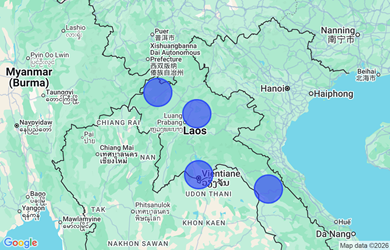
Urban
Vientiane Capital
Vientiane has a significant potential for sustainable tourism. Its urban setting provides infrastructure and resources for the promotion and management of nature-based tourism.
Semi-urban
Champasak Province
Known for its natural and cultural heritage, Champasak is well-suited for nature-based tourism. Its semi-urban nature balances accessibility and preserved natural environments, increasing its appeal to eco-tourists.
Urban
Luang Prabang Province
Declared a UNESCO World Heritage Site, Luangprabang's rich culture and history combined with its urban setting makes it ideal for sustainable tourism. Its urban infrastructure can support the growth of nature-based tourism while preserving its unique heritage.
Semi-urban
Khammouane Province
Khammuan's abundant natural resources, including the Phou Hin Poun National Protected Area, make it an ideal location for nature-based tourism. Its semi-urban nature allows for development while ensuring that natural environments are preserved.
Semi-urban
Luang Namtha Province
Home to the Nam Ha National Protected Area, Luangnamtha is already a destination for eco-tourism. Its semi-urban setting allows tourism infrastructure development while maintaining the integrity of its natural resources.
[1] World Bank. (2019). Tourism for Development in Lao PDR. (https://openknowledge.worldbank.org/handle/10986/31668)
[2] Lao PDR's Eighth National Socio-Economic Development Plan (2021-2025). (https://www.la.undp.org/content/lao_pdr/en/home/library/socio-economic-development-plan.html)
[3] UNDP. (2020). Women's Economic Empowerment in the Tourism Sector in Lao PDR. (https://www.la.undp.org/content/lao_pdr/en/home/library/womens-economic-empowerment-in-the-tourism-sector-in-lao-pdr.html)
[4] Ministry of Natural Resources and Environment, Lao PDR. (https://www.monre.gov.la/index.php/en/)
[5] Asian Development Bank. (2019). Financial Inclusion in Lao PDR. (https://www.adb.org/sites/default/files/publication/513501/financial-inclusion-lao-pdr.pdf)
[6] World Bank. “Lao PDR Economic Monitor August 2021.” World Bank Group, 2021, https://www.worldbank.org/en/news/press-release/2021/08/19/lao-pdr-economy-recovers-then-falters-again-under-covid-19.
[7] UNDP. “Lao PDR Tourism COVID-19 Recovery Roadmap for 2021-2025.” UNDP, 2021, https://www.undp.org/laopdr/publications/lao-pdr-tourism-covid-19-recovery-roadmap-2021-2025.
[8] UNCTAD. “COVID-19 Puts Women Working in SIDS Tourism Industry at Risk.” UNCTAD, 2020, https://unctad.org/news/covid-19-puts-women-working-sids-tourism-industry-risk.
[9] UNWTO. “Tourism Greenfield Investment Report 2022.” UNWTO, 2022, https://www.unwto.org/investment/tourism-investment-report-2022.
[10] UNCTAD. “COVID-19 Puts Women Working in SIDS Tourism Industry at Risk.” UNCTAD, 2020, https://unctad.org/news/covid-19-puts-women-working-sids-tourism-industry-risk..
[11] The Gibbon Experience. https://www.gibbonexperience.org/.
[12] Nam Nern Night Safari. https://www.namet.org/nam-nern-night-safari.
[13] Kamu Lodge Experience. https://www.kamulodge.com/.
[14] Laos Buffalo Dairy. https://www.laosbuffalodairy.com/.
[15] Green Discovery Laos. https://www.greendiscoverylaos.com/.
[16] World Travel and Tourism Council. Travel & Tourism Economic Impact 2020 - Lao PDR. https://wttc.org/Research/Economic-Impact.
[17] The Impact of COVID-19 on the Tourism Sector in Lao PDR. Asian Development Bank, 2020. https://www.adb.org/publications/assessment-impact-covid-19-tourism-lao-pdr. [18] "Investing in the Hospitality Industry in Emerging Markets," Hospitality Net, 2021. https://www.hospitalitynet.org/opinion/4106267.html