
Explore the country and target locations of the investment opportunity.
Country
Malaysia
Region
- Penang
- Selangor
- Johor
- Kedah
Situate the investment opportunity within sustainability focused sector, subsector and industry classifications.
Sector
Health Care
Development need
The growth in the incidence of Non-Communicable Diseases (NCDs) is high and led to 74 per cent of deaths in 2021. In addition, the ageing population with related diseases are major challenges for the Malaysian healthcare system (1). Recognition and treatment of mental health issues is also a concern, which increased as a consequence of COVID-19 lockdowns (1).
Policy priority
Malaysia adopted a NCDs prevention and treatment program, as well as, in 2019, a comprehensive and inclusive national health protection scheme offering insurance coverage to the majority of the population (1, 3). Additionally, Malaysia is orienting its pharmaceuticals and medical devices industry towards producing higher-value products (4).
Gender inequalities and marginalization issues
Disparities in life expectancy between Malaysia's states (Perlis has the lowest, Kuala Lumpur the highest) reflects to some extent the uneven vulnerability to health risks and access to advanced medical care. Women are over-represented in the informal sector and in the unpaid care services, face higher health risks (5, 12).
Investment opportunities
A new National Biotechnology Policy 2.0 was adopted in Malaysia, which plans a 5 per cent GDP growth through the development of biotechnologies (6). Moreover, the halal market, including pharmaceuticals, is growing, with halal exports amounting to RM36.3 billion (USD 7.94 billion) in 2021 with the market expected to increase to USD 105 billion by 2024 (4, 7, 8).
Key bottlenecks
The healthcare sector in Malaysia is reported to be facing manpower challenges (due to institutional issues), shortage of beds, equipment and medicine, and not enough isolation facilities (9, 16).
Sub Sector
Medical Technology
Development need
6.5 per cent of Malaysians did not have access to nearby health facilities or mobile services in 2019 (1). Greater access to quality healthcare services is crucial for preventing, monitoring and treating NCDs in Malaysia (1). Improved data collection and analysis are especially key for prevention (1). 95 per cent of medical device needs in Malaysia are catered through imports (2).
Policy priority
After Covid-19 outbreak, Malaysia invested in its health care infrastructure's modernization for increased resilience, including against future pandemics. Malaysia aspires to position itself as a leader in medical tourism by reaching more than 1 million medical tourists annually, via 4IR tools adoption, and by becoming a key medical device manufacturer in the ASEAN region (2, 4).
Gender inequalities and marginalization issues
Orang Asli are among the most deprived of access to healthcare facilities in Malaysia (1). Out-of-pocket expenses tripled from 2006 to 2020, with 43 per cent being spent for out-patient care and 3 per cent in medical appliances and non-durable goods (15), increasing the burden of healthcare, especially for poor households. Finally, women are composing the majority of care workers (97 per cent of nurses and 64 per cent of unpaid care work) (17, 18).
Investment opportunities
The Government announced the allocation of RM 420 million (USD 92.4 million) for the refurbishment of hospitals and clinics and new equipment (priority given to the Sabah and Sarawak), and procurement for new facilities and equipment amounting to RM 350 million (USD 76.59 million) (49). Malaysia also aims at becoming a high-end medical tourism hub (4).
Key bottlenecks
Investors need to resort to a local agent, representation or partner to engage with the public sector to invest in healthcare in Malaysia (2). Facilities managed by the Ministry requires upgrading (78 public hospitals are more than 30 years old). Public funds are not sufficient to fully cover the investments required in healthcare (48).
Industry
Medical Equipment and Supplies
Discover the investment opportunity and its corresponding business model.
Investment Opportunity Area
Medical Devices Manufacturing
Business Model
Invest in medical device manufacturers in Malaysia that primarily operate on a B2B business model, supplying healthcare facilities such as hospitals, clinics, distributors, resellers and research institutes. Some manufacturers may also adopt a B2G (or B2G2B) model, selling medical devices to the Ministry of Health. Examples of companies active in this space are:
Vigilenz Medical Devices Sdn Bhd's offerings includes infection control and wound management products. In 2020, Vigilenz was acquired by Bactiguard with a consideration consisting of a cash payment of USD 4.5 million payable at closing and 241,512 shares in Bactiguard equivalent to a value of USD 2 million (45).
B Braun is a global MNC that offers a wide range of medical products including infusion pumps, catheters, surgical instruments, anesthesia workstations, dialysis machines, and wound care dressings. At Group level, B Braun's sales increased by 8 per cent to USD 8.5 billion in 2022. B Braun has invested close to USD 1 billion in its Malaysian facilities since its establishment in 1972 (46, 47).
ResMed Malaysia Sdn Bhd manufactures a range of medical devices including masks, Continuous Positive Airway Pressure (CPAP) machines and Variable Positive Airway Pressure (VPAP) machines, among other devices and accessories. ResMed generates an estimated USD 18.7 million in revenue (50).
Learn about the investment opportunity’s business metrics and market risks.
Market Size and Environment
Market Size (USD)
> USD 1 billion
CAGR
5% - 10%
Critical IOA Unit
1 in 5 Malaysians were diabetic. Translating into 3.9 million people (12). 3 in 10 Malaysians or 6.4 million people had hypertension (12). 4 in 10 people or 8 million adults had raised total cholestoral levels (12).
Cardiovascular diseases are the leading cause of death in the country (12). The annual healthcare cost from NCDs stood at c USD 2 billion (13).
The Malaysian Domestic Medical Device market is valued at USD 2.8 billion as of 2022, with a CAGR of 8.3 per cent between 2021 to 2026. It is an established industry in the country, with the Association of Medical Medical Industries (AMMI) founded in 1989. 90 per cent of the medical devices produced in the country are exported (27).
Specifically, Malaysia is the world’s leading manufacturer and exporter of catheters and surgical and examination gloves, supplying 80 per cent of the world market for catheters and 60 per cent for rubber gloves (27).
Indicative Return
GPM
Net Margin's orthopedic devices are expected to be 10 per cent to 20 per cent (29).
Straits Orthopaedics (Mfg) Sdn Bhd’s net margins reported in 2020 stood around 10 per cent to 20 per cent (29). Straits Orthopaedics was founded in 2003 (14).
Meanwhile, UMediC Group Bhd, which listed on Bursa Malaysia in 2022 reported a mean gross profit margin of 34.89 per cent during its 2019 to 2022 financial years (10, 11).
Total industry revenue from the medical device industry is expected to be c.USD 3.27 billion (22).
Investment Timeframe
Timeframe
Medium Term (5–10 years)
Expert consultations suggest that setting up a medical device manufacturing facility is potentially capital intensive, with a lengthy regulatory process with the Medical Device Authority (MDA). As such a holding period of at least 5 to 10 years is required (24).
Ticket Size
Average Ticket Size (USD)
> USD 10 million
Market Risks & Scale Obstacles
Market - Highly Regulated
Medical Devices Manufacturing is a highly regulated activity under the Malaysian Medical Device Authority (MDA) under the Medical Device Act (23).
Market - High Level of Competition
According to the Association of Medical Device Manufacturers, as of 2022, it has 84 members, of which 25 are SMEs (26).
Market - High Level of Competition
Medical device manufacturing has a significant amount of players in the market, with high foreign player participation.
Read about impact metrics and social and environmental risks of the investment opportunity.
Sustainable Development Need
Non-communicable diseases (NCDs) being the primary cause of death (74 per cent of total deaths in 2021) and the ageing population substantially increasing, population in Malaysia need affordable access to specific medical devices and equipment to address their health challenges (2, 1).
The domestic medical device production in Malaysia is largely export-oriented with 50 per cent shipped to the US, Germany, Japan, and China even though Malaysia's needs are significant with 95 per cent of its medical devices requirements met through imports (2).
In Malaysia, there is demand for affordable and quality healthcare services. The investments (representing 5 per cent of GDP for both public and private investments in health, in 2021), especially in state-of-the art medical equipment and devices fall short to respond to the need (2).
Gender & Marginalisation
In Malaysia, women in average spend more years of their life in poor health than men (15.6 per cent of their life years, compared to 13.7 per cent for men) (5). NCDs, obesity and advanced age are all factors that put Malaysian women at greater health risk during pregnancy (2).
Informal foreign workers in Malaysia tend to have poorer health due to improper working conditions, and low access to healthcare services compared to Malaysian citizens, due to prohibitive costs, with a daily ward charge of RM 3 (UDS 0.6) for nationals and RM 160 (USD 35) for non-citizens (5).
People living in rural areas encounter more challenges in accessing medical devices and quality healthcare due to low levels of awareness, longer travel distances, limited state-of-the-art devices use, among others. They face higher risk of having undiagnosed NCDs, especially in East Malaysia (32).
Expected Development Outcome
Domestic production of high value-added and technologically advanced medical devices contributes to responding to NCD needs, for enhanced prevention, diagnosis, treatment of illness and disease, and rehabilitative care. (2, 30, 31).
Medical devices manufacturing increases healthcare system's resilience by decreasing dependency on external supply and increasing provision of affordable and adapted devices to the national context (31).
Increased domestic supply of medical devices improve healthcare quality and reduce economic loss caused by preventable diseases, including NCDs (2, 30). It also contributes to reduce households' out-of-pocket health expenses, especially related to NCDs, as some regional examples show (42).
Gender & Marginalisation
Enhanced adoption of advanced medical devices by hospitals and clinics contributes to the prevention of avoidable maternal death via providing better pre-pregnancy care and timely and appropriate medical treatment (2).
Providing that awareness is raised on the healthcare system and medical devices, the manufacturing of the latter enhances affordable and appropriate care to be offered to vulnerable groups in Malaysia, including informal foreign workers who have low access to healthcare (39, 5).
Increased access to medical devices will improve the access to quality care for people in rural areas and will enable better diagnosis and treatment of their NCDs (39, 33).
Primary SDGs addressed

3 - Good Health and Well-Being
3.4.1 Mortality rate attributed to cardiovascular disease, cancer, diabetes or chronic respiratory disease
3.8.2 Proportion of population with large household expenditures on health as a share of total household expenditure or income
3.1.1 Maternal mortality ratio
Current Value
18.4 per cent mortality rate for 30-70 years old, in 2019 (with 14.9 per cent for females and 21.8 per cent for males) (34). The probability of premature death between the age of 30 and 70 caused by NCDs was 11.3 per cent in 2019 (1).
In 2019, 0.13 per cent of households recorded an expenditure over 25 per cent and 1.52 per cent recorded an expenditure over 10 per cent of their income towards healthcare (34).
21.1/100,000 live birth in 2019 (1).
Target Value
Reduce premature mortality from cardiovascular diseases, cancer, diabetes or chronic respiratory diseases to 15 per cent by 2025. Reduce prevalence of blood pressure to 26 per cent by 2025 (36).

8 - Decent Work and Economic Growth
8.1.1 Annual growth rate of real GDP per capita
Current Value
Contraction of (-) 6.8 per cent in 2020 (34).
Target Value
Target to reach a GDP growth per annum of 4.5-5.5 per cent by 2025 (4).
Secondary SDGs addressed
9 - Industry, Innovation and Infrastructure
10 - Reduced Inequalities

5 - Gender Equality
Directly impacted stakeholders
People
The general population and patients (with NCDs, elderly persons with age-related diseases), healthcare personnel benefit from better quality of care. Medical devices' producers, healthcare-related industries' employees and researchers benefit from increased and more efficient activities.
Gender inequality and/or marginalization
Women and informal foreign workers, as well as patients living in rural areas will benefit from increased access to healthcare monitoring/diagnostic services through improved access to medical devices.
Corporates
Producers and suppliers of medical devices, R&D companies increase their economic activities, and companies owning and managing private hospitals and clinics have a more seamless access to medical devices.
Public sector
Public hospitals and clinics, public schools of medicine, the Ministry of Health benefit from increased access to quality devices and up to date training, resulting in better quality of healthcare, and a healthier population.
Indirectly impacted stakeholders
Corporates
E&E companies producing medical tech parts, other companies supporting the healthcare sector increase their operations, and software companies providing medical software benefit form an increase in the demand.
Public sector
The Ministry of Women, Family and Community Development benefit form better women health outcomes, and the Ministry of Science, Technology and Innovation of an increase in innovation and activities in the sector.
Outcome Risks
Unless circular manufacturing practices are adopted, the environmental harm might outcome social positive impact (healthcare sector contribute to 3-8 per cent of emissions globally) (43).
Without a conductive environment for innovation, including for life cycle and use analysis of medical devices, circular practices might not be adopted, impacting the affordability of devices (44).
Without adoption of sustainable practices throughout the entire value chain, including packaging, emissions of the sector (to which medical devices significantly contribute) will not decrease (44).
Solutions for the medical waste should also be developed to limit the increase in hazardous waste caused by the enhanced medical devices production.
Considering the maternal mortality rate and prevalence of certain NCDs among women, unless women are prioritized in accessing medical devices, disparity may not decrease.
Impact Risks
Stakeholder participation risk, if manufactured medical devices do not correctly take into account patients' needs in Malaysia.
Alignment risk might limit impact creation if the medical device manufacturer's enterprise model does not aim for improving the healthcare sector in Malaysia.
Increasing complexity of medical devices, speed of innovation, local business environment and international medical device regulations are external risks which might limit impact creation both on people and the planet.
Without more visibility on medical waste management, increased investments in medical devices manufacturing might increase in unexpected environmental damages.
Impact Classification
C—Contribute to Solutions
What
Improvement in manufacturing of affordable and accessible medical devices responding to healthcare needs, also leading to a decrease in the country's dependency on imports, with improvements in the quality of domestic healthcare provision.
Who
Different segments of patients with NCDs such as the elderly, women and last mile populations benefit from improved access to medical devices; Producers of medical devices, researchers in the field, and healthcare personnel including doctors and nurses.
Risk
Not taking into account patients' needs in Malaysia while manufacturing the medical devices, enterprise model not aiming for improving the local sector, and external risks including device complexity, speed of innovation, local business environment.
Contribution
NCDs were responsible for 74 per cent of deaths in 2021, in Malaysia (1). Local production of medical devices contributes to mitigate this high mortality rate.
How Much
The probability of early death between 30 and 70 is of 18.7 per cent (2). Additionally, the cost of loss of productivity caused by NCDs is estimated between RM 12.88 billion (USD 2.82 billion) and RM 8.91 billion (USD 1.95 billion) (30).
Impact Thesis
Enhance quality of healthcare services including decreased out of pocket expenses on healthcare, provide healthcare that is better suited for local needs and Malaysian's health behaviour, as well as decrease country's import dependence for medical devices
Explore policy, regulatory and financial factors relevant for the investment opportunity.
Policy Environment
Industry FWRD Policy on Industry 4.0 2019: The Industry4 FRD Policy aims to digitally transform the manufacturing sector, including medical devices manufacturing, by integrating advanced technologies and digitalization (28).
National Biotechnology Policy: the policy was first published in 2005 and was updated in 2022. It aims to transform Malaysia into a global biotechnology hub by recognising the importance of medical devices manufacturing in the broader biotechnology landscape (6, 41, 42).
Twelfth Malaysia Plan (12MP) (2021-2025): Building on the progress made under the 11MP, it outlines strategies for strengthening the healthcare ecosystem, promoting innovation, and increasing the adoption of advanced technologies in the medical devices manufacturing sector (6).
Industry4WRD Policy on Industry 4.0: The policy intends to support companies' digital transformation in manufacturing sector, including medical manufacturing, through incentives and support for infrastructure, human capital and technology development (52).
Malaysia Madani: The Malaysia Madani plan has six main principles of which Innovation is the most applicable to this IOA. Commitments such as MSME resilience and enhancing digitalization adoption are part this framework (51)
Financial Environment
Financial incentives: Investment Tax Allowance (ITA) - 60 per cent of qualifying capital expenditure incurred within 5 years provided to medical device manufacturing companies. It can be offset against 70 per cent of statutory income for each assessment year and unutilized amount can be carried forward (40)
Fiscal incentives: Pioneer Status (MIDA) grants a 70 per cent tax exemption on statutory income for a period of 5 years. (49) High-tech medical device manufacturers are eligible to be considered for full income tax exemption for their statutory income for five years (44)
Regulatory Environment
Medical Device Authority Act 2012 (Act 738): created the Authority to control, regulate medical devices, its industry and activities (37).
Medical Device Act 2012 (Act 737): regulates medical devices and the industry, including the registration and license of manufacturers (38).
Accreditation ISO 13485: Medical device manufacturers need to acquire the ISO 13485 Quality Management System (QMS) for Medical Devices ensuring they meet regulatory requirements. It requires that an organization’s quality management system pass a third party Medical Device Single Audit Program.
Discover examples of public and private stakeholders active in this investment opportunity that were identified through secondary research and consultations.
Private Sector
Vigilenz Medical Devices Sdn Bhd; B Braun; ResMed; Inari Amerton Berhad; Straits Orthopaedics; Pentamaster Corporation Berhad; Flextronics Technology; Avillion Berhad.
Government
Ministry of Health (MOH); Ministry of International Trade and Industry (MITI); Malaysia Investment Development Authority (MIDA); Malaysia External Trade Development Corporation (MATRADE); Malaysian Industrial Development Finance Berhad (MIDF)
Multilaterals
United Nations Development Programme (UNDP); World Health Organization (WHO); International Finance Corporation (IFC); Asian Development Bank (ADB).
Non-Profit
Malaysian Medical Device Association (MMDA); Association of Malaysian Medical Industries (AMMI); Malaysia Productivity Corporation (MPC).
Public-Private Partnership
Malaysia Bioeconomy Development Corporation (Bioeconomy Corp); Malaysia Venture Capital Management Berhad (MAVCAP); Malaysia Technology Development Corporation (MTDC).
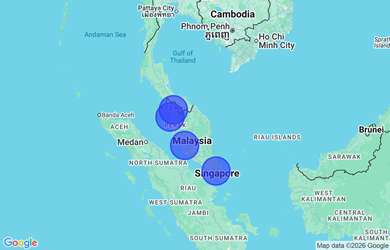
See what country regions are most suitable for the investment opportunity. All references to Kosovo shall be understood to be in the context of the Security Council Resolution 1244 (1999)
Urban
Penang
Penang is the nation's main medical devices manufacturing hub, with clusters including Bayan Lepas Free Zone, Bukit Minyak Park, Penang Science Park, Prai Industrial Estate and Batu Kawan Industrial Park. Penang has established supply-chains, a skilled workforce and proximity to major markets.
Urban
Selangor
Selangor has prominent medical devices manufacturing clusters including Selangor Bio Bay, iPark@Indahpura and Klang Valley, Port Klang Free Zone. Selangor has established supply-chains, a skilled workforce and proximity to major markets.
Urban
Johor
Johor has notable medical devices manufacturing clusters including iPark@Senai Airport City, Tanjung Langsat Industrial Complex, Southern Industrial and Logistics Clusters and Medini Iskandar. Johor has established supply-chains, a skilled workforce and proximity to major markets.
Rural
Kedah
Kedah is known for its manufacturing hub, Kulim Hi Tech Park, which has a zone dedicated to medical devices manufacturing. Kulim Hi Tech is well connected via established supply-chains, has a skilled and expanding workforce, and is in close proximity to domestic markets.
SECTOR SOURCES
1) Economic Planning Unit (EPU). 2021. Malaysia Voluntary National Review (VNR) 2021. https://www.epu.gov.my/sites/default/files/2021-07/Malaysia_Voluntary_National_Review_%28VNR%29_2021.pdf.
2) The Netherlands Ministry of Foreign Affairs. 2019. Market Insights Opportunities in the Life Science and Healthcare Industry (Malaysia). https://www.rvo.nl/sites/default/files/2022/03/Opportunities%20in%20the%20Life%20Science%20and%20Healthcare%20Industry%20Malaysia.pdf.
3) Ministry of Health. 2016. National Strategic Plan for Non-Communicable Diseases (NSP-NCD) 2016-2025. https://www.iccp-portal.org/system/files/plans/MYS_B3_NSP%20NCD%202016-2025%2C%20FINAL.pdf.
4) Economic Planning Unit (EPU), Prime Minister’s Department. 2021. Twelfth Malaysia Plan (12MP) 2021-2025 : A Prosperous, Inclusive, Sustainable Malaysia. https://rmke12.epu.gov.my/en.
5) Khazanah Research Institute. 2020. Social Inequalities and Health in Malaysia: The State of Households 2020 Part III. https://www.krinstitute.org/assets/contentMS/img/template/editor/KRI%20-%20Full%20Report%20-%20Social%20Inequalities%20and%20Health%20in%20Malaysia_latest.pdf.
6) Malaymail. 2022. PM: National Biotechnology Policy 2.0 focuses on food security, health, climate change. https://www.malaymail.com/news/malaysia/2022/09/12/pm-national-biotechnology-policy-20-focuses-on-food-security-health-climate-change/27856.
7) MIDA. 2021. Halal pharmaceuticals market set to grow to US$105 bln by 2024. https://www.mida.gov.my/mida-news/halal-pharmaceuticals-market-set-to-grow-to-us105-bln-by-2024-azmin/.
8) Ministry of Finance. 2022. Speech - Islamic Finance and the Development of Malaysia’s Halal Economy. https://www.mof.gov.my/portal/en/news/speech/islamic-finance-and-the-development-of-malaysia-s-halal-economy.
9) The Malaysian Reserve. 2022. Malaysia’s health system must adapt to evolving circumstances. https://themalaysianreserve.com/2022/07/16/malaysias-health-system-must-adapt-to-evolving-circumstances/.
10) UMediC Group Bhd. 2022. UMediC Group Berhad Financial Results for 4QFY22. https://disclosure.bursamalaysia.com/FileAccess/apbursaweb/download?id=220530&name=EA_FR_ATTACHMENTS.
11) UMedi C Group Bhd. 2022. UMedi C Group Bhd IPO Prospectus. https://disclosure.bursamalaysia.com/FileAccess/apbursaweb/download?id=218254&name=EA_DS_ATTACHMENTS.
12) Ministry of Health Malaysia. 2019. Key-Findings - National Health and Morbidity Survey 2019 Non-communicable diseases, healthcare demand, and health literacy. https://iptk.moh.gov.my/images/technical_report/2020/4_Infographic_Booklet_NHMS_2019_-_English.pdf.
13) Ministry of Health Malaysia and WHO. 2022. The annual health-care cost of cardiovascular diseases, diabetes and cancer in Malaysia exceeds RM 9.65 billion. https://www.who.int/malaysia/news/detail/09-08-2022-the-annual-health-care-cost-of-cardiovascular-diseases--diabetes-and-cancer-in-malaysia-exceeds-rm-9.65-billion.
14) Deal Street Asia. 2023. Quadria picks majority stake in Malaysian medical device firm Straits Orthopaedics. https://www.dealstreetasia.com/stories/quadria-straits-orthopaedics-341355.
15) Code Blue. 2021. Malaysia Out-Of-Pocket Health Spending More Than Triples In 15 Years. https://codeblue.galencentre.org/2021/12/07/malaysia-out-of-pocket-health-spending-more-than-triples-in-15-years/.
16) Code Blue. 2023. Poll: 95% Of Health Workers Say Malaysia’s Public Health Care System Is In Crisis Now. https://codeblue.galencentre.org/2023/01/30/poll-95-of-health-workers-say-malaysias-public-health-care-system-is-in-crisis-now/.
17) The Straits Times. 2021. Women dominate healthcare, yet their health issues are neglected. https://www.nst.com.my/opinion/columnists/2021/06/698772/women-dominate-healthcare-yet-their-health-issues-are-neglected.
18) The Edge Market. 2021. Stethoscope: Making the care economy equitable, sustainable and visible. https://www.dosm.gov.my/v1/uploads/files/5_Gallery/2_Media/4_Stats@media/1_General%20News/2021/11%20Nov/19%20Nov%20-%20General%202%20-%20the%20edge%20markets(1).pdf.
19) The Edge Malaysia. 2020. Top Glove ups capex allocation to RM10b from RM8b. https://www.theedgemarkets.com/article/top-glove-ups-capex-allocation-rm10b-rm8b.
20) The Edge Malaysia. 2023. Apex Healthcare's associate to divest entire stake in Straits Apex for RM1.06 billion. https://www.theedgemarkets.com/node/665096.
49) The Edge Markets. 2022. Full Budget 2023 Speech. https://maa.theedgemarkets.com/article/full-budget-2023-speech.
48) Ministry of Health. 2021. Strategic Framework of the Medical Programme 2021-2025. http://www.moh.gov.my/moh/resources/Pelan_Strategik_KKM.pdf.
IOA SOURCES
21) Fitch. 2022. Malaysia's Medical Device Market Remains Supported https://www.fitchsolutions.com/medical-devices/malaysias-medical-device-market-remains-supported-despite-near-term-headwinds-26-10-2022?fSWebArticleValidation=true&mkt_tok=NzMyLUNLSC03NjcAAAGKxWhgGEib6-jp7yDbaOine5-PGDwk3Z_jm0wVxtZ9WSTY6nccBT6Rw5DMsla_0u3qbDnJBPNYllohmMkGzMvtVGjDQOvuwrr-H-8l-Ct1JHb4S-dmQA
22) Statista. 2023. Medical Devices - Malaysia https://www.statista.com/outlook/hmo/medical-technology/medical-devices/malaysia
23) Medical Device Authority. 2014. How to Apply for Medical Device Registration under Medical Device Act 2012 (Act 737) https://portal.mda.gov.my/documents/guideline-documents/30-guidelines-on-medical-device-registration-under-act-737-mda-gl-md-01-june-2014-2nd-edition/file.html.
24) Stakeholder Consultation on March 23, 2023
25) The Sunday Mail. 2022. AMMI members plan to pump in RM1.4b for expansion https://www.thesundaily.my/business/ammi-members-plan-to-pump-in-rm14b-for-expansion-MD10204855.
26) AMMI. 2022. AMMI Annual Report 2022. https://ammi.com.my/wp-content/uploads/2023/02/AMMI-Annual-Report-2022.pdf.
27) Malaysian Investment Development Authority (MIDA). 2021. Malaysia’s Medical Devices Industry: Immense Growth Potential. https://www.mida.gov.my/wp-content/uploads/2020/07/Medical-Device-SIB.pdf.
28) Prime Minister Office. 2019. National Policy on Industry 4.0 (IndustryFWRD). https://www.pmo.gov.my/ms/2019/07/dasar-kebangsaan-mengenai-industri-4-0/.
29) Malaysian Investment Development Authority. 2020. Medical devices industry is Penang’s hidden gem. https://www.mida.gov.my/mida-news/medical-devices-industry-is-penangs-hidden-gem/
30) Ministry of Health Malaysia. 2020. The Impact of Noncommunicable Disaeses and their Risk Factors on Malaysia's Gross Domestic Product. https://www.moh.gov.my/index.php/database_stores/attach_download/554/64.
31) WHO. 2012. Local Production and Technology Transfer to Increase Access to Medical Devices - Addressing the barriers and challenges in low- and middle- income countries. https://www.who.int/publications/i/item/9789241504546.
32) Dominick J. Falcon. 2019. The Health Care Gap in Rural Malaysia. https://core.ac.uk/download/pdf/275906747.pdf.
33) WHO. 2019. Priority medical devices for management of cardiac diseases, stroke, and diabetes. https://www.who.int/news-room/feature-stories/detail/priority-medical-devices-for-management-of-cardiac-diseases-stroke-diabetes.
34) UN Department of Economic and Social Affairs. 2022. SDG Indicators Database. https://unstats.un.org/sdgs/dataportal/database.
36) WHO. 2017. National NCD Targets for Malaysia. https://extranet.who.int/ncdccs/Data/MYS_Malaysia_NCD_targets.pdf.
37) Government of Malaysia. 2012. Law of Malaysia, Act 738, Medical Device Authority Act 2012. https://tsquality.ch/wp-content/uploads/2020/02/malaysia-act-738-medical-device-authority-act-9-feb-2012-english.pdf.
38) Government of Malaysia. 2012. Law of Malaysia, Act 737, Medical Device Act 2012. https://www.myrubbercouncil.com/industrynews/pdf/Medical%20Device%20Act%20&%20Authority%20Act%202012%20(ACT%20737%20&%20738).pdf.
39) WHO. 2016. Towards improving access to medical devices through local production. https://www.who.int/publications/i/item/9789241510141.
40) MIDA. 2020. Guide on Medical Devices Industry Malaysia https://mida.gov.my/wp-content/uploads/2020/07/Guide-on-Medical-Devices-Industry-in-Malaysia_21072020.pdf.
41) Biotechnology Corporation. 2005. National Biotechnology Policy. https://www.bioeconomycorporation.my/national-biotech-policy/overview/#:~:text=THE%20NATIONAL%20BIOTECHNOLOGY%20POLICY%20(NBP,status%20of%20a%20developed%20nation.
42) Public Health Foundation of India and & Indian Medical Parliamentarians’ Forum. 2023. Equitable Access to Medical Devices. https://phfi.org/wp-content/uploads/2023/03/2023-Equitable-Access-to-Medical-Devices.pdf.
43) Irza Hanie Abu Samah, et al. 2020. The Impact of Healthcare Expenditure and Healthcare Sector Growth on CO2 Emission using Dynamic Panel Data System GMM Estimation Model during COVID 19 Crisis. https://www.econjournals.com/index.php/ijeep/article/view/9769/5447.
44) Medical Device Network. 2022. Healthier carbon emissions: reducing the environmental impact of healthcare. https://www.medicaldevice-network.com/comment/healthier-carbon-emissions-reducing-the-environmental-impact-of-healthcare/.
50) Zoominfo. 2023. ResMed (Malaysia) Sdn Bhd. https://www.zoominfo.com/c/resmed-malaysia-sdn-bhd/559786481
45) Bactiguard. 2020. Bactiguard makes its first acquisition by acquiring Vigilenz. https://www.bactiguard.com/media/press-releases/bactiguard-makes-its-first-acquisition-by-acquiring-vigilenz/
46) B Braun. 2022. Annual Report 2022. https://www.bbraun.com/en/about-us/company/facts-and-figures/annual-report-2022.html.
47) Business Today. 2022. Pioneering Malaysian-Made Medical Devices: B. Braun. https://www.businesstoday.com.my/2022/09/09/pioneering-malaysian-made-medical-devices-b-braun/.
51) Government of Malaysia. Economic & Fiscal Outlook and Federal Government Revenue Estimates 2023. 2023. https://budget.mof.gov.my/pdf/belanjawan2023/ekonomi-fiskal/EUFORE2023_270223.pdf
52) Government of Malaysia. Industry4WRD Policy. 2018. https://www.miti.gov.my/index.php/pages/view/4832
49) MIDA. 2020. Incentives for New Investment. https://www.mida.gov.my/wp-content/uploads/2020/07/Chapter-2-Incentives-for-New-Investments.pdf