
Explore the country and target locations of the investment opportunity.
Country
Philippines
Region
- Central Visayas
- Eastern Visayas
- Northern Mindanao
Situate the investment opportunity within sustainability focused sector, subsector and industry classifications.
Sector
Technology and Communications
Development need
Internet access especially in remote areas remain to be a challenge (1). As of June 2023, only 35% of the country is reported to have access to the internet (5). With heavy transition of education towards hybrid learning, lack of access to internet and technology significantly adds to learning losses.
This issue is even more prominent in geographically isolated and disadvantaged areas (GIDAs) which lack ICT infrastructure. For instance, in Bangsamoro region where most GIDA can be found, only 51% of elementary schools have access to internet, which is 14% lower than the national average (DepEd 2022) (6).
Further, in a study by T4 Education, around 72% of the teachers observed learning losses in poorer sections of the country primarily brought by poverty and the digital divide (7).
Policy priority
The Philippine Development Plan for 2023-2028 identifies technology and communications as one of the cross-cutting strategies that would support various sectors and goals. Specifically, the Plan requires the expansion of the ICT services and infrastructure in the country to improve education outcomes, support climate action, and enhance business and economic growth.
As such, the Department of Information and Communicaiton Technology is tasked to ensure the continuity and implementation of the National Broadband Plan to provide quality broadband throughout the country. (1)
Gender inequalities and marginalization issues
Connectivity infrastructure is expensive and resource intensive, thereby severely impacting low-income families who are unable to afford access to online portals for work and education. Such sudden shifts have led to higher drop-out rates, lower learning outcomes and even lower quality of potential income/livelihood, as more businesses shift online.
Moreover, within such changes in routine life, internet connectivity has become a necessity, in order to achieve highest productivity in school and in the work place. (2)
Investment opportunities
Government focuses on investment in technology and communications infrastructure to improve economic development.(1) This promotes entry of new investors with the support of policy initiatives for ownership, as well as public private partnership projects.
Key bottlenecks
Current conventional solutions to internet connectivity are typically capital intensive due to the geographical nature of a multiple island country. Undersea cables and tower sites can be expensive and the private industry might find little opportunity to recuperate such costs without government intervention.
Sub Sector
Internet Media and Services
Development need
Asian Development Bank and Thinking Machines Data Science, Inc. reveals a significant digital divide in the Philippines, with 83 percent of the population having adequate fixed broadband speeds and 70 percent having sufficient mobile internet access. (8) Urban areas, particularly Metro Manila, fare better than rural regions, emphasizing the disparity.
Wealthier cities enjoy much faster internet speeds than poorer counterparts, indicating an economic divide. Access is further limited for the "last mile" population, residing over 2 kilometers from major roads, with only 15 percent having suitable fixed broadband and 6.5 percent out of 9.4 million at the "last mile" having adequate mobile internet access. (9)
Geographical constraints and uneven infrastructure deployment contribute to these disparities, underscoring the urgent need for targeted efforts to bridge the digital gap and enhance internet accessibility, especially in remote and underserved areas.(10)
Industry
Internet Media and Services
Discover the investment opportunity and its corresponding business model.
Investment Opportunity Area
Low-cost Internet Services
In partnership with last-mile local governments
Business Model
Providing low-orbit satellite internet solutions to last mile communities which can then be used for education, communication and e-commerce. Business models can operate through providing short term loans to local governments for the internet as well as working in partnership with e-commerce solutions and generating proceeds through small service fees.
Installation of Starlink Internet improved the internet speed in Sta. Ana National High School in Barangay Sta. Ana, Pandan, and Antique, mainly through local funding, which is situated in one of the isolated barangays in the province. Before the installation, the school had a 20 Mbps WiFi connection with a slow download speed of 6.93 Mbps. After installing Starlink internet, initial speed tests demonstrated significant improvements, with download speeds ranging from 217.3 Mbps to 324.97 Mbps, and upload speeds increasing from 6.49 Mbps to 28.7 Mbps.
Remote communities in need of high-speed internet may take advantage of the satellite internet service provided by Starlink and have its cost shared among users. The cost of Starlink is around USD500 for each satellite dish and a monthly cost of around USD100 to USD200 while providing up to 200 Megabits per second (Mbps) of low latency internet service. (22)2
Kacific Internet: Kacific provides services from Kacific1, a Ka-band satellite that uses concentrated spot beams—from Batanes to Palawan and even all the way to Sulu which allows very effective geographic targeting, especially in mountainous areas. Kacific is being supported by companies such as SKY Perfect JSAT, The Boeing Company, and Marsh and Mclennan (22)
Non-Geostationary Satellite Constellations: The Philippine Space Agency (PhilSA) launched the Introducing Non-Geostationary Satellite Constellations Test Deployments to Improve Internet Service, or INCENTIVISE, project in 2020, supported by USAID. The project aims to determine the effectiveness of the emerging satellite internet technologies in the country. (23)
Learn about the investment opportunity’s business metrics and market risks.
Market Size and Environment
Market Size (USD)
> USD 1 billion
CAGR
< 5%
Critical IOA Unit
Internet penetration was 73.1% in 2023; 30 million Filipinos still lack internet connectivity. (24)
Monthly spending on internet for Philippine rural households is over USD 250 million (34) (35) (36) Total revenue of telecom services is estimated to have a CAGR of 3–5% from 2021–2026 (25) The target market, i.e., last mile or segmented areas of the country, is fairly small, yet critical in terms of the required development.
Based on the internet penetration rate, only 73.1% of the population uses internet regularly. The difference between internet penetration rate and social media usage is merely less than a 1% — the latter at 72.5%. It can, thus, be assumed that internet connectivity is due to a lack of capability rather than personal choice. (24)
While the annual revenue of telecom services is considerably high each year, the CAGR itself seems to be fairly low. These numbers can generally be used to estimate the market size of last-mile-IT, given that the three largest ISPs of the country, all primarily deal in telecommunications. (25) (26)
Indicative Return
IRR
10% - 15%
ROI
5% - 10%
GPM
> 25%
Philippine policies on emerging internet technologies currently enforce a max ROI of 12%. (28) In 2021, ISP Converge metrics indicated an estimated gross profit margin of 25–30% (28)
ISPs are required to connect to telco facilities to render services; in turn, telecommunication is considered a public utility. All public utilities are regulated to ensure a maximum ROI of 12%, with any excess plowed back into capital investment and systems improvement. (27)
Gross profit margin is estimated based on metrics of ISP company Converge ICT. In 2021, Converge presented a net income of PHP 7.16 billion and consolidated revenue of around USD 470 million. In particular, this success was credited to expansion in underserved Visayas and Mindanao regions. (28)
Investment Timeframe
Timeframe
Short Term (0–5 years)
~USD 5 B in annual revenue is required to breakeven Starlink's annual costs; annual USD 30 B is required to recoup initial investment. 2023 annual revenue projections are USD 15 B. Thus, the investment timeframe is relatively short; Starlink in the Philippines may also follow a similar pattern. (30) (31)
Ticket Size
Average Ticket Size (USD)
> USD 10 million
Market Risks & Scale Obstacles
Business - Business Model Unproven
The satellite internet industry is capital-intensive, and there will be a need to raise a significant amount of money to finance its operations.
Capital - CapEx Intensive
A business case on the installation of fiber optic internet services in rural areas indicates intensive CapEx requirements (33)
Read about impact metrics and social and environmental risks of the investment opportunity.
Sustainable Development Need
Compared to many neighboring countries which already achieved universal access to internet, the Philippines has low internet access rate of 64.2 percent at the elementary school level, 60.4 percent at the junior high school level, and 67.3 percent at the senior high school level. (13) The lack of internet connectivity creates barriers for education, especially with the demand for online learning.
The lack of access to digital connectivity, especially in remote areas, exacerbates poverty and income inequality mainly as it limits opportunities for the people to access training and other digital services necessary for economic growth such as ecommerce.
Inclusive digital connectivity is vital for the growth of the Philippine economy, where the digital economy contributes 10% to the country's GDP and employs 13% of the total workforce. MSMEs, including SEs account for over 90% of total employment, and the agricultural sector—where poverty is most prevalent—employs two-thirds of the workforce.
Gender & Marginalisation
Hard to reach areas are often neglected in terms of internet access provision due to higher cost of set-up and perspectives of low returns on investment. Women and youth especially in geographically isolated and disadvantaged areas are digitally left behind, wherein lack of internet access limits their activities to traditional mode, hampering their economic growth.
Expected Development Outcome
Internet connectivity allows learners to access e-learning platforms and digital resources. A more extensive range of learning materials and resources can improve the educational outcomes of students. Increasing digital connectivity will spur employment growth and enhance financial resilience, through access to more opportunities including e-commerce within the identified locations and communities
Gender & Marginalisation
Promotes equity by diminishing the gap between leading and lagging regions in terms of internet access. Internet connectivity could lead to Increased access to education and healthcare, which may both positively affect gender inequality and marginalisation issues.
By increasing digital inclusiveness and digital literacy, gender and socio-economic gaps in remote areas will be addressed, and women in these areas will be empowered to participate in and benefit from the digital transformation.
Primary SDGs addressed
4 - Quality Education
4.4.1 Proportion of youth and adults with information and communications technology (ICT) skills, by type of skill
Current Value
Due to the required shift brought by the pandemic, latest data shows an 84% access of adults to the internet, however it is still very limited in capacity for low-income, limited infrastructure communities
Target Value
Target was set for 100% by 2030, and key driver for this are the ICT infrastructure and solutions for last-mile communities
1 - No Poverty
1.2.1 Proportion of population living below the national poverty line, by sex and age
Current Value
Poverty rate in the Philippines as of 2021 is at 18.1%
Target Value
Target is to reduce poverty rate to 10% by 2030
17 - Partnerships For the Goals
17.8.1 Proportion of individuals using the Internet
Current Value
As of 2019, 75.4% Filipinos have access to internet
Target Value
By 2030, the target is for 100% of Filipinos to have access to internet
Secondary SDGs addressed
5 - Gender Equality
10 - Reduced Inequalities
8 - Decent Work and Economic Growth
Directly impacted stakeholders
People
Learner outcomes can improve with more learning resources that can be accessed with improved connectivity. People in the remote communities will have more opportunities for economic activities, including online transactions and businesses.
Gender inequality and/or marginalization
The IOA addresses equity concerns of last-mile communities as they are often marginalized in terms of technological development. Women in the communities will also gain more access to economic opportunities such as but not limited to online selling.
Public sector
Digitalization of the education system in last mile regions would help school-based national programs and initiatives better reach students from far-flung communities. Provision of government services through online platforms can also become feasible with increased connectivity.
Indirectly impacted stakeholders
People
Better learning resources improves the capability of students to earn more upon having a degree, this can translate to better quality of life both for the students as well as their families
Corporates
Improved quality of education benefits corporations as they can hire better quaity workforce, thereby improving the quality of their output.
Public sector
Government usually has to bear the responisibility of development of last mile communities due to higher set-up cost and lower returns compared to that in urban or neighbouring areas that are atrractive for private investors. Hence, this IOA can support government initiatives in promoting equitable growth.
Gender inequality and/or marginalization
Access to the internet is a crucial way for women and girls to learn, enter markets and earn income, and access critical information and services. This is particularly true today in the context of the global COVID-19 pandemic.
Outcome Risks
Being connected to the internet of things may also provide learners access to undesirable or age-inappropriate content or themes Not knowing how to utilize the internet and media illiteracy may lead to further divide among the Filipinos, resulting in more disinformation and misinformation challenges.
With the prevalence of online scammers, new users especially in remote areas might be vulnerable. Digital literacy is required.
Impact Risks
Last mile schools will continue to be deprived of internet connection that can further support learning
Impact Classification
C—Contribute to Solutions
What
Providing internet connectivity for rural communities, especially last mile areas
Who
At least 8.8 million Filipinos residing in last mile areas that are often last to receive benefits from the government and other development partners
Risk
Slow approvals with the specified local government units and/or delays caused by coordination layers
Contribution
Digital public infrastructures that will increase current penetration at 73.1% that will support the learning of students and businesses, especially MSMEs
How Much
Contribute in reducing the number of Filipinos, currently around 30 million, without access to internet.
Impact Thesis
Increased internet connectivity for communities in remote areas to improve social and economic services including education of young people
Explore policy, regulatory and financial factors relevant for the investment opportunity.
Policy Environment
MATATAG Agenda: DepEd's overarching 4 point agenda to improving the country's education system. The 2nd point focuses on infrastructure: "Take steps to accelerate the delivery of basic education facilities and services. " (16)
DepEd Order No. 46, s. 2011: Provides guidelines on the implementation of the DepEd Internet Connectivity Project which deploys ICT equipment to secondary schools (15)
Digital Rise Program: A holistic framework that encompasses increasing technological access and availability as well as capacity building of teachers and learners with regards to ICT use (16)
RA 11927: National Digital Workforce Competitiveness Act, a law that aims to ensure that all Filipino workers have access to and are provided with digital skills and competencies that are at par with global standards (30)
DTI's E-Commerce Roadmap which aims to prepare the country's infrastructure, institutions, systems, and people to fully embrace an economy that operates in the digital universe, we will be able to see the growth of the e-Commerce sector (31)
Financial Environment
RA 11534: Corporate Recovery and Tax Incentives for Enterprises Act (CREATE): Defines the tax incentives for registered business enterprises investing in the Philippines including a tax of only one percent (1%) on their taxable income for businesses that are for educational purposes. (20)
Fiscal incentives: Philippines allow 100% foreign ownership for internet and telecommunication services.
Regulatory Environment
RA 7925: Public Telecommunications Policy Act: Establishes the National Telecommunications Commission which facilitates and manages qualified service providers in the Philippines. Section 5 highlight its responsibilities. (17)
RA 11659: Amending the Public Service Act: Allows 100% foreign ownership to telecommunications (18)
DepEd Order No. 78, s. 2010: Provides guidelines on the implementation of the DepEd Computerization Program which provides public schools with modern technology (19)
Discover examples of public and private stakeholders active in this investment opportunity that were identified through secondary research and consultations.
Private Sector
PLDT Inc. and Smart Communications, Globe Telecom, Now Corporation, AC Infrastructure Holdings Corporation, ISOC Infrastructure, Inc. KKR & Co. Inc., CVC Capital Partners, Sequoia Capital, Actis LLP, Northstar Group
Government
Department of Education; Department of Information and Communications Technology
Multilaterals
Asian Development Bank
Public-Private Partnership
Converge ICT Solutions, Inc; Pacific Kable Net
See what country regions are most suitable for the investment opportunity. All references to Kosovo shall be understood to be in the context of the Security Council Resolution 1244 (1999)
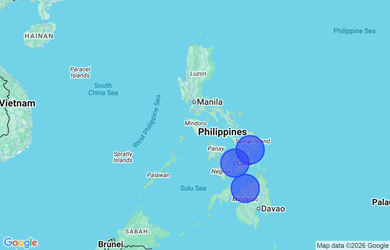
Semi-urban
Central Visayas
One of the bottom regions in terms of families who used internet access (15)
Rural
Eastern Visayas
One of the regions with low wealth and low internet speeds (31)
Rural
Northern Mindanao
One of the regions with low wealth and low internet speeds (31)
1) NEDA. Philippine Development Plan 2023 to 2028 https://pdp.neda.gov.ph/philippine-development-plan-2023-2028/
2) INFF. Development Finance Assessment 2022 https://medium.com/@jp.inff.ph/2022-development-finance-assessment-shows-ph-financing-landscape-in-the-time-of-covid-19-and-the-68dcc39bcc19
3) Data on Digital Infrastructure and Access to the Internet in the Philippines (2023): https://datareportal.com/reports/digital-2023-philippines
4) NY Times: As schools closed, Covid-19 deepens the Philippines' crisis on education: https://www.nytimes.com/2021/09/13/world/asia/philippines-students-remote-covid.html
5) The Philippine Star (2023) https://www.philstar.com/headlines/2023/06/14/2273740/dict-65-philippines-not-connected-internet
6) Konrad Adenauer Stiftung (2022) https://kas-japan.or.jp/wp-content/uploads/2022/11/Essay_Addressing-Challenges-in-EdTech.pdf
7) Philippine Daily Inquirer (2021) https://globalnation.inquirer.net/199341/intl-study-notes-worst-learning-loss-among-poorest-ph-kids
8) Data Portal (2023) https://datareportal.com/reports/digital-2023-philippines#:~:text=The%20Philippines's%20internet%20penetration%20rate,percent)%20between%202022%20and%202023. "
9) Statita (2023) https://www.statista.com/statistics/1125436/philippines-e-commerce-spend-growth-by-category/ 10) Philippine Daily Inquirer (2021) https://business.inquirer.net/318223/mapping-digital-poverty-in-ph
11) Research Gate (2021) https://www.researchgate.net/publication/315675551_A_Study_on_The_Internet_Connectivity_in_The_Philippines#:~:text=Comparing%20the%20current%20global%20IT,inclusive%20information%20society%20(Salac%20and
12) Philippine Institute for Development Studies (2020) https://pids.gov.ph/details/pids-study-regulatory-bottlenecks-hinder-dev-t-of-ict-sector
13) Philippine Institute of Development Studies (2022). https://pidswebs.pids.gov.ph/CDN/PUBLICATIONS/pidsdps2210.pdf
14) Duterte (2023) https://ovp.gov.ph/post/basic-education-report-2023-speech
15) Department of Education (2011) https://www.deped.gov.ph/2011/06/01/do-46-s-2011-revised-guidelines-on-the-implementation-of-the-deped-internet-connectivity-project-dicp/
16) Department of Education. https://authdocs.deped.gov.ph/wp-content/uploads/2021/09/FINAL-00-Introduction-to-DepEds-Digital-Rise-Program-0921019-20210903.pdf
17) RA 7925. https://lawphil.net/statutes/repacts/ra1995/ra_7925_1995.html
18) RA 11659. https://www.officialgazette.gov.ph/2022/03/21/republic-act-no-11659/
19) Department of Education (2011) https://www.deped.gov.ph/2010/06/10/do-78-s-2010-guidelines-on-the-implementation-of-the-deped-computerization-program-dcp/
20) RA11534 https://www.officialgazette.gov.ph/2021/03/26/republic-act-no-11534/
21) Philippine Statistics Authority (2021). https://psa.gov.ph/sites/default/files/%5BONSrev-cleared%5D%202020%20APIS%20Final%20Report_rev1%20wo%20comments_ONSF3_signed.pdf
22) Dela Cruz (2022). https://www.pna.gov.ph/articles/1179386
23) PhilSA. Introducing Non-Geostationary Satellite Constellations Test Deployments to Improve Internet Service (INCENTIVISE). https://philsa.gov.ph/incentivise/
24) Digital 2023: The Philippines. (2023, February 9). https://datareportal.com/reports/digital-2023-philippines
25) GlobalData (2022, November 17). https://www.globaldata.com/store/report/philippines-telecom-operators-ma/rket-analysis
26) Orgaz, A. S. (2023, 6 January). Why Philippines internet usage in 2023 is at an all time high. Ding. https://www.ding.com/community/internet-usage-in-philippines-2022
27) From Analog to Digital: Philippine Policy and Emergong Technology (2018, October). The Asia Foundation. https://asiafoundation.org/wp-content/uploads/2018/10/From-Analog-to-Digital_Philippine-Policy-and-Emerging-Internet-Technologies.pdf
28) Esmael, L. (2022, May 17). Converge 2021 profit swells to 7.16 billion. https://www.cnnphilippines.com/business/2022/3/17/Converge-2021-profit-swells-to--7.16B.html
29) Free Wifi For All (2023) https://www.undp.org/philippines/blog/free-wi-fi-enabling-inclusive-and-accessible-internet-all
30) RA 11927 https://lawphil.net/statutes/repacts/ra2022/ra_11927_2022.html
31) DTI's Ecommerce Roadmap https://ecommerce.dti.gov.ph/madali/images/eCommerce_Philippines_Roadmap_2022.pdf