
Explore the country and target locations of the investment opportunity.
Country
Philippines
Region
- MIMAROPA Region
- Western Visayas
Situate the investment opportunity within sustainability focused sector, subsector and industry classifications.
Sector
Renewable Resources and Alternative Energy
Development need
Philippines consistently has the highest electricity prices compared to peer ASEAN countries. (1) Coupled with this, there are grid challenges that create congestions, uneven power distribution and stranded electricity that cause power interruptions in some congested areas, but also wasted energy produced because of power production.)
As of 2021, 5 percent of Filipino households still live without electricity, bereft of the benefits including increased welfare and productivity, education, and improved indoor air quality. Majority of these un-energized households are located in Abra, Albay, Masbate, Basilan, Sulu, Tawi-Tawi, and Lanao Del Sur and are being catered by ailing and problematic electric cooperatives (ECs). (1)
Policy priority
The Philippine Development Plan proposed to revise the implementation rules and regulations of the Renewable Energy Act of 2008. Additionally, On 15 November 2022, Department of Justice Circular No. 2022-11-0034 was issued allowing 100 percent foreign ownership of RE projects where applicable.
This move is aimed at achieving the government’s target to increase the share of RE in the power generation mix to 35% by 2030 and 50% by 2040. The government have committed to reduce its emission levels by 75% in 2030, with renewable energy as the main thrust to transition to a low emission economy. (1)
Gender inequalities and marginalization issues
While no gender disparity has been observed in terms of access to electricity. Last mile areas and poor families mainly comprise the remaining population with no access to electricity. Provinces such as Abra, Albay, Masbate, Basilan, Sulu, Tawi-Tawi, and Lanao Del Sur also consist significant population of low income families.
Investment opportunities
Multiple market support have seen to push for renewable energy. Conversations with the Banking industry leaders showed that projects related to RE can be tagged green without much difficulty. With the country's decarbonization, support for green investments are highly preferred by both national and local governments; some have done scoping in their area. (1)
Key bottlenecks
The World Bank in its report: Philippine Economic Update June 2021 pinpoint that the main challenges within the industry are long time frames which creates slower budget execution rates. Coupled with emerging policies, there's a significant need to improve the capacity of local government workers to effectively mobilize capital to create public-private partnerships.
Sub Sector
Alternative Energy
Development need
While data from the Philippine Statistics Authority shows that 95% of families in the Philippines already have access to electricity.The Philippine Development Plan of 2023 to 2028 recognized Philippines still has multiple significant challenges in providing access to electricity.
Multiple areas are still not connected to the main grid where concesionaires are mainly operating small off grid power generators, mostly diesel based. Additionally, there are challenges in depletion of current sources of energy. (1) As such, the Philippines envisions tripling renewable energy capacity by 2030, requiring an additional 14,900 MW, including 8,700 MW of hydropower. (5)
Policy priority
The DOE's Solar PV Mainstreaming (PVM), which aims to solve unpowered and widely distributed remote homes that are far from ECs' distribution networks, employed the fee-for-service business model. The DOE's Access to Sustainable Energy Program (ASEP) offered policy and strategy assistance, developed planning tools that assist in putting investment components into practice.
When it comes to resolving administrative and regulatory difficulties that prevent the government from achieving its electrification goals, ASEP works with the DOE and other energy sector stakeholders. The government's goal of 100% electrification is supported by the QTP, or Qualified Third Party, which also creates an atmosphere more favorable to private sector engagement.
Investment opportunities
With the National Determined Contribution to reduce emission by 75% in 2030, the government through the Philippine Energy Expenditure plan 2020-2040, the Phlippine Development Plan 2023 - 2028 and local governments Investor forums (QC and Capiz) has shown great support in exploration and building more renewable energy production around the country. (1)
Given the need to achieve 8,700 MW of hydropower, small hydropower plants totaling around 250 MW are already listed as indicative power projects (5)
Gender inequalities and marginalization issues
Majority of the remaining percentages of no access to electricty involved families in remote areas, which hugely affects women and children. Women are challenged to perform their dedicated roles, and children in school find it difficult to undertake studies at home due to lack of electricity access.
There are 12,00 sitios which still has no access to decent electricity, with indegenous people and low-income household comprising majority of the population (5)
Key bottlenecks
Given the nature of energy generation, multiple delay points are currently experienced. Local government support is crucial to the success of such projects, and those that do not get support are further delayed. Specifically for hydropower, approval of powerplant development undergo a tedious local and national approval process that may cause significant delays. (21)
Discover the investment opportunity and its corresponding business model.
Investment Opportunity Area
Hydropower Infrastructure
Business Model
Build and Operate Renewable Energy Infrastructure, particularly hydropower, in partnership with local governments to cater to remote and underserved areas.
San Roque Multi-purpose Hydroelectric Powerplant is a Build-Transfer-and-Operate scheme under the Public-Private Partnership (PPP) Program of the National Government. The project is located in San Manuel and San Nicolas, Pangasinan. The project is under the implementation of the National Power Corporation (NPC) and the private sector partner is the consortium of Marubeni Corporation, Sithe Philippines Holdings, Inc., and Italian-Thai Development Public Company Limited.
The Bakun A/B and C Hydroelectric Power Plant is a 70 MW run-off-river development, located in the southern part of the Central Cordillera Mountains along the major tributary of the Amburayan River. The project cost was USD 83 Million and it was implemented under the Build-Operate-Transfer (BOT) scheme. The project is now operational and is owned and operated by Luzon Hydro Corporation.
Ifugao Ambangal mini hydro power plant in the Philippines is a 200 kW run-of-the-river project that provides clean, renewable electricity to the agricultural community of Kiangan, Ifugao and improves the residents’ livelihood by supporting their rice farming practices. The plant generates on average 1,200 MWh per year of reliable and clean electricity. The plant’s power sales to the local Ifugao Electric Cooperative (IFELCO), secure around 70,000 USD annually for the conservation fund
Learn about the investment opportunity’s business metrics and market risks.
Market Size and Environment
Market Size (USD)
> USD 1 billion
Critical IOA Unit
35% share in power generation
The 2020-2040 Philippines Energy Plan shows $130–140B investment for a Clean Energy Scenario, including hydropower (7) The 2022 Philippine National Renewable Energy Program aims to achieve 35% share of renewable energy in the country by 2030. This goal shall rise to 50% share by 2040.
To achieve the Clean Energy Scenario for the entirety of the 2020–2040 Philippine Energy Plan, an investment of around USD 138 Billion is required in renewable technology. (7) The report by Mordor Intelligence highlights several forecasts for the Philippine renewable energy market for 2023–2028, and classifies Philippine Renewable Energy into four types: Solar, Wind, Hydro, and Others. (8)
Indicative Return
ROI
10% - 15%
Feasibiility Study of Hydropower Project shows an ROI of 12-20% for small sizes (100-250kW) depending on type (new build/existing site) (11) A Feasibility Study by JICA on WAWA hydropower project in Rizal shows an IRR of 12.7%. (9) A similar case study for a hydropower project in South Cotabato shows an ROI of 12%.
According to an article by BusinessWorld, the 2019 and 2020 gross profit margin of the National Grid Corporation of the Philippines was 66% and 68% respectively. In comparison, they indicate that even Meralco's profit margin was 17% and 16% over those two same years. (12)
Investment Timeframe
Timeframe
Medium Term (5–10 years)
This is dependent on the technology used for the energy infrastructure. According to studies and the Department of Energy, for hydropower, at least 7 years is needed to generate return (10)
Ticket Size
Average Ticket Size (USD)
USD 1 million - USD 10 million
Market Risks & Scale Obstacles
Capital - CapEx Intensive
Projects of this nature require large capital expenditures, as they require purchase of high-value items including land
Additional risks that may be encountered, include: technology Obsolescence Risk, Merchant Risk, Curtailment Risk, and Delays due to government protocols or implementation risk (9)
Read about impact metrics and social and environmental risks of the investment opportunity.
Sustainable Development Need
Malampaya's natural gas fields will be depleted by 2027, leading to importing liquefied natural gas (LNG). Imported gas costs and volatile supplies result in higher power prices. (14)
There are reports of electricity shortage, with 12 predicted yellow alerts in Luzon from March to November 2023, and a proposed P12.536 billion budget cut may result in power outages in 800k+ homes across the country, primarily in Luzon, Visayas, and Mindanao.
Electricity prices in the Philippines remain among the highest in Southeast Asia. In December 2021, the Philippines’ residential rate was $0.16/kWh, second to Singapore ($0.18/kWh) and higher than Thailand ($0.10/kWh), Indonesia ($0.10/kWh), and Malaysia ($0.05/kWh). (15)
Gender & Marginalisation
Energy access affects women's life, education, and employment in developing nations. The digital divide excludes poor women from the digital economy and learning, which need electricity. The health and safety of women and girls are at risk if they are not able to access energy due to the care work burdens they are expected to do such as cooking, laundry, cleaning, etc.
Inclusive economic growth is the single most effective means of reducing poverty and boosting prosperity. Yet most economic activity is impossible without adequate, reliable, and competitively priced modern energy. 1 in 7 (or 1.1 billion people) don’t have access to electricity. (18)
Expected Development Outcome
The 2021 data shows an increase in population with access to electricity to 95.4%, up from 90.7% in 2016. The administration's priority is to provide electrification to the entire population, including isolated and disadvantaged areas (1).
The entry of more players in renewable energy, such as hydropower, will result to increased generation capacity, which consequently contributes to cost reduction in electricity (1).
Gender & Marginalisation
The outcomes are to increase energy availability for rural households, narrow the gender gap in energy employment, ensure safe working conditions for women in the sector, and promote women's participation as stakeholders in energy development. Increase in green jobs generation and just transition for workers shifting from coal/gas industries to renewable energy.
Primary SDGs addressed
7 - Affordable and Clean Energy
7.1.1 Proportion of population with access to electricity
7.1.2 Proportion of population with primary reliance on clean fuels and technology
Current Value
Latest data shows 95% access to electricity, however security of access is a significant issue even for those with access to electricity. Power rationing continues across the country. Additionally, access to electricity in regional standpoint varies significantly.
Latest data from the Philippines Statistics office shows 48.9 percent. Renewable energy contribution to the main grid however remains less than 20%. Most offgrid solutions are also diesel driven.
Target Value
The Philippines aim to have 100% of its population to have access to electricity
The Philippines does not have a target for this SDG however, the Department of Energy expressed support and desire to increase the share of renewable energy within the decade to 40%
Secondary SDGs addressed
8 - Decent Work and Economic Growth
13 - Climate Action
11 - Sustainable Cities and Communities
5 - Gender Equality
Directly impacted stakeholders
People
All households, especially in rural and geographically isolated and disadvantaged areas, will have affordable access to reliable electricity.
Gender inequality and/or marginalization
Access to energy allows women, who are generally in charge of household management, to maximize its use and benefits for learning purposes of their children, for income-generating activities, to improve comfort and convenience at home, and, generally, to improve their families’ circumstances (16)
Corporates
Developers design, construct, and operate the system. Reliable electricity benefits tourism, the economy, healthcare, education, and job opportunities, enhancing local economic well-being.
Planet
Increasing energy mix from renewable energy reduces emissions.
Public sector
Government provides permits and monitors progress of the project.
Indirectly impacted stakeholders
People
Greater investment in renewable or clean energy, such as hydropower, will help generate some 350,177 jobs if all capacity in the current pipeline is successfully deployed by 2030. (13)
Gender inequality and/or marginalization
The lives of people from all sectors will be more convenient with the availability of clean and affordable energy. Maximization of accessible energy allows disadvantaged communities to invest their time in education, better health and income-generating activities.
Planet
Access to clean energy, such as hydropower, will lessen the use of fossil fuels. Clean energy technologies support ecosystem health by reducing air pollution and water and soil contamination. Furthermore, hydropower also reduces risk of flooding, which is common in the Philippines as it experiences at least 20 typhoons per year.
Corporates
Energy powers agriculture and affects costs and transportation. Environmental impacts affect tourism. Local communities are affected by public health, environment, and economy. Academia studies energy technology, analyzes impacts, and shapes policy.
Public sector
Improving access to electricity can lead to economic growth, increased job opportunities, and improved quality of life for the community. This can also lead to increased tax revenues and reduced reliance on government subsidies.
Outcome Risks
Financial risks: cost overruns due to delays, regulatory hurdles, and increased material costs; limited revenue generation from insufficient demand or contract challenges. Environmental risks: ecological impact through land clearance and construction, greenhouse gas emissions aggravate climate change, and water usage and pollution affecting local environments.
Social risks: displacement and land rights issues, health and safety concerns for workers and communities, limited community participation leading to resentment, distrust, and hampered project success Governance and policy risks: regulatory uncertainty impacting viability, corruption undermining effectiveness, and lack of institutional capacity hindering long-term sustainability
Gender inequality/marginalization risks: unequal access for women, limited participation in decision-making, and inadequate consideration of gender-specific safety concerns, perpetuating disparities
Impact Risks
Governance and policy impact risks: corruption and lack of transparency impacting fund allocation, regulatory instability, and insufficient accountability leading to community distrust Environmental impact risks: increased greenhouse gas emissions, ecological disruption, water stress due to construction, land clearance, and high water resource requirements
Social and community impact risks include potential relocation and problems with land rights, diseases, and cultural disruption causing social unrest, negative health effects Economic impact risks: increased energy costs, job-skill mismatch affecting job creation, economic dependence on a single sector, possibly making poverty and vulnerability to economic shocks worse
Gender inequality/marginalization risks: access disparities, exclusion from decision-making processes, inadequate consideration of gender-specific safety concerns, increasing women's vulnerability
Impact Classification
C—Contribute to Solutions
What
Providing a more reliable and affordable source of energy through hydropower to underserved areas which also reduce greenhouse gas emissions and improve air quality
Who
For people in remote communities, jobs will be created and air quality will be improved. The hydropower infrastructure can help reduce energy costs, which is a burden for low-income families.
Risk
Impact risks can include vulnerability to changes in energy prices and possible displacement from the project site.
Contribution
Hydropower infrastructure will contribute to the overall 35% target for renewable energy source by 2030 and can reduce greenhouse gas emissions, improve air quality, and create jobs for the community
How Much
Increase hydropower generation which is currently only 17% of the country's hydropower potential
Impact Thesis
Reducing greenhouse gas emissions while improving air quality, energy affordability and creating green jobs through hydropower investments.
Explore policy, regulatory and financial factors relevant for the investment opportunity.
Policy Environment
Executive Order 30, Series of 2017 mandates the establishment of the Energy Investment Coordinating Council (EICC) to oversee and facilitate energy-related investments, including hydropower, in the country. The aim is to ensure a more efficient and streamlined process for energy projects, from planning to implementation.
The entire RA 11032 or Ease of Doing Business and Efficient Government Service Delivery Act is a law in the Philippines that aims to simplify business procedures and promote efficient government services to attract more investors and boost the country's economy.
The entire RA 11234 or the Energy Virtual One-Stop Shop (EVOSS) Act aims to streamline the permitting process for energy projects in the Philippines by creating an online platform that allows for easier coordination between government agencies involved in the approval process.
The entire Administrative Order (AO) 23 aims to streamline government processes and reduce bureaucratic red tape by eliminating unnecessary requirements and redundant procedures in government agencies. It aims to promote ease of doing business in the Philippines.
JMC 2020-01: (1.9) The DILG, in support of the DOE, enjoins all LGUs to implement the directive of the President Duterte on the implementation of energy projects through the issuance of this policy.
The Philippine Energy Plan (PEP) 2020-2040 is the second comprehensive energy blueprint supporting the government’s long-term vision known as Ambisyon Natin 2040 which reiterates the energy sector’s goal to chart a transformative direction towards attaining a clean energy future.
Financial Environment
RA 9513 or the Renewable Energy Act of 2008, Chapter III, Section 9: Green Energy Option - provides end-users the option to choose RE resources as their sources of energy
The Net Metering Program allows consumers who generate their own electricity, typically through solar panels or wind turbines, to sell excess power back to the grid and receive credits on their bills for the power they provide (2).
Tax credit on Domestic Capital equipment equivalent to 100% of the value of the VAT and custom duties for the local purchase of machinery, equipment, materials and parts; Special Realty Tax rates on equipment and machinery not exceeding 2.5% of original cost
Foreign direct investments is limited to 40% maximum ownership for this sector.
Regulatory Environment
The entire Electric Power Industry Reform Act (EPIRA) of 2001 aims to restructure the power industry in the Philippines by promoting competition, privatizing government-owned utilities, and creating a more efficient and reliable power supply system.
Department Circular 2018-02-2003: Policy for the Competitive Selection Process in the Procurement by the Distribution Utilities of Power Supply Agreement for the Captive Market
Department Circular No. 2018-07-0019: Promulgating the Rules and Guidelines Governing the Establishment of the Green Energy Option Program Pursuant to the Renewable Energy Act of 2008
RA 9513 or the Renewable Energy Act of 2008, Chapter III, Section 6: Renewable Portfolio Standard - All stakeholders in the electric power industry shall contribute to the growth of the renewable energy industry
Department Circular No 2018-08-0024: Promulgating the Rules and Guidelines Governing the Establishment of the Renewable Portfolio Standards for Off-Grid Areas
Discover examples of public and private stakeholders active in this investment opportunity that were identified through secondary research and consultations.
Private Sector
AC Energy, Iberdola Philippines, Windkraft Group, First Gen Energy Solutions, Philippine Geothermal Production Company, Inc., Bacman Geothermal Inc. San Roque Power, SMC Global Power, CBK Power, JBD Water Power, Belisama Hydropower, Tokyo Electric Power Company ResponsAbility Investments, Aboitiz Equity Ventures, BDO Unibank, Inc.
Government
Department of Energy; Public-Private Partnership Center; National Power Corporation; LGUs from Roxas town, Palawan, San Luis town, Aurora and San Carlos City, Negros Occidental
Multilaterals
Asian Development Bank, World Bank, Asian Investment Infrastructure Bank (AIIB), The Japan Bank for International Cooperation (JBIC), Japan International Cooperation Agency, World Wide Fund for Nature (WWF) Philippines
Non-Profit
Okra Solar, Institute for Climate and Sustainable Cities, Protect VIP Network, Center for Energy, Equality and Development (CEED), The Philippine Movement for Climate Justice, Bangon Kabuhayan
Public-Private Partnership
Luzon Hydro Corporation; Mitsui Engineering & Shipbuilding, Ltd; Burmeister & Wain Scandinavian Contractor; Consortium of Mitsui & Company Limited
See what country regions are most suitable for the investment opportunity. All references to Kosovo shall be understood to be in the context of the Security Council Resolution 1244 (1999)
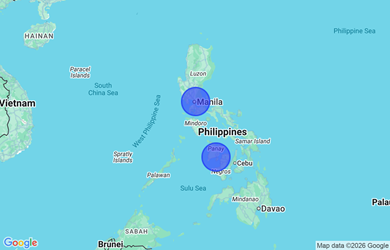
Rural
MIMAROPA Region
A proposed project by the Tourism Infrastructure and Enterprise Zone Authority (TIEZA); supported by the government, based on the Public-Private Partnership Center.
Semi-urban
Western Visayas
Capiz, during their investor forum 2023 presented multiple protential renewable energy sites, including hydropower, within the region they are keen to explore
1) NEDA. Philippine Development Plan 2023 to 2028 https://pdp.neda.gov.ph/philippine-development-plan-2023-2028/
2) INFF. Development Finance Assessment 2022 https://medium.com/@jp.inff.ph/2022-development-finance-assessment-shows-ph-financing-landscape-in-the-time-of-covid-19-and-the-68dcc39bcc19
3) Department of Energy. (2020). Philippine Energy Plan 2020-2040. Department of Energy. https://www.doe.gov.ph/sites/default/files/pdf/pep/PEP_2020-2040_signed_01102022.pdf
4) Ocampo, R. (n.d). How Net-Metering Works: Understanding the Basics of Policy, Regulation, and Standards. Department of Energy. https://www.doe.gov.ph/1-how-net-metering-works-understanding-basics-policy-regulation-and-standards
5) Barbosa, Mario (2019). https://www.andritz.com/hydro-en/hydronews/hydro-news-asia/philippines#:~:text=With%20more%20than%2070%20plants,728%20MW%20pumped%20storage%20complex."
6) Department of Energy (2023) Hydropower. https://www.doe.gov.ph/hydropower
7) Department of Energy. (2020). Philippine Energy Plan 2020-2040. Department of Energy. https://www.doe.gov.ph/sites/default/files/pdf/pep/PEP%202022-2040%20Final%20eCopy_20220819.pdf
8) Mordor Intelligence https://www.mordorintelligence.com/industry-reports/philippines-renewable-energy-market
9) Polestrom, (2019). Unpublished 50-Megawatt Solar Power Project FS
10) Department of Health. (2020). Philippine Health Facility Development Plan 2020- 2040. Manila, Philippines: Department of Health.https://doh.gov.ph/sites/default/files/publications/DOH_PHILIPPINE%20HEALTH%20FACILITY%20DEVELOPMENT%20PLAN%202020_2040_0.pdf
11) Green Infrastructure Investment Opportunities. (2020) https://www.adb.org/sites/default/files/publication/653566/green-infrastructure-investment-philippines-2020.pdf
12) Oplas, Jr., B. S. (2022). Electrifying profit and penalties, the case of NGCP, DUs, and ERC. BusinessWorld. https://www.bworldonline.com/opinion/2022/02/07/428389/electrifying-profit-and-penalties-the-case-of-ngcp-dus-and-erc/
13) Fernandez, A. (2021) How the Philippines’ low-carbon plans may fuel a switch to green jobs. Eco-Business. https://www.eco-business.com/news/how-the-philippines-low-carbon-plans-may-fuel-a-switch-to-green-jobs/
14) As gas reserves wane, Philippines faces rising costs in switch to LNG. (2023). BusinessWorld. https://www.bworldonline.com/top-stories/2023/05/24/524691/as-gas-reserves-wane-philippines-faces-rising-costs-in-switch-to-lng/
15) Ravago, M. (2023). The cost structure of electricity in the Philippines and other Asian countries: A Comparative Note. ACERD. https://www.ateneo.edu/sites/default/files/2023-01/AdMU%20WP%202023-02_0.pdf "
16) Silverio, I. (2023) Filipino Women Speak Out On Equitable Energy Access https://maritimefairtrade.org/filipino-women-speak-out-on-equitable-energy-access/
17) World Bank (2022). The Philippine Offshore Wind Roadmap https://documents1.worldbank.org/curated/en/099225004192234223/pdf/P1750040b777da0c30935a0e2aa346f4e26.pdf
18) Indrawati, S. (2015) What you need to know about energy and poverty. https://blogs.worldbank.org/voices/what-you-need-know-about-energy-and-poverty
19) Power Technology (2023) https://www.power-technology.com/data-insights/top-five-hydro-power-plants-in-operation-in-the-philippines/?cf-view
20) Technology Brief. USAID (1998). https://docs.google.com/spreadsheets/d/1AOwwjnF_sEbOnyzznxc3Tu7_6CcrDjjI/edit#gid=1578749044
21) Renewables First (2023). https://renewablesfirst.co.uk/renewable-energy-technologies/hydropower/hydropower-learning-centre/what-would-the-return-on-investment-be/
22) JICA Feasibility Study. https://openjicareport.jica.go.jp/pdf/12267399_02.pdf"
23) 37) Yamog Renewable Energy Development Group. https://www.globalgiving.org/pfil/2752/projdoc