
Explore the country and target locations of the investment opportunity.
Country
Lao PDR
Region
- Vientiane Capital
- Champasak Province
- Luang Prabang Province
- Savannakhet Province
Situate the investment opportunity within sustainability focused sector, subsector and industry classifications.
Sector
Financials
Development need
In Lao PDR, access to financial services remains a significant challenge, with only 26.8% of the adult population with an account at a formal financial institution. There is a critical need for financial inclusion, improved financial literacy, and access to credit for small businesses and marginalized communities. (1)(2)
Policy priority
Lao PDR's National Socio-Economic Development Plan (NSEDP) for 2021-2025 emphasizes the importance of expanding financial services to rural areas, improving financial sector stability, and strengthening the regulatory framework to promote inclusive growth. (3)
Gender inequalities and marginalization issues
In Lao PDR, only 23% of women have an account at a financial institution, compared to 31% of men. Women entrepreneurs face constraints in accessing finance due to limited collateral, credit history, and financial literacy. Addressing these challenges could foster gender equality and financial inclusion. (4)(5)
Investment opportunities
Investment opportunities in Lao PDR's financial sector include microfinance institutions, digital financial services, and capacity building for financial literacy, which can contribute to economic growth and poverty reduction. (6)
Key bottlenecks
Key challenges in Lao PDR's financial sector include weak regulatory frameworks, insufficient financial infrastructure, and a lack of financial literacy among the population. These bottlenecks hinder the development of a more inclusive financial sector, limiting access to finance for underserved communities. (7)
Sub Sector
Insurance
Development need
In Lao PDR, the insurance sector is notably underdeveloped, with a glaring insurance penetration gap. The lack of financial literacy exacerbates this issue, especially in understanding insurance services. This gap is particularly concerning in the healthcare sector, where insurance can be pivotal in improving access to medical services.
Policy priority
The Lao PDR government, in its National Socio-Economic Development Plan (NSEDP) for 2021-2025, has emphasized the importance of broadening access to financial services, including insurance. The government aims to extend insurance services to 60% of adults by 2025, making healthcare more accessible and affordable.
Gender inequalities and marginalization issues
Insurance usage is disproportionately lower among women in Lao PDR, especially in rural areas. This gender disparity in access to insurance services highlights the need for targeted interventions to ensure that women, who often bear the brunt of healthcare responsibilities, are adequately covered.
Investment opportunities
The underdeveloped insurance sector in Lao PDR presents a significant untapped market, especially in health insurance. Expanding services to underserved groups, including women and rural communities, offers potential investment opportunities that can contribute to both economic growth and social well-being.
Key bottlenecks
The insurance sector faces challenges like low financial literacy, limited infrastructure, and evolving regulatory frameworks, which could pose challenges for insurance providers. (11)
Industry
Insurance
Discover the investment opportunity and its corresponding business model.
Investment Opportunity Area
Health Insurance Services
Proving critical insurance services to improve healthcare access
Business Model
B2B models to help develop and promote affordable health insurance plans, to expand access to health services in Lao PDR. B2C models to help local healthcare providers distribute insurance products, particularly focused on health insurance to improve last mile access. Services will include underwriting services, post-sales services including premium collection, insurance renewals, claims settlement, etc. Illustrative examples of companies active in this space are:
Allianz Insurance Laos: Allianz Insurance Laos provides health insurance that covers minor health problems up to serious illnesses, including hospitalization and doctor visits. Their health insurance provides reimbursement of medical and hospital expenses.
Learn about the investment opportunity’s business metrics and market risks.
Market Size and Environment
Market Size (USD)
USD 100 million - USD 1 billion
CAGR
5% - 10%
Critical IOA Unit
6.8 million people are currently enrolled into the national health insurance plan.
The insurance market in Lao PDR is still in its early stages of development. In 2019, the total premium income was around $50 million, with an estimated growth rate of 10% year on year(21)
Despite this growth, there are still approximately 6 million adults in the country without insurance [22]. This presents a significant market opportunity for affordable health insurance. The Lao PDR government's focus on improving financial inclusion, including insurance access, supports this market opportunity [23].
If cost of insurance per person assumed at $20 per person per year, the market size can be estimated at $136 million USD.
Indicative Return
ROI
10% - 15%
Investment Timeframe
Timeframe
Medium Term (5–10 years)
Given Lao PDR's ongoing efforts to modernize infrastructure and enhance financial stability, mainly targeting Micro, Small and Medium Enterprises (MSMEs) and agriculture, a 5-10 year investment timeframe is projected for these initiatives to mature and start generating positive cash flows.
Ticket Size
Average Ticket Size (USD)
> USD 10 million
Market Risks & Scale Obstacles
Business - Supply Chain Constraints
The insurance industry in Lao PDR faces supply chain constraints due to limited financial infrastructure, particularly in rural areas. This hampers the ability to offer and manage insurance services
Capital - Limited Investor Interest
Limited Investor Interest Despite the potential for growth, the insurance sector in Lao PDR has seen limited investor interest. This can be attributed to the nascent state of the sector, perceived risk, and a lack of investor familiarity with the market
Market - Highly Regulated
Highly Regulated The insurance sector in Lao PDR is highly regulated, with new amendments introduced in 2019 to the Insurance Law. These changes impose additional compliance requirements on insurance providers, potentially acting as a barrier to entry.
Read about impact metrics and social and environmental risks of the investment opportunity.
Sustainable Development Need
Health Access: Limited insurance coverage in Lao PDR hampers access to necessary health services, affecting the well-being of the population and increasing out-of-pocket health expenses
Financial Inclusion: Only 26.8% of adults use formal financial services. Lack of insurance coverage is a significant component of this financial exclusion.
Rural Development: Rural populations in Lao PDR lack insurance coverage, limiting their financial stability and resilience against health crises.
Gender & Marginalisation
Gender Inequality: Women in Lao PDR, particularly in rural areas, face increased difficulties in accessing insurance services, contributing to a gender gap in financial inclusion.
Rural Marginalisation: Rural populations, especially ethnic minorities, face financial exclusion, including lack of access to insurance services.
Expected Development Outcome
Health Access: The IOA aims to expand insurance coverage, thereby improving access to health services, reducing out-of-pocket health expenditures, and enhancing population health.
Financial Inclusion: By increasing insurance coverage, the IOA seeks to enhance financial inclusion, contributing to economic development in Lao PDR.
Rural Development: The IOA targets increased insurance coverage in rural areas, aiming to enhance financial resilience and stability among these populations.
Gender & Marginalisation
Gender Equality: The IOA aims to reduce the gender gap in financial inclusion by expanding insurance coverage to women, particularly in rural areas.
Rural Inclusion: The IOA seeks to reduce financial exclusion in rural areas, including among ethnic minorities, by expanding access to insurance services.
Primary SDGs addressed
1 - No Poverty
1.4.2 Proportion of total adult population with secure tenure rights to land, (a) with legally recognized documentation, and (b) who perceive their rights to land as secure, by sex and type of tenure
Current Value
Only 26.8% of adults in Lao PDR have access to formal financial services
Target Value
The goal is to increase the proportion of adults with access to formal financial services to 50% by 2030, as per the Lao PDR Financial Inclusion Roadmap
3 - Good Health and Well-Being
3.8.2 Proportion of population with large household expenditures on health as a share of total household expenditure or income
Current Value
Out-of-pocket health expenditure is 43.9% of current health expenditure in Lao PDR
Target Value
The goal is to decrease out-of-pocket health expenditure to 30% of current health expenditure by 2030
8 - Decent Work and Economic Growth
8.10.2 Proportion of adults (15 years and older) with an account at a bank or other financial institution or with a mobile-money-service provider
Current Value
8 - Decent Work and Economic Growth
8.10.2 Proportion of adults (15 years and older) with an account at a bank or other financial institution or with a mobile-money-service provider
Target Value
The goal is to increase the proportion of adults with an account at a financial institution or with a mobile money service provider to 50% by 2030, in line with the Lao PDR Financial Inclusion Roadmap
Secondary SDGs addressed
5 - Gender Equality
10 - Reduced Inequalities
11 - Sustainable Cities and Communities
Directly impacted stakeholders
People
The uninsured population in Lao PDR, especially those with low income, are directly impacted through increased access to affordable insurance, leading to improved financial resilience.
Gender inequality and/or marginalization
Access to health insurance will reduce the economic burden women face when receiving healthcare.
Planet
Adoption of sustainable practices may not be as wide as expected due to short-term costs, limiting intended environmental outcomes.
Corporates
Companies in the insurance sector will directly benefit from expanding the market, seeing increased revenues and potentially greater diversification of their portfolios.
Public sector
The public sector, particularly regulatory bodies, will need to ensure a robust regulatory framework is in place to support the growth and stability of the insurance market.
Indirectly impacted stakeholders
People
Family members and communities of those gaining insurance will be indirectly impacted as they experience increased financial stability.
Planet
Broader insurance adoption could indirectly contribute to environmental sustainability by promoting risk awareness and incentivizing protective measures, especially in climate-related insurance.
Corporates
The growth of the insurance sector can stimulate the broader financial services industry, indirectly benefiting banks and other financial institutions that collaborate with insurance companies.
Public sector
The growth of the insurance sector can indirectly contribute to economic stability by reducing the financial burden on public resources in times of crises or disasters.
Outcome Risks
Economic instability or downturns could hinder the growth of the insurance market, negatively impacting the intended outcomes.
Environmental risks: Adopting sustainable practices may not be as wide as expected due to short-term costs, limiting intended environmental outcomes.
Impact Risks
Evidence risk: Insufficient data or misinterpretation of data may lead to an inaccurate understanding of the actual impacts of the program.
Gender inequality risk: Without careful management, insurance services could exacerbate gender inequalities, for example, if men control women's access to these services.
Impact Classification
C—Contribute to Solutions
What
The IOA is expected to enhance financial resilience and reduce poverty in Lao PDR by providing affordable insurance to low-income individuals.
Who
The program will directly impact low-income individuals and those currently uninsured, who are currently underserved in terms of access to affordable insurance.
Risk
There are various risks to the anticipated impact, including economic instability, gender inequality, stakeholder participation risks, and execution risks.
Contribution
The IOA promotes affordable insurance services, thereby creating a safety net for financial shocks and reducing poverty.
How Much
6.8 million people in Lao PDR are covered by national health insurance. The IOA aims to further increase insurance coverage, reducing the proportion of people living in poverty.
Impact Thesis
The IOA is expected to enhance the financial resilience of low-income individuals in Lao PDR by providing affordable insurance services, thereby reducing poverty and promoting economic stability.
Explore policy, regulatory and financial factors relevant for the investment opportunity.
Policy Environment
The National Social Protection Strategy (NSPS) of Lao PDR emphasizes enhancing the access of the poor and vulnerable to social insurance and social assistance services [24].
The National Strategy on Microfinance 2021-2025 aims to improve access to affordable and responsible financial services for the underserved population, including insurance services [25].
The National Socio-Economic Development Plan (NSEDP) highlights the importance of social insurance in reducing poverty and promoting inclusive growth [26].
Financial Environment
The Government of Lao PDR has established the Microfinance Promotion Fund, which supports microfinance institutions, including those offering micro-insurance services [30].
The Lao PDR government provides tax exemptions for microfinance institutions under certain conditions, encouraging them to expand their services, including micro-insurance [31].
The Bank of Lao PDR promotes financial inclusion through various initiatives, including support for micro-insurance services targeting low-income individuals [32].
Regulatory Environment
The Insurance Law of Lao PDR provides the regulatory framework for insurance providers, including micro-insurance services targeting low-income individuals [27].
The Microfinance Regulation of Lao PDR sets the guidelines for microfinance institutions, which often offer micro-insurance services [28].
The Social Security Law of Lao PDR regulates the provision of social insurance services, which often target low-income and vulnerable groups [29].
Discover examples of public and private stakeholders active in this investment opportunity that were identified through secondary research and consultations.
Private Sector
Insurance companies like Allianz and Prudential are active in providing insurance services in Lao PDR, including affordable products for low-income individuals [33].
Government
The Ministry of Labor and Social Welfare and the Bank of the Lao PDR are involved in policymaking and regulation affecting the insurance sector [34].
Multilaterals
Organizations like the World Bank and the Asian Development Bank (ADB) provide technical and financial support to improve financial inclusion in Lao PDR [35].
Non-Profit
Non-profit organizations like the Lao Microfinance Association, GIZ, and Save the Children provide on-ground support to enhance financial resilience among low-income individuals [36].
Public-Private Partnership
Public-Private Partnership: The Lao National Chamber of Commerce and Industry (LNCCI) is involved in initiatives to improve financial inclusion, including access to affordable insurance services [36].
See what country regions are most suitable for the investment opportunity. All references to Kosovo shall be understood to be in the context of the Security Council Resolution 1244 (1999)
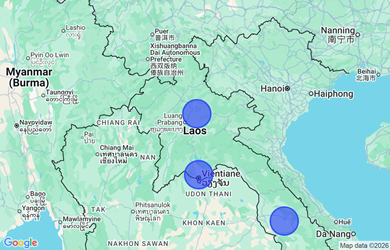
Urban
Vientiane Capital
Urban economic hub, IOA supports MSMEs & agriculture and fosters economic development & financial inclusion.
Urban
Champasak Province
Substantial agriculture, IOA provides tailored financial services, boosts productivity, and reduces poverty.
Urban
Luang Prabang Province
Urban-rural mix, IOA benefits rural communities in agriculture and enhances investment & growth.
Savannakhet Province
Populous province, IOA helps MSMEs & agriculture, stimulates development, and creates employment.
(1) World Bank Data. “Account ownership at a financial institution or with a mobile-money-service provider (% of population ages 15+).” The World Bank, 2021, https://data.worldbank.org/indicator/FX.OWN.TOTL.FE.ZS?locations=LA.
(2) Asian Development Bank. “Lao People’s Democratic Republic: Economy.” Asian Development Bank, 2022, https://www.adb.org/countries/lao-pdr/economy.
(3) United Nations Capital Development Fund (UNCDF). “Lao PDR Financial Inclusion Refresh (2021).” UN Capital Development Fund, 2021,
(4) UNCDF. “Lao PDR Financial Inclusion Refresh (2021).” UN Capital Development Fund, 2021, https://www.uncdf.org/article/7935/lao-pdr-financial-inclusion-refresh-2021.
(5) UNCDF. “Lao PDR Financial Inclusion Refresh (2021).” UN Capital Development Fund, 2021, https://www.uncdf.org/article/7935/lao-pdr-financial-inclusion-refresh-2021.
(6) Investment Promotion Department, Ministry of Planning and Investment. “Financial Sector.” Invest Laos - Lao PDR Investment Promotion Department, Ministry of Planning and Investment, https://investlaos.gov.la/investment-opportunities/financial-sector/.
(7) UNCDF. “Lao PDR Financial Inclusion Refresh (2021).” UN Capital Development Fund, 2021, https://www.uncdf.org/article/7935/lao-pdr-financial-inclusion-refresh-2021.
(8) Asian Development Bank Institute. “Stylized Facts of Financial Literacy in the Lao PDR.” Asian Development Bank Institute Working Paper Series, no. 933, 2019, pp. 1–28.
(9) UNICEF. “Country Office Annual Report 2021 Lao People’s Democratic Republic.” UNICEF, 2021, https://www.unicef.org/media/117106/file/Lao-Peoples-Democratic-Republic-2021-COAR.pdf.
(10) “Lao PDR Gender Profile.” World Bank, 2005, documents1.worldbank.org/curated/en/665161468278050105/pdf/455720WP0Box331o1Gender1Report12005.pdf.
(11) Tilleke & Gibbins. “Insurance and Reinsurance in Laos: Overview.” Tilleke & Gibbins, 2020, https://www.tilleke.com/wp-content/uploads/2020/03/Insurance-and-reinsurance-in-Laos-overview.pdf.
(14) “Lao PDR Financial Inclusion Refresh (2021).” UNCDF. https://www.uncdf.org/article/7935/lao-pdr-financial-inclusion-refresh-2021.
(15) Singh, S. K. “Financial Inclusion and Gender Barriers for Rural Women.” SSRN Electronic Journal, 2019.
(16) ILO. “Decent work: ILO and Lao People’s Democratic Republic continue efforts to advance equal decent and productive work opportunities for women and men following the signing of a new five-year Decent Work Country Programme (DWCP).” International Labour Organization, 2021, https://www.ilo.org/asia/media-centre/news/WCMS_848731/lang–en/index.htm.