
Explore the country and target locations of the investment opportunity.
Country
Vietnam
Region
- Mekong Delta Region
- Eastern South Region
Situate the investment opportunity within sustainability focused sector, subsector and industry classifications.
Sector
Food and Beverage
In 2021, the Global Food Security Index of Vietnam was ranked 65/113, indicating high food insecurity and poor nutrition (1) due to very low labor productivity in agriculture production, i.e. 2.4 and 2.1 times less than that of Indonesia and Thailand, respectively. (2) Vietnam is also severely affected by climate change, and the impact of floods alone causes a loss of 2.3% of GDP each year (3).
Policy priority
Resolution 26-NQ/TW/2008 offers strong support from the government for rural development, including the activities in agricultural value chains, e.g market access, technology transfer, access to capital, human resource improvement, infrastructure investment, and business model development (4); and food safety for the population (5)
Gender inequalities and marginalization issues
As of 2016, 26 million female labor force in the agriculture sector had unstable jobs, lower incomes, and limited access to social welfare (6); a high malnutrition ratio for under-five children in rural areas was observed at 23.7% as opposed to 6.2% in urban areas (in 2020) (7)
Investment opportunities
Mass production in various crops and livestock, for example, 12.6 m tons of fruits, 22 m pigs, and 512 m poultry in 2020 (8); USD 48 billion agricultural/ aquacultural export value in 2021 (9); Post-harvest processing technology - processed products with high added value accounts for only 10-40% of the farm output (10)
Key bottlenecks
Inefficient long supply chain, the under-developed infrastructure of the supply chain, unstandardized production processes leading to challenges in quality control, and lack of human resources.
Sub Sector
Food and Agriculture
Development need
High post-harvest loss rate of 10- 20% (7). More than 50% of farmers overuse pesticides, negatively impacting human health (11). Limited processing capacity with equipment renewal coefficient is only 7%/year (equivalent to 1/2 - 1/3 of the minimum level of other countries), leading to a low income of USD 210 - 340/month for 1.6 m workers in the sector (12).
Policy priority
Decree 57/2018/ND-CP encourages investment in agriculture and rural areas (15); Resolution 48/2009/ND-CP supports solutions to minimize post-harvest losses for key agricultural products, improve production efficiency, and stabilize farmers' incomes (14). Decision 20/QĐ-TTg/2012 requires ensuring food safety by control throughout the food supply chain (16).
Gender inequalities and marginalization issues
Post-harvest loss and overuse of chemical inputs reduces income for, and causing a negative impact on the health of, millions of households, including women, children and ethnic minorities. E.g in Binh Thuan, the income of over 35,000 households, of which women account for half of the labor force in dragon fruit plantations (21, 17), is often negatively affected by the demand drop in China.
Investment opportunities
Estimated USD 300m market for agri-tech solutions including the ones for distribution and retailing (19), more than 100,000 tons of pesticides are imported into Vietnam annually (18). and low fruit and veggies processing capacity: estimated at 600,000 tons versus total national production of more than 12m tons (20)
Key bottlenecks
Access to land or land acquisition may be costly. Challenges in securing enough input supply at desired quality/quantity for processing factories, and in setting up distribution networks for production inputs or finished products.
Industry
Processed Foods
Discover the investment opportunity and its corresponding business model.
Investment Opportunity Area
Food processing for fruit and vegetable drinks
Business Model
Invest in new processing plants for the production of fruit and vegetable drinks or in existing factories to increase capacity and operational efficiency under a B2C model serving end-consumers in the domestic market. Examples of companies active in this space are:
Nafoods Company engages in the production and processing of vegetables and fruit juices in Vietnam. It offers juice concentrates, fresh fruits, IQF fruits and vegetables, and juice/NFC/puree. Nafoods export covers more than 70 countries. It announced a private placement of gross proceeds of about USD 500,000 on March 9, 2020. This transaction involved Endurance Capital Vietnam I Ltd.
In the three years 2017-2019, domestic enterprises such as TH Group, Nafoofs Group, Dong Giao Food Export Joint Stock Company (DOVECO), Lavifood Joint Stock Company, Vina T&T have invested in 8 modern fruit and vegetable processing factories with capacity of 180,000 tons of products/year with an investment capital of VND 6,152 billion (nearly 300 million USD) (24)
Van Ho Fresh Fruit Processing Factory is operated by TH Group. Phase 1: Inaugurated in Sep 2020, with a total investment of VND 1,200 billion (est. USD 55 million) and a design capacity of 100 tons of fruit/day. Main products include longan juice, concentrated orange juice, passion fruit juice, and products made from mango and medlar (22)
Learn about the investment opportunity’s business metrics and market risks.
Market Size and Environment
Market Size (USD)
USD 100 million - USD 1 billion
CAGR
5% - 10%
Critical IOA Unit
The fruit juice market in Vietnam is 450 m USD, nearly 11% of Vietnam beverage industry in 2019
The global fruit and vegetable juice market size was valued at USD 131.62 billion in 2021 and is expected to grow at a CAGR of 6.3% from 2022 to 2030 (23) The total value of the fruit juice market in Vietnam is 450 million USD, accounting for nearly 11% of the consumption structure of the beverage industry in Vietnam in 2019; the CAGR is 8% for the period 2020-2025 (25)
The import value of fruit and vegetable juices into Vietnam has continuously increased: in 2008 it was 10 million USD, but in 2019 it reached 25 million USD, and the trend is on the rise. Primary consumers of this industry are urban youth, who shop through the modern trade (MT) channel. (25)
The source of raw materials for processing fruit and vegetable juices in Vietnam is large and diverse: 12-15 million tons of fruits and 17.6 million tons of veggies. Vietnam has over 150 industrial-scale fruit and vegetable processing establishments with a total designed capacity of over 1 million tons/year, but the actual production output is only over 600,000 tons (33).
Indicative Return
GPM
15% - 20%
Nafoods Group JSC, a large company specializing in fruit juice processing, reported a gross profit margin in 2019 of 18.70%. Similar businesses have the same level of profit.
Investment Timeframe
Timeframe
Medium Term (5–10 years)
This is varied by the investment size. Time is consumed for investment registration procedures, import of machinery and equipment, construction, product development, and establishment of an input supply base. The investment timeframe is estimated to be 3 - 7 years.
Ticket Size
Average Ticket Size (USD)
Varied by the target size of the investment which can range from a few hundred to several million dollars. A small processing factory may require USD 500,000 - 1 m (including land), while a large investment may require ~USD 50m (22).
Market Risks & Scale Obstacles
Capital - Limited Investor Interest
Investment in agricultural production faces many difficulties such as lack of land, difficulty in accessing capital, unattractive governmental support mechanisms and policies, and challenges to develop a reliable input supply base (34)
Business - Supply Chain Constraints
The vegetable and fruit production areas in Vietnam are small and scattered at the household level. Underdeveloped infrastructure, low productivity, and the issue of quality due to limited production techniques, all lead to high collection costs and value chain unsustainability (31, 24, 29)
Read about impact metrics and social and environmental risks of the investment opportunity.
Sustainable Development Need
The production of fruits and veggies drinks is a solution to increase the absorption of fresh fruits and veggies from farms, bringing down the mass volume of the post-harvest loss which accounts for over 20% (7) of the national production of more than 30m tons/year (33).
The investment in processing fruits and veggies to make drinks can improve workers' income that is low due to the low rate of processed vegetables and fruits (less than 4%, and over 80% of fresh fruits and vegetables are exported without processing (38, 20))
Gender & Marginalisation
The low and unstable income of fruit and vegetable farmers, especially the poor households, can be improved if the farmers establish supply contracts with the fruit and veggies drinks factories that will usually offer competitive purchase prices and provide technical assistance for farmers.
Expected Development Outcome
Processing fruit and vegetable juice will help to reduce post-harvest losses, increase product value 3-4 times, and create favorable conditions for market expansion - especially for export (38).
Meeting the consumer demand for high quality (processed) fruit and vegetable products, with ensured safety and hygiene, and long shelf-lives.
Gender & Marginalisation
Jobs creation and increased income will support farmers to develop plantation areas and invest in processing factories. (8)
Primary SDGs addressed
12 - Responsible Consumption and Production
12.3.1 (a) Food loss index and (b) food waste index
Current Value
Post-harvest losses are still large, depending on the industry, but generally range from 10-20%: vegetables, fruits, cassava about 20-30%; group of coffee, pepper, cashew, tea about 10-15%; about 15-20% caught seafood; rice about 5-7% (7)
Target Value
Reducing the rate of post-harvest - no specific roadmap (7)
2 - Zero Hunger
2.3.2 Average income of small-scale food producers, by sex and indigenous status
Current Value
Per capita income in rural areas in 2019 reached 39.5 million (7)
Target Value
Per capita income in rural areas by 2030: 90 million (7)
Secondary SDGs addressed
8 - Decent Work and Economic Growth
1 - No Poverty
Directly impacted stakeholders
People
People who work in processing factories and participate in the processed fruit and vegetable value chain, will benefit from improved job opportunities and higher average income as a result of having more diverse markets and higher farm gate prices.
Gender inequality and/or marginalization
Increasing linkage to private businesses means rural women benefit as their effort and role in decision making is recognized by private players, resulting in their empowerment and inclusion.
Planet
Reducing post-harvest losses equates to more efficient use of natural resources such as land & water, and inputs such as fertilizers and pesticides that can have a negative impact on the environment.
Corporates
Businesses in the value chain have more options for products (processed fruit and vegetables) to better serve the demand from the domestic market.
Public sector
Reduce the pressure on finding solutions for agricultural products that are dumped and sold at cheap prices due to a drop in the demand market and a lack of processing capacity for storing the products with longer shelf-lives.
Indirectly impacted stakeholders
People
The population benefits from improved well-being with more options for nutritious food and drinks over a period of time.
Gender inequality and/or marginalization
The benefits of empowerment of women (who participated in this business model) will spill over to other women, especially benefiting those from marginalized groups.
Corporates
Input service providers in the market-enabling system of the fruits and veggies value chain will benefit from more demand and higher revenue.
Public sector
Public sector: The competitiveness of Vietnam's agriculture is increased, contributing to achieving the socio-economic development of the provincial governments.
Outcome Risks
A negative externality is mainly the risk of water pollution because wastewater from processing contains many organic compounds, chemicals, grease, and heavy metals.
The investment capacity may not have enough supply volume due to traditional local traders and collectors often paying high temporary prices in the short term to secure supply from farmers.
Limited market understanding and marketing capacity will impede the investment from running profitably.
Gender inequality and/or marginalization risk: the investment benefit may not reach women and marginalized groups in areas where the investment is not happened due to under-developed infrastructure.
Impact Risks
Sourcing a sufficient input supply volume at the required quality from a large number of small producers is challenging to the delivery of the investment expected added value.
Inadequate investment in product development and market development can undermine the scalability of the business model vertically and horizontally.
There is not enough quality data to assess the impact of reduced harvest loss and increased income for farmers involved in the fruit and vegetable processing value chain.
Gender inequality and/or marginalization risk: the lack of technical assistance may prevent marginalized groups from supplying inputs of the required quality for the fruit processing business.
Impact Classification
B—Benefit Stakeholders
What
Production of fruit and vegetable juices to reduce post-harvest losses and increase the value of processed fruits and vegetables.
Who
Farmers in the fruits and veggies value chain of which the processing capacity is underdeveloped. Employees who work for the processing and distribution businesses
Risk
The risk level is low, maybe the water pollution and/or bad smell caused by the processing activities.
Contribution
Various investments have been made by private companies, for example, during 2017-2019, about USD 250m was invested by large domestic enterprises in 8 processing factories (20)
How Much
Vietnam's annual production of fruits is over 12 m tons. This IOA will contribute to increasing the current processing capacity of only 600,000 tons in 2020 (20)
Impact Thesis
The fruit and veggies juice processing factories combined with the development of plantation areas for input supply contribute to increased agricultural productivity, and economic development.
Explore policy, regulatory and financial factors relevant for the investment opportunity.
Policy Environment
National Strategy for sustainable agriculture and rural development: set out strategies for agriculture and rural development to increase productivity, reduce poverty, apply green technology, and develop new rural communities (30)
GoV, Decision 7/QĐ-TTg, 2021: the country’s fruit and vegetable exports will be in the Top 5 globally, reaching an export value of 8-10 billion USD of which 80% is fruit (27)
GoV, Directives 25/CT-TTg, 2020: Measures and tasks on the promotion of linkages in the production and distribution of agricultural products (33)
GoV, Decree 98/2018/NĐ-CP: Encourage collaboration and linkage in agricultural production and distribution by providing different support that can enable the linkage, such as hard infrastructure, consultancy, extension service, production inputs, product brand development (31)
Financial Environment
GoV, Decree 57/2018/NĐ-CP: incentives for businesses to invest in agriculture and rural areas, including support for access to land/ water surface, reduced income taxes, research and technology transfer, human resource development, processing facilities, and so on (28)
Financial package of 4,37b USD is offered by the State Bank & other banks for hi-tech business (26)
If the newly established enterprise in an area with difficult or extremely difficult socio-economic conditions is entitled to the reduced corporate income tax rate (32)
Regulatory Environment
The Law on Food Safety, 2010: regulations on rights and obligations of organizations and individuals in ensuring food safety (35)
GoV, Circular 35/2010/TT-BYT: National technical regulation for non-alcoholic beverage products (36)
Discover examples of public and private stakeholders active in this investment opportunity that were identified through secondary research and consultations.
Private Sector
TH Group, Nafoods Group, Dong Giao Food Export Joint Stock Company (DOVECO), Lavifood Joint Stock Company, Vina T&.
Government
Local governments at provincial and district level, Ministry of Agriculture and Rural Development (MARD), Ministry of Science and Technology. Ministry of Health (MOH)
Multilaterals
European Union (EU, Development Programme (UNDP), World Health Organization (WHO), World Bank (WB), The Food and Agriculture Organization (FAO)
Non-Profit
VinaFruit, Association of Food Transparency (AFT), Vietnam Agriculture Export Association, Farmers Union (FU), Women Union (WU)
See what country regions are most suitable for the investment opportunity. All references to Kosovo shall be understood to be in the context of the Security Council Resolution 1244 (1999)
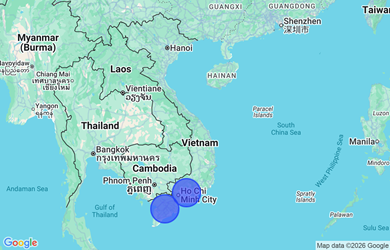
Mekong Delta Region
Mekong Delta region in the South, including Ben Tre, Tien Giang, Can Tho, Dong Thap, is the fruit production hub in Vietnam. Major fruits in this region are pumeloes, mangos, dragon fruits, durian, coconuts, plums.
Eastern South Region
Three suggested provinces are Khanh Hoa, Ninh Thuan, Binh Thuan, in which Binh Thuan is highly recommended due to its dragon fruit production hub and its close proximity to provinces in the Eastern part of the South where the supply of fruits is abundant.
SECTOR SOURCES
1) Economist Impact. (2021). Global Food Security Index. Retrieved from https://impact:.economist.com/sustainability/project/food-security-index/Index
2) Tran, V. D. (2020, Nov 11). Nông nghiệp Việt Nam: Những vấn đề tồn tại. Retrieved from https://tiasang.com.vn/-quan-ly-khoa-hoc/Nong-nghiep-Viet-Nam-Nhung-van-de-ton-tai-26635
3) Vietnam Meteorological and Hydrological Administration. (2022, May 6). Công bố 'sách trắng' về biến đổi khí hậu tác động đến nông nghiệp. Retrieved from http://vmha.gov.vn/kttv-voi-san-xuat-va-doi-song-106/cong-bo-sach-trang-ve-bien-doi-khi-hau-tac-dong-den-nong-nghiep-12094.html
4) Nguyen, A. T. (2020, Oct 19). Phát triển nông nghiệp, nông thôn bền vững ở nước ta. Retrieved from https://www.tapchicongsan.org.vn/web/guest/kinh-te/-/2018/819844/phat-trien-nong-nghiep%2C-nong-thon-ben-vung-o-nuoc-ta.aspx
5) Vietnam Government Administration Office. (2020, Feb 5). Conclusion of the Prime Minister on the National Online Conference on Foods Safety. Retrieved from https://datafiles.chinhphu.vn/cpp/files/vbpq/2020/02/41.signed.pdf
6) Dan, M. (2018, Mar 8). Chất lượng việc làm của lao động nữ nông thôn còn thấp. Retrieved from https://thoibaotaichinhvietnam.vn/chat-luong-viec-lam-cua-lao-dong-nu-nong-thon-con-thap-72150.html
7) UNDP. (2021). Vietnam National Report on SDGs Implementation 2020. Retrieved from https://www.undp.org/sites/g/files/zskgke326/files/migration/vn/Bao-cao-QG-SDG_VN.pdf
8) General Statistic Office. (2020). Niên giám thống kê Việt Nam. Hà nội.
9) Vu, L. (2021, Dec 29). Tổng kết ngành nông nghiệp 2021: Lần đầu xuất khẩu lập kỷ lục 48,6 tỉ USD. Retrieved from https://laodong.vn/kinh-te/tong-ket-nganh-nong-nghiep-2021-lan-dau-xuat-khau-lap-ky-luc-486-ti-usd-989424.ldo
10) Ngoc, Q. (2022, Apr 5). Tập trung phát triển công nghiệp chế biến nông sản. Retrieved from https://hanoimoi.com.vn/tin-tuc/Nong-nghiep/1028667/tap-trung-phat-trien-cong-nghiep-che-bien-nong-san
11) OPhan, T. T. (2020, Dec 10). Tránh lạm dụng thuốc bảo vệ thực vật nhằm đáp ứng tốt nhu cầu của thị trường. Retrieved from https://quochoi.vn/hoatdongdbqh/Pages/home.aspx?ItemID=50492
12) Department of Cooperatives and Rural Development. (2020, Feb 24). Đẩy mạnh nâng cao năng lực công nghiệp chế biến nông sản và thúc đẩy cơ giới hóa trong nông nghiệp. Retrieved from https://dcrd.gov.vn/day-manh-nang-cao-nang-luc-cong-nghiep-che-bien-nong-san-va-thuc-day-co-gioi-hoa-trong-nong-nghiep-a225.html
13) Khanh, Y. (2021, Dec 6). Bất động sản kho lạnh: Nhu cầu tăng nhưng nguồn cung ít. Retrieved from https://thuonghieucongluan.com.vn/bat-dong-san-kho-lanh-nhu-cau-tang-nhung-nguon-cung-it-a157631.html#:~:text=Savills%20Vi%E1%BB%87t%20Nam%20nh%E1%BA%ADn%20%C4%91%E1%BB%8Bnh,c%E1%BA%A5p%20kho%20l%E1%BA%A1nh%20v%E1%BA%ABn%20%C3%ADt
14) MARD. (2009, Sep 23). Nghị quyết Về cơ chế, chính sách giảm tổn thất sau thu hoạch đối với nông sản, thủy sản. Retrieved from https://vbpl.vn/bonongnghiep/Pages/vbpq-toanvan.aspx?ItemID=85611
15) Government of Vietnam. (2008, Apr 17). Nghị định 57 Khuyến khích doanh nghiệp đầu tư vào nông nghiệp nông thôn. Retrieved from https://datafiles.chinhphu.vn/cpp/files/vbpq/2018/04/57.signed.pdf
16) Government of Vietnam. (2012, Jan 4). Phê duyệt Chiến lược quốc gia An toàn thực phẩm giai đoạn 2011 - 2020 và tầm nhìn 2030. Retrieved from https://vfa.gov.vn/van-ban/phe-duyet-chien-luoc-quoc-gia-an-toan-thuc-pham-giai-doan-2011-2020-va-tam-nhin-2030.html
17) Ho, K. V. (2019, Aug 2). Bình Thuận: Sử dụng thuốc BVTV theo hướng bền vững cho thanh long. Retrieved from https://vusta.vn/binh-thuan-su-dung-thuoc-bvtv-theo-huong-ben-vung-cho-thanh-long-p67248.html
18) Quan, T. (2021, Oct 31). Thời của thuốc bảo vệ thực vật sinh học. Retrieved from https://nongnghiep.vn/thoi-cua-thuoc-bao-ve-sinh-hoc-d305995.html
19) BritCham. (2021, Sep). Vietnam AgriTech Report. Retrieved from https://britchamvn.com/wp-content/uploads/2021/09/Agri-Tech-Sector-Report.pdf
20) Khuong, L. (2020, Nov 19). Đầu tư nghìn tỷ xây nhà máy chế biến rau quả, doanh nghiệp “sợ" nhất điều gì? Retrieved from https://danviet.vn/dau-tu-nghin-ty-xay-nha-may-che-bien-rau-qua-doanh-nghiep-so-nhat-dieu-gi-20201118181313753.htm
21) Nguyen, T. (2022, Mar 1). Giá thanh long còn 500-1.500 đồng/kg, nông dân Bình Thuận ứa nước mắt. Retrieved from https://vov.vn/kinh-te/gia-thanh-long-con-500-1500-dongkg-nong-dan-binh-thuan-ua-nuoc-mat-post927428.vov
IOA SOURCES
22) TH Group. (2020, Sep 20). TH GROUP OPERATING VAN HO FACTORY FOR PROCESSING FRESH FRUIT AND PHARMACEUTICAL PRODUCTS – SON LA. Retrieved from https://www.thmilk.vn/en/thanh-group-operating-factory-for-processing-fresh-fresh-flower-and-van-ho-pharmaceutical-products-son-la/
23) Grand View Research. (2021). Fruit And Vegetable Juice Market Size, Share & Trends Analysis Report By Product (Fruit, Vegetable Juices), By Distribution Channel (Supermarkets/Hypermarkets, Online), By Region, And Segment Forecasts, 2022 - 2030. Retrieved from https://www.grandviewresearch.com/industry-analysis/fruit-vegetable-juice-market#:~:text=The%20global%20fruit%20and%20vegetable,6.3%25%20from%202022%20to%202030.
24) Khuong, L. (2020, Nov 19). Đầu tư nghìn tỷ xây nhà máy chế biến rau quả, doanh nghiệp “sợ" nhất điều gì? Retrieved from https://danviet.vn/dau-tu-nghin-ty-xay-nha-may-che-bien-rau-qua-doanh-nghiep-so-nhat-dieu-gi-20201118181313753.htm
25) Vu, H. M. (2020). BÁO CÁO VỀ THỊ TRƯỜNG NƯỚC ÉP TRÁI CÂY TẠI VIỆT NAM. Retrieved from https://www.studocu.com/vn/document/dai-hoc-kinh-te-quoc-dan/demographic-statistics/bao-cao-ve-thi-truong-nuoc-ep-trai-cay-tai-viet-nam/11938316
26) AgriBank. (2020, Jan 23). Agribank đầu tư phát triển nông nghiệp sạch, nông nghiệp công nghệ cao. Retrieved from https://www.agribank.com.vn/vn/ve-agribank/tin-tuc-su-kien/dong-hanh-cung-tam-nong/agribank-dau-tu-phat-trien-nong-nghiep-sach-nong-nghiep-cong-nghe-cao
27) Government of Vietnam. (2021, Mar 22). Quyết định PHÊ DUYỆT ĐỀ ÁN PHÁT TRIỂN NGÀNH CHẾ BIẾN RAU QUẢ GIAI ĐOẠN 2021 - 2030. Retrieved from https://thuvienphapluat.vn/van-ban/thuong-mai/quyet-dinh-417-qd-ttg-2021-phat-trien-nganh-che-bien-rau-qua-giai-doan-2021-2030-468479.aspx?v=d
28) Government of Vietnam. (2008, Apr 17). Nghị định 57 Khuyến khích doanh nghiệp đầu tư vào nông nghiệp nông thôn. Retrieved from https://datafiles.chinhphu.vn/cpp/files/vbpq/2018/04/57.signed.pdf
29) Minh, P. (n.d.). eMagazine. Retrieved from Không thiếu tiền xây nhà máy chỉ khát nguyên liệu: https://nongnghiep.vn/khong-thieu-tien-xay-nha-may-che-bien-chi-khat-vung-nguyen-lieu-d278237.html
30) Government of Vietnam. (2022, Jan 28). Phê duyệt chiến lược phát triển nông nghiệp và nông thôn bền vững 2021 - 2030 tầm nhìn 2050. Retrieved from https://vukehoach.mard.gov.vn/DataStore/2022331943_150-qd-ttg.%20Chien%20luoc%20phat%20trien%20nong%20nghiep.pdf 31) Government of Vietnam. (2018, Jul 5). NGHỊ ĐỊNH VỀ CHÍNH SÁCH KHUYẾN KHÍCH PHÁT TRIỂN HỢP TÁC, LIÊN KẾT TRONG SẢN XUẤT VÀ TIÊU THỤ SẢN PHẨM NÔNG NGHIỆP. Retrieved from https://thuvienphapluat.vn/van-ban/Thuong-mai/Nghi-dinh-98-2018-ND-CP-chinh-sach-khuyen-khich-phat-trien-hop-tac-san-xuat-san-pham-nong-nghiep-387110.aspx
32) ) Government of Vietnam. (2008, Dec 11). Quy định chi tiết và hướng dẫn thi hành một số điều của Luật Thuế thu nhập doanh nghiệp. Retrieved from https://chinhphu.vn/default.aspx?pageid=27160&docid=81476
33) PGovernment of Vietnam. (2020, Jun 4). Chỉ thị VỀ MỘT SỐ NHIỆM VỤ, GIẢI PHÁP PHÁT TRIỂN CÔNG NGHIỆP CHẾ BIẾN NÔNG LÂM THỦY SẢN VÀ CƠ GIỚI HÓA SẢN XUẤT NÔNG NGHIỆP. Retrieved from https://thuvienphapluat.vn/van-ban/Thuong-mai/Chi-thi-25-CT-TTg-2020-nhiem-vu-giai-phap-phat-trien-cong-nghiep-che-bien-nong-lam-thuy-san-444172.aspx
34) Nguyen, H. (2019, Nov 4). Quá ít dự án đầu tư vào vùng nguyên liệu cho chế biến thực phẩm. Retrieved from https://haiquanonline.com.vn/qua-it-du-an-dau-tu-vao-vung-nguyen-lieu-cho-che-bien-thuc-pham-115260.html Vietnam Farmers Association. (2020, Nov 18). Đầu tư vào nông nghiệp: Vì sao doanh nghiệp chưa “mặn mà”? Retrieved from http://hoinongdan.org.vn/sitepages/news/25/105070/dau-tu-vao-nong-nghiep-vi-sao-doanh-nghiep-chua-man-ma
35) Vietnam National Assembly. (2010, Jun 17). Luật an toàn thực phẩm. Retrieved from https://thuvienphapluat.vn/van-ban/Thuong-mai/Luat-an-toan-thuc-pham-2010-108074.aspx
36) Ministry of Health. (2010, Jun 2). Thông tư Ban hành Quy chuẩn kỹ thuật quốc gia. Retrieved from https://luatvietnam.vn/y-te/thong-tu-35-2010-tt-byt-bo-y-te-53242-d1.html
37) MOLISA. (2019, Jul 11). Dân số Việt Nam hơn 96,2 triệu người, là nước đông dân thứ 15 trên thế giới. Retrieved from http://www.molisa.gov.vn/Pages/tintuc/chitiet.aspx?tintucID=29769#:~:text=D%C3%A2n%20s%E1%BB%91%20khu%20v%E1%BB%B1c%20th%C3%A0nh,s%E1%BB%B1%20kh%C3%A1c%20bi%E1%BB%87t%20%C4%91%C3%A1ng%20k%E1%BB%83
38) Ministry of Industry and Trade. (2021, Jul 31). Ngành rau quả chuyển dịch cơ cấu sang sản phẩm chế biến sâu nhằm gia tăng giá trị, mở rộng thị trường. Retrieved from https://moit.gov.vn/tin-tuc/phat-trien-cong-nghiep/nganh-rau-qua-chuyen-dich-co-cau-sang-san-pham-che-bien-sau-.html