
Explore the country and target locations of the investment opportunity.
Country
Vietnam
Region
- Mekong Delta Region
- Eastern South Region
Situate the investment opportunity within sustainability focused sector, subsector and industry classifications.
Sector
Food and Beverage
Development needs
In 2021, The Global Food Security Index of Vietnam is ranked 65/113, indicating high food insecurity and poor nutrition (1) due to low labor productivity in agriculture production, i.e. 2.4 and 2.1 times less than Indonesia and Thailand respectively (2). Vietnam is also severely affected by climate change, the impact of floods alone causes a loss of 2.3% of GDP every year (3).
Policy priority
Resolution 26-NQ/TW/2008 offers strong support from the government for rural development, including the activities in agricultural value chains, e.g market access, technology transfer, access to capital, human resource improvement, infrastructure investment, and business model development (4); and food safety for the population (5)
Gender inequalities and marginalization issues
26 m female labor force (in 2016) in the agriculture sector have unstable jobs, low income, and limited access to social welfare (6); a high malnutrition ratio for under-five children in rural areas is 23.7% as opposed to 6.2% in urban areas (in 2020) (7)
Investment opportunities
Mass production in various crops and livestock, for example, 12.6 m tons of fruits, 22 m pigs, and 512 m poultry in 2020 (8); USD 48 billion agricultural/ aquacultural export value in 2021 (9); Post-harvest processing technology - processed products with high added value accounts for only 10-40% of the farm output (10)
Key bottlenecks
Inefficient long supply chain, the under-developed infrastructure of the supply chain, unstandardized production processes leading to challenges in quality control, and lack of human resources.
Sub Sector
Food and Agriculture
Development need
High post-harvest loss rate of 10-20% (7). More than 50% of farmers overuse pesticides, negatively impacting human health (11). Limited processing capacity with equipment renewal coefficient, i.e. only 7%/year (equivalent to 1/2 - 1/3 of the minimum level of other countries), leading to a low income of USD 210 - 340/month for 1.6 m workers in the sector (12).
Policy priority
GoV encourages investment in agriculture and rural areas (15), including the application of irradiation technology to increase product quality and competitiveness of the agriculture sector (Decision 775/QD-TTg/2010) (29), while also ensuring food safety by control throughout the food supply chain from production to consumption (16).
Gender inequalities and marginalization issues
Post-harvest loss and overuse of chemical inputs reduces income for, and causing a negative impact on the health of, millions of households, including women, children and ethnic minorities. E.g in Binh Thuan, the income of over 35,000 households, of which women account for half of the labor force in dragon fruit plantations (21, 17), is often negatively affected by the demand drop in China.
Investment opportunities
Estimated USD 300m market for agri-tech solutions including the ones for distribution and retailing (19), more than 100,000 tons of pesticides are imported into Vietnam annually (18). and low fruit processing capacity, is estimated at 600,000 tons versus total national production of more than 12m tons (20)
Key bottlenecks
Access to land or land acquisition may be costly. Challenges in securing enough input supply at desired quality/quantity for processing factories, and in setting up distribution networks for production inputs or finished products.
Industry
Agricultural Products
Discover the investment opportunity and its corresponding business model.
Investment Opportunity Area
Food irradiation facilities
Business Model
Investment in irradiation facilities for sterilization of fruits, seafood, medical instruments, and traditional pharmaceuticals. Fruits are recommended as a major target market segment. This service may be combined with warehouse rental and cold storage services. This model is B2B, with customers being domestic exporters or overseas importers. Examples of companies active in this space are:
An Phu Irradiation is a listed Joint Stock Company. It has invested nearly USD 30m in 3 factories to provide irradiation services for seafood and fruits, with a total installed capacity of nearly 400 tons/day in the South (Binh Duong and Long An Province) and the North (Bac Ninh Province) (22)
Learn about the investment opportunity’s business metrics and market risks.
Market Size and Environment
Market Size (USD)
USD 50 million - USD 100 million
CAGR
10% - 15%
Critical IOA Unit
3% of Vietnam's fruit export of about USD 1.8 billion in 2021 can be potentially for irradiating.
The demand for the export of fruits and seafood to high-value markets is estimated to be growing by 10-15% (25). This is an important key driver for the growth of demand for irradiation services.
Vietnamese seafood has been exported to more than 105 countries with a compound growth rate of 11% from 2009 to 2018. Meanwhile, the growth of fruit and vegetable export in the period 2009 - 2018 reached 26%/year. (22)
Indicative Return
IRR
15% - 20%
Irradiation services have a high rate of return due to the prevailing high price of service compared to the cost. Estimated investment cost is USD 0.5 - 0.8/kg. Meanwhile, the service cost is 0.8-1 USD/kg. (34)
Investment Timeframe
Timeframe
Medium Term (5–10 years)
The irradiation industry is a conditional business. It will probably take more than 12 months for the investors to complete the relevant procedures required by the authorities. The investment timeframe is estimated to be 5-10 years (34).
Ticket Size
Average Ticket Size (USD)
> USD 10 million
Market Risks & Scale Obstacles
Market - Highly Regulated
Irradiation is a conditional business - both during plant construction and equipment operation (36). In addition, this service is subject to the regulations of the importing country.
Market - Volatile
In the early stage, domestic demand is still low, irradiation services largely depends on the capacity of enterprises to export agricultural and aquatic products to countries with irradiation requirements for imported products.
Read about impact metrics and social and environmental risks of the investment opportunity.
Sustainable Development Need
Investment in processing technology, including irradiation, is needed to increase agricultural product value by satisfying the technical demand of high-value markets like the USA and reducing post-harvest losses.
Gender & Marginalisation
Investment in irradiation capacity will help farmers on fruit plantations in rural areas to improve farm outputs, and so, gain access to high-value and stable markets, contributing to sustainably increasing their incomes.
Expected Development Outcome
Increase the export volume of agricultural and aquatic products to high-value markets by applying irradiation technology for preservation.
Reduce post-harvest losses for export agriculture products (fruits and veggies)
Gender & Marginalisation
Increase stable income for farmers participating in the export value chains of irradiated products
Primary SDGs addressed
2 - Zero Hunger
2.3.2 Average income of small-scale food producers, by sex and indigenous status
Current Value
Per capita income in rural areas in 2019 reached 39.5 million (7)
Target Value
Per capita income in rural areas by 2030: 90 million (7)
12 - Responsible Consumption and Production
12.3.1 (a) Food loss index and (b) food waste index
Current Value
Post-harvest losses are still large, depending on the industry, but generally range from 10-20%: vegetables, fruits, cassava about 20-30%; group of coffee, pepper, cashew, tea about 10-15%; about 15-20% caught seafood; rice about 5-7% (7)
Target Value
Reducing the rate of post-harvest - no specific roadmap (7)
Secondary SDGs addressed
8 - Decent Work and Economic Growth
1 - No Poverty
Directly impacted stakeholders
People
Farmers who participated in the value will improve income resulting from diversified markets and reduced post-harvest losses. Consumers of irradiated products will be more assured about food safety and hygiene.
Gender inequality and/or marginalization
Women and marginalized groups with livelihoods relying on fruit plantations will benefit from secured and high-value market demand, and so have a more stable income.
Corporates
Exporters have more opportunities to expand to high-value markets while improving the business profit.
Public sector
Reduction in the pressure of finding solutions for agricultural products that are dumped and sold at cheap prices due to a drop in their demand from major and traditional markets.
Indirectly impacted stakeholders
People
The population living in the areas where the investment is made will benefit from the economic development in the region
Gender inequality and/or marginalization
Investment in irradiation processing can create a crowding-in effect that attracts more investment from the private sector in the agriculture sector, and benefits women and marginalized groups living in rural areas.
Corporates
Input production suppliers for the irradiation businesses will have the opportunity to increase sales
Public sector
The competitiveness of Vietnam's agriculture is increased, contributing to the achieving socio-economic development of the provincial governments.
Outcome Risks
After use, radioactive wastes, if not properly handled and managed in accordance with regulations, will cause harm to the environment.
Facilities using food irradiation technology, if not operated in accordance with safety regulations, will adversely affect the health of workers directly engaged in the job.
Gender inequality and/or marginalization risk: the investment benefit may not reach women and marginalized groups in areas where the investment is not happened due to under-developed infrastructure.
Impact Risks
There is not enough quality data to assess the impact of reduced harvest loss and increased income for farmers involved in the export value chain of irradiated products
Significant reduction in export capacity and/or demand resulting in a reduced impact of irradiation services on post-harvest loss reduction and increased income for farmers.
Unexpected impact risk: Radioactive leakage during operation and/or post-use radioactive handling can affect workers and the public.
Gender inequality and/or marginalization risk: the lack of technical capacity may prevent marginalized groups from supplying inputs at the required quality for the irradiation business.
Impact Classification
C—Contribute to Solutions
What
Important positive outcomes: Reduce post-harvest losses and increase farmers' income.
Who
Underserved: Rural farmers participating in the export value chain of irradiated products have the opportunity to increase their income.
Risk
Possible radioactive leakage during operation and/or handling of radioactive material after use, affecting workers and the community.
Contribution
GoV commits to developing specialized cultivation areas for fruit and vegetable production to ensure the raw materials (about 5-6 million tons by 2030) for processing activities. (40)
How Much
This IOA will contribute to achieving 2 million tons of processing capacity by 2030 for the fruits and veggies sector in Vietnam (40).
Impact Thesis
Irradiation services contribute to the export of agricultural products and directly benefit the farmers involved in the production and consumers who can enjoy enhanced product quality assurance
Explore policy, regulatory and financial factors relevant for the investment opportunity.
Policy Environment
National Strategy for sustainable agriculture and rural development: set out strategies for agriculture and rural development to increase productivity, reduce poverty, apply green technology, and develop new rural communities (30)
GoV, Decision 417/QĐ-TTg, 2021: the country’s fruit and vegetable exports will be in the Top 5 globally, reaching an export value of 8-10 billion USD of which 80% is fruit (27)
GoV, Decision 339/QĐ-TTg, 2021: Government plan for seafood exports to reach 14-16 billion USD by 2030 (33)
GoV, Decision 775/QĐ-TTG, 2010: GoV aims to have, by 2020, 9-12 industry-scaled Co-60 gamma source irradiation facilities completed to serve irradiation demand for preservation, quarantine and hygiene, and safety of agricultural and food products (29)
GoV, Directives 25/CT-TTg, 2020: Policies on the promotion of linkages in production and distribution of agricultural products, 2018 (38)
Financial Environment
GoV, Decree 57/2018/NĐ-CP: incentives for businesses to invest in agriculture and rural areas, including support for access to land/ water surface, reduced income taxes, research and technology transfer, human resource development, processing facilities, and so on (28)
A financial package of 4,37b USD is offered by the State Bank & other banks for hi-tech business (26)
If the newly established enterprise in an area with difficult or extremely difficult socio-economic conditions is entitled to the reduced corporate income tax rate (32)
Regulatory Environment
The Law on Food Safety, 2010: regulations on rights and obligations of organizations and individuals in ensuring food safety (39)
GoV, 142/2020/NĐ-CP: Regulations on conditions, dossiers, orders, and procedures for granting licenses to conduct radiation/irradiation work, registration certificates for atomic energy application support services, and application support service practice certificates for atomic energy (36)
Discover examples of public and private stakeholders active in this investment opportunity that were identified through secondary research and consultations.
Private Sector
An Phu Irradiation Joint Stock, Son Son Co., Ltd, Thai Son Group, Da Nang irradiation facility, Dong Nai irradiation facility, Toan Phat Irradiation Co., Ltd
Government
Local governments at provincial and district level, Ministry of Agriculture and Rural Development (MARD), Ministry of Science and Technology. Ministry of Health (MOH)
Multilaterals
European Union (EU, Development Programme (UNDP), World Health Organization (WHO), World Bank (WB), The Food and Agriculture Organization (FAO)
Non-Profit
VinaFruit, Vietnam Association of Seafood Exporters and Producers (VASEP), Association of Food Transparency (AFT), Vietnam Agriculture Export Association, Farmers Union (FU), Women Union (WU)
See what country regions are most suitable for the investment opportunity. All references to Kosovo shall be understood to be in the context of the Security Council Resolution 1244 (1999)
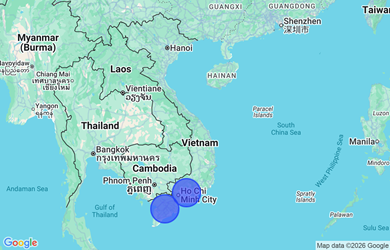
Mekong Delta Region
Mekong Delta region in the South, including Ben Tre, Tien Giang, Can Tho, Dong Thap. This region is a fruit production hub. The major fruits in this region are pumeloes, mangos, dragon fruits, durian, coconuts, and plums.
Eastern South Region
Three suggested provinces are Khanh Hoa, Ninh Thuan, Binh Thuan, in which Binh Thuan is highly recommended due to its dragon fruit production hub and being closed to provinces in the Eastern part of the South where the supply of fruits is abundant.
SECTOR SOURCES
1) https://impact:.economist.com/sustainability/project/food-security-index/Index
2) https://tiasang.com.vn/-quan-ly-khoa-hoc/Nong-nghiep-Viet-Nam-Nhung-van-de-ton-tai-26635
5) https://datafiles.chinhphu.vn/cpp/files/vbpq/2020/02/41.signed.pdf
6) https://thoibaotaichinhvietnam.vn/chat-luong-viec-lam-cua-lao-dong-nu-nong-thon-con-thap-72150.html
7) https://www.undp.org/sites/g/files/zskgke326/files/migration/vn/Bao-cao-QG-SDG_VN.pdf
11) https://quochoi.vn/hoatdongdbqh/Pages/home.aspx?ItemID=50492
14) https://vbpl.vn/bonongnghiep/Pages/vbpq-toanvan.aspx?ItemID=85611
15) https://datafiles.chinhphu.vn/cpp/files/vbpq/2018/04/57.signed.pdf
17) https://vusta.vn/binh-thuan-su-dung-thuoc-bvtv-theo-huong-ben-vung-cho-thanh-long-p67248.html
18) https://nongnghiep.vn/thoi-cua-thuoc-bao-ve-sinh-hoc-d305995.html
19) https://britchamvn.com/wp-content/uploads/2021/09/Agri-Tech-Sector-Report.pdf
IOA SOURCES
22) file:///C:/Users/Admin/Downloads/APC_BCTN_2018_vi-VN_40639CH.pdf
24) https://bos.vn/download/BaoCao/ART_Bao%20cao%20phan%20tich_APC_T6.2019.pdf
28) ) https://datafiles.chinhphu.vn/cpp/files/vbpq/2018/04/57.signed.pdf
31) https://nhandan.vn/bandoc/go-kho-cho-san-xuat-va-su-dung-thuoc-bao-ve-thuc-vat-sinh-hoc-666607/
32) https://chinhphu.vn/default.aspx?pageid=27160&docid=81476
35) https://nld.com.vn/kinh-te/kho-tham-gia-chieu-xa-doanh-nghiep-cau-cuu-20190403205056795.htm
39) https://thuvienphapluat.vn/van-ban/Thuong-mai/Luat-an-toan-thuc-pham-2010-108074.aspx