
Explore the country and target locations of the investment opportunity.
Country
Lao PDR
Region
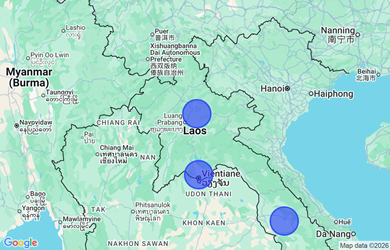
- Vientiane Capital
- Luang Prabang Province
- Savannakhet Province
- Champasak Province
Situate the investment opportunity within sustainability focused sector, subsector and industry classifications.
Sector
Education
Education in Lao PDR faces significant challenges. In 2015, the literacy rate was 84.7% for adults (15 years and older), which is relatively low compared to other countries in the region. The quality of education is inadequate to meet the demands of the labor market, contributing to a skills gap. (1)
Policy priority
The Lao PDR government has recognized the importance of education and has included it as a priority in its national development plans. The Education and Sports Sector Development Plan (ESSDP) 2021-2025 outlines a strategy for improving access, quality, and relevance of education at all levels, and promoting lifelong learning. (2)
Gender inequalities and marginalization issues
Girls, especially those from ethnic minority groups, face lower enrollment rates and higher dropout rates compared to boys. This is due to factors such as poverty, geographical isolation, and cultural norms that prioritize boys' education over girls'. (3)
Investment opportunities
There are several opportunities for investment in the education sector. These include enhancing teacher training, promoting inclusive education for girls and marginalized groups, and investing in digital infrastructure to support distance learning, which has become increasingly important due to the COVID-19 pandemic.(4)
Key bottlenecks
However, the sector faces several bottlenecks. These include insufficient funding for education, inadequate school infrastructure, particularly in rural areas, and a shortage of trained teachers. Addressing these challenges is crucial to improving the quality and inclusiveness of education in Lao PDR. (5)
Sub Sector
Education Technology
Development need
The low level of digital literacy and connectivity, especially in rural and remote areas, highlights the need for improvements in education technology to support digital learning and teaching. (6)
Policy priority
The Lao government's "ICT for Education Development Plan (2021-2025)" aims to enhance the use of ICT in teaching and learning, and to develop digital literacy skills.(7)
Gender inequalities and marginalization issues
The digital divide can exacerbate educational inequalities and limit opportunities for girls, people from low-income families, and those living in rural areas.(8)
Investment opportunities
Opportunities include improving digital infrastructure, developing digital content for education, training teachers in using ICT for teaching, and promoting digital literacy among students. (9)
Key bottlenecks
Challenges include limited internet connectivity, particularly in rural areas, lack of digital literacy among teachers and students, and insufficient funding for ICT in education. (10)
Discover the investment opportunity and its corresponding business model.
Investment Opportunity Area
Digital Infrastructure For Virtual Skill Development
across K-12 and Professional Education
Business Model
Invest in the development and operationalizing of online learning platforms providing skill development courses for K-12 students and professionals, enabling remote learning and upskilling opportunities. Business models may include learning management systems, teacher training modules, student coaching and tuition services, professional courses for strengthening workforce in Laos. Standalone and combinations of such services can be provided in B2B or B2C formats. Illustrative examples of enterprises operating in this space are:
B-You Education Center Founded in 2019, the center specializes in offering Chinese language education and consulting services for students interested in studying in China.
LS Technical Training Center, founded in 2019 this center specializes in providing English and business lessons in Lao PDR.
Vientiane International School (VIS) is an independent, not-for-profit day school located in Vientiane, Laos.The school is a member of the Global Online Academy, an international consortium of leading independent schools that offers rigorous online courses. This membership allows VIS to provide a globally networked education to its students. [13]
Sengdara International School (SIS) is a private institution located in Vientiane, Laos. The school offers a comprehensive curriculum from kindergarten to secondary school. Their e-learning platform, allowed students to continue their education remotely, a crucial feature during the COVID-19 pandemic. [12]
Khang Panya Lao or Lao Wisdom Warehouse: This is the country's first digital learning platform, launched by the Ministry of Education and Sports (MoES) in 2021 due to the COVID-19 pandemic. The platform was developed with the support of UNICEF and in collaboration with the European Union (EU) and the Global Partnership for Education (GPE) [11]
Learn about the investment opportunity’s business metrics and market risks.
Market Size and Environment
Market Size (USD)
< USD 50 million
CAGR
20% - 25%
Critical IOA Unit
3,400,000 people in Lao PDR are under the age of 25 (17)
Between 2017 and 2022, EdTech ventures in Southeast Asia experienced a robust 23% CAGR. In Lao PDR, government policies are strategically aligned to boost investment in digital education.(14)
Indicative Return
ROI
20% - 25%
The edtech sector in southeast Asia is projecting >25% returns. The government policy priorities focused on education technology in a post-COVID environment further support such an IRR expectation. (14)
Investment Timeframe
Timeframe
Medium Term (5–10 years)
The COVID-19 pandemic has popularized digital education in Lao PDR. However, low digital literacy and a lack of devices to effectively access digital content hinder rapid and wider adoption.
Ticket Size
Average Ticket Size (USD)
USD 1 million - USD 10 million
Market Risks & Scale Obstacles
Market - Highly Regulated
Digital content aimed towards education needs to be in line with the laws and regulations of the country.
Business - Supply Chain Constraints
While the internet infrastructure is improving in Laos, there are still significant gaps, especially in remote areas. This could pose a challenge in terms of reaching a wider audience and scaling the business.
Read about impact metrics and social and environmental risks of the investment opportunity.
Sustainable Development Need
Education: As of 2020, only 74.3% of Lao PDR's population was literate. (15)
Digital Literacy: As of 2022, only 22.5% of the population in Lao PDR had internet access (16)
Employment: In 2022 the unemployment rate was 2.4% . However, 52.9% of the working-age population is outside the labor force. (17)
Gender & Marginalisation
Gender Disparity: Female literacy rates were 67.6%, compared to 81.3% for males in 2020. (15)
Rural Marginalisation: Only 18% of rural households had internet access in 2022. (16)
Expected Development Outcome
By offering low-cost online courses, Digital education will reduce out-of-pocket expenditure on education, making it more accessible to a larger section of the population. This mirrors the 9th NSEDP's goal of universal access to affordable and quality education. (18)
Sustainable Educational Content Production: By enabling educators to create and distribute courses cost-effectively on their platform, IOA ensures a consistent supply of quality educational content. This aligns with the 9th NSEDP's emphasis on the development of skilled human resources. (18)
Digital Training Materials: Access to digital training materials will increase the number of skilled workers thus improving employment.
Gender & Marginalisation
Gender Equality in Education: By promoting gender-inclusive enrolment policies, IOA aims to contribute towards the 9th NSEDP's objective of gender equality in education. (18)
Rural Inclusion: By providing quality education in rural areas, IOA aims to support the 9th NSEDP's rural development goal and reduce geographical disparities in educational access. (18)
Primary SDGs addressed
4 - Quality Education
4.1.1 Proportion of children and young people (a) in grades 2/3; (b) at the end of primary; and (c) at the end of lower secondary achieving at least a minimum proficiency level in (i) reading and (ii) mathematics, by sex
Current Value
As of 2022, the literacy rate in Lao PDR is 84.7%[19]
Target Value
In accordance with the 9th NSEDP, IOA aims to contribute to raising the literacy rate to 95% by 2025, emphasizing the improvement of learning outcomes, especially in reading and math [18].
10 - Reduced Inequalities
10.2.1 Proportion of people living below 50 per cent of median income, by sex, age and persons with disabilities
Current Value
As of 2022, the poverty rate in Lao PDR is 18.6% [21].
Target Value
IOA's skill development courses strive to support the national aim of reducing poverty to below 10% by 2025. (18)
8 - Decent Work and Economic Growth
8.6.1 Proportion of youth (aged 15–24 years) not in education, employment or training
Current Value
As of 2022, 38.7% of youth have no education and employment training.
Secondary SDGs addressed
9 - Industry, Innovation and Infrastructure
5 - Gender Equality
Directly impacted stakeholders
People
In Lao PDR, Digital Education directly impacts a diverse student body, ranging from ages 5-65, by equipping them with new skills and knowledge. The program aims to expand this positive impact, offering direct benefits to the students.
Gender inequality and/or marginalization
Access to digital education increases opportunities women can pursue for livelihood improvement.
Planet
Digital Education promotes digital literacy and online courses, reducing the need for physical infrastructure and lessening environmental impact.
Corporates
Companies in Lao PDR benefit from hiring graduates of Digital Education, who bring enhanced skills and knowledge, thereby increasing productivity and innovation. This aligns with Lao PDR's goal of transitioning from a 'land-linked' to a 'land-linked' economy
Public sector
The Lao PDR government gains from Digital Education initiatives, as an educated populace contributes to sustainable economic growth and social stability, aligning with the 9th NSEDP.
Indirectly impacted stakeholders
Planet
Indirect environmental benefits include reduced carbon emissions from commuting, as learning can take place online
Public sector
Digital Education's focus on literacy and digital skills indirectly aids the Lao PDR government's modernization and digitization efforts, a key goal in the 9th NSEDP
People
Families of students enrolled in Digital Education experience indirect benefits through increased opportunities and improved economic conditions, thanks to their family members' enhanced education.
Outcome Risks
Content Quality: While Digital Education aims to provide high-quality courses, inconsistencies in content quality could lead to varied learning outcomes, affecting the program's reputation and impact.
Curriculum Relevance: There's a risk that the Digital Education curriculum may not align well with the local education system or job market needs, affecting its utility and adoption.
Data Security: The platform could be vulnerable to data breaches or unauthorized access, affecting user trust and engagement.
User Engagement: If the course material is not sufficiently engaging or interactive, students may lose interest, leading to lower completion rates and reduced educational impact.
Lack of inclusion: People in the bottom 30% are more likely to not have access to devices necessary to consume digital education content.
Impact Risks
Technology Misuse: The digital platforms and resources provided could be misused for purposes other than education, which could dilute the program's intended impact.
Educational Outcome Variability: The effectiveness of the digital courses in achieving desired educational outcomes may vary among different demographic groups, affecting the overall impact.
Gender and Social Inequality: While the program aims to be inclusive, it may inadvertently perpetuate existing inequalities if not designed with these considerations in mind.
Impact Classification
C—Contribute to Solutions
What
Digital Education aims to enhance the quality of education in Lao PDR, focusing on improved learning outcomes and reducing educational inequality.
Who
The primary beneficiaries are students across various age groups in Lao PDR, who gain access to quality educational content. Indirect beneficiaries include families who experience improved economic conditions through better-educated members.
Risk
There is a risk of digital divide and potential misalignment with the local education system, as well as potential risk of data security breaches that could affect user trust.
Contribution
Digital Education aims to address the unemployment gap in Lao PDR by providing quality educational content that enhances employability. This will help in reducing educational and employment inequality, especially among the working-age population.
How Much
As of 2022, the unemployment rate in Lao PDR was 2.63%, and the employment-to-population ratio was 57.303. Digital Education aims to contribute to improving these figures by enhancing the skills and employability of the working-age population.
Impact Thesis
Digital Education aims to bridge the educational and employment gaps in Lao PDR, empowering underserved communities for socio-economic upliftment by providing quality, accessible educational content.
Explore policy, regulatory and financial factors relevant for the investment opportunity.
Policy Environment
Lao PDR's Ninth National Socio-Economic Development Plan (NSEDP 2021-2025): Outcome 6 focuses on human resource development and skills enhancement in various occupations, including vocational education.
Lao PDR's Education and Sports Sector Development Plan: The plan aims to provide quality education to all children, focusing on curriculum improvement and resource provision, especially in remote areas.
Lao PDR's ICT Development Strategy (2016-2025): The strategy encourages the use of digital solutions for socio-economic development, including e-Government portals.
Financial Environment
BAF provides matching grants and business assistance to businesses operating in Lao PDR.
Other incentives: In 2021, the Ministry of Education and Sports launched the country's first national digital teaching and learning platform, Khang Panya Lao, with the support of UNICEF, the European Union, and the Global Partnership for Education (11)
Regulatory Environment
Law on Cybersecurity (2019): This law ensures the protection of users' data on digital platforms
Decree on E-Commerce (2018): Sets the legal framework for digital platforms
Law on Electronic Data (2017): Governs digital data management
Discover examples of public and private stakeholders active in this investment opportunity that were identified through secondary research and consultations.
Private Sector
Brighteye Ventures and GSV Capital are venture capital firms interested in edtech and digital platforms. Byou Academy and LS technical center provide online education for locals to provide skill development.
Government
The Lao PDR government is actively promoting digital education. The Ministry of Education and Sports has launched the digital teaching-learning platform ""Khang Panya Lao"", which aligns with IOA's business model.
Multilaterals
Organizations like the Global Partnership for Education and World Bank Group are working on improving education quality in Lao PDR. Their initiatives could provide opportunities for collaboration with IOA.
Non-Profit
Non-profit organizations like World Education Laos and the UNDP are engaged in capacity building and providing grants for digital education initiatives. They could be potential partners for IOA in Lao PDR.
Public-Private Partnership
The Lao PDR government is interested in public-private partnerships, especially in the digital education space. Such partnerships could provide a favourable environment for IOA to operate and expand its business in the country.
See what country regions are most suitable for the investment opportunity. All references to Kosovo shall be understood to be in the context of the Security Council Resolution 1244 (1999)
Urban
Vientiane Capital
Being the capital and the largest city of Lao PDR, Vientiane has the most developed infrastructure and highest internet penetration rate in the country. This makes it an ideal location for launching and testing digital education initiatives.
Semi-urban
Luang Prabang Province
As a UNESCO World Heritage site, Luang Prabang has a growing tourism industry and a need for skilled labor in various sectors. Digital education can provide the necessary training and skills to the local population, enhancing employability.
Semi-urban
Savannakhet Province
Savanakhet is strategically located along the East-West Economic Corridor (EWEC), connecting it to major markets like Vietnam and Thailand. The semi-urban setting is ripe for digital education initiatives that can prepare the workforce for diverse economic opportunities.
Semi-urban
Champasak Province
Champasak is known for its rich cultural heritage and natural resources. The semi-urban area needs education that aligns with sustainable development goals. Digital education can offer courses focusing on sustainable tourism and environmental conservation, meeting local needs.
(1) UNICEF DATA. “Lao PDR Education Country Report.” UNICEF DATA, 2020, https://data.unicef.org/resources/lao-pdr-education-country-report/
(2) Ministry of Education and Sports. "Education and Sports Sector Development Plan (2021-2025)." 2020.
(3) UNICEF Lao People’s Democratic Republic. “Gender Equality.” UNICEF, https://www.unicef.org/laos/gender
(4) UNICEF. “Advancing Girls’ Education and Gender Equality through Digital Learning.” UNICEF, 2021, https://www.unicef.org/media/113221/file/Advancing%20Girls’%20Education%20and%20Gender%20Equality%20through%20Digital%20Learning.pdf
(5) UNICEF DATA. “Lao PDR Education Country Report.” UNICEF DATA, 2020, https://data.unicef.org/resources/lao-pdr-education-country-report/
(6) World Bank. “Digital Connectivity in Lao PDR – Lagging Behind Peers.” World Bank, 2018, https://documents.worldbank.org/curated/en/336311549033138864/pdf/134271-WP-P146216-PUBLIC-WBDigitalConnectivityInLaoPDRFAHiRes.pdf
(7) Ministry of Education and Sports. “Education and Sports Sector Development Plan 2021-2025.” UNESCO, 2020, https://planipolis.iiep.unesco.org/sites/default/files/ressources/lao_education_development_plan_2011-2025_en.pdf
(8) UNICEF. “Advancing Girls’ Education and Gender Equality through Digital Learning.” UNICEF, 2021, https://www.unicef.org/media/113221/file/Advancing%20Girls’%20Education%20and%20Gender%20Equality%20through%20Digital%20Learning.pdf
(9) UNICEF. “Advancing Girls’ Education and Gender Equality through Digital Learning.” UNICEF, 2021, https://www.unicef.org/media/113221/file/Advancing%20Girls’%20Education%20and%20Gender%20Equality%20through%20Digital%20Learning.pdf
(10) UNICEF. “Advancing Girls’ Education and Gender Equality through Digital Learning.” UNICEF, 2021, https://www.unicef.org/media/113221/file/Advancing%20Girls’%20Education%20and%20Gender%20Equality%20through%20Digital%20Learning.pdf.
(1) UNICEF DATA. “Lao PDR Education Country Report.” UNICEF DATA, 2020, https://data.unicef.org/resources/lao-pdr-education-country-report/
(2) Ministry of Education and Sports. "Education and Sports Sector Development Plan (2021-2025)." 2020.
(3) UNICEF Lao People’s Democratic Republic. “Gender Equality.” UNICEF, https://www.unicef.org/laos/gender
(4) UNICEF. “Advancing Girls’ Education and Gender Equality through Digital Learning.” UNICEF, 2021, https://www.unicef.org/media/113221/file/Advancing%20Girls’%20Education%20and%20Gender%20Equality%20through%20Digital%20Learning.pdf
(5) UNICEF DATA. “Lao PDR Education Country Report.” UNICEF DATA, 2020, https://data.unicef.org/resources/lao-pdr-education-country-report/
(6) World Bank. “Digital Connectivity in Lao PDR – Lagging Behind Peers.” World Bank, 2018, https://documents.worldbank.org/curated/en/336311549033138864/pdf/134271-WP-P146216-PUBLIC-WBDigitalConnectivityInLaoPDRFAHiRes.pdf
(7) Ministry of Education and Sports. “Education and Sports Sector Development Plan 2021-2025.” UNESCO, 2020, https://planipolis.iiep.unesco.org/sites/default/files/ressources/lao_education_development_plan_2011-2025_en.pdf
(8) UNICEF. “Advancing Girls’ Education and Gender Equality through Digital Learning.” UNICEF, 2021, https://www.unicef.org/media/113221/file/Advancing%20Girls’%20Education%20and%20Gender%20Equality%20through%20Digital%20Learning.pdf
(9) UNICEF. “Advancing Girls’ Education and Gender Equality through Digital Learning.” UNICEF, 2021, https://www.unicef.org/media/113221/file/Advancing%20Girls’%20Education%20and%20Gender%20Equality%20through%20Digital%20Learning.pdf
(10) UNICEF. “Advancing Girls’ Education and Gender Equality through Digital Learning.” UNICEF, 2021, https://www.unicef.org/media/113221/file/Advancing%20Girls’%20Education%20and%20Gender%20Equality%20through%20Digital%20Learning.pdf.
(11) The Ministry of Education and Sports Officially Launches a National Digital Teaching and Learning Platform.” UNICEF. 5 Oct. 2021, https://www.unicef.org/laos/press-releases/ministry-education-and-sports-officially-launches-national-digital-teaching-and
(12) “Sengdara International School – Sengdara_IS.” Sengdara International School. https://sengdara.la/
(13) “Vientiane International School.” Vientiane International School. https://www.vislao.com/
(14) “Education Technology Market Size & Share Report, 2030 - Grand View Research.” Grand View Research. https://www.grandviewresearch.com/industry-analysis/education-technology-market
(15)“Literacy rate, youth total (% of people ages 15-24) - Lao PDR | Data.” The World Bank. https://data.worldbank.org/indicator/SE.ADT.1524.LT.ZS?locations=LA
(16) “Key insights and opinions of young people.” UNICEF. https://www.unicef.org/eap/media/7766/file/Digital%20Literacy%20in%20Education%20Systems%20Across%20ASEAN%20Cover.pdf
(17) “COUNTRY REPORT - UNICEF DATA.” UNICEF. https://data.unicef.org/wp-content/uploads/2019/07/MICS-EAGLE-Country-report-Lao-PDR-English_2020.pdf
(18) Open Development Laos. “9th Five-Year National Socio-Economic Development Plan (2021-2025).” Open Development Laos, 2021, data.laos.opendevelopmentmekong.net/en/library_record/9th-five-year-national-socio-economic-development-plan-2021-2025
(19) “Literacy rate, youth total (% of people ages 15-24) - Lao PDR | Data.” The World Bank.
(20) “Proportion of seats held by women in parliament Laos 2012-2022 - Statista.” Statista
(21) “Lao PDR: Poverty | Asian Development Bank.” Asian Development Bank.
(22) “Education and sports sector development plan 2021-2025": Lao People’s Democratic Republic. National Education Plans. Lao People’s Democratic Republic. Ministry of Education and Sports. Ministry of Education and Sports, 2020.
(23)“ICT Development Strategy (2016-2025)”: Lao People’s Democratic Republic. Ministry of Posts and Telecommunications. Ministry of Posts and Telecommunications, 2016.
(24)“Decree on E-Commerce (2018)”: Lao People’s Democratic Republic. Ministry of Industry and Commerce. Ministry of Industry and Commerce, 2018.
(25)“Law on Cybersecurity (2019)”: Lao People’s Democratic Republic. National Assembly. National Assembly, 2019.
(26)“The Law on Electronic Data Protection, No. 25 (2017)”: Lao People’s Democratic Republic. National Assembly. National Assembly, 2017.
(27) World Bank. (2019). Lao PDR Economic Monitor, December 2019: Supporting Private Sector Development. Retrieved from https://www.worldbank.org/en/country/lao/publication/lao-pdr-economic-monitor-december-2019-supporting-private-sector-development