
Explore the country and target locations of the investment opportunity.
Country
Vietnam
Region
- Mekong Delta Region
Situate the investment opportunity within sustainability focused sector, subsector and industry classifications.
Sector
Infrastructure
Development need
there are some gaps in the availability and access to key infrastructure and utilities in Vietnam. For instance, in 2018, 6.3% of the population in rural areas did not have access to sanitary water (7). An average of 84.3% of solid waste from urban activities is collected and treated as per national standards but this is mainly for landfills, and the ratio is much lower in some regions (e.g. 63% in the Highlands) (9).
Policy priority
As specified in the Socio-economic Development Strategy 2021-2030 of the Vietnam Communist Party, infrastructure development is one of Vietnam's key strategic development pillars. In addition, the application of high and green technology by the private sector is strongly encouraged by the government for infrastructure projects (8).
Gender inequalities and marginalization issues
Women account for half of the 64 m population in rural areas that suffer from underdeveloped infrastructure services, including pollution caused by solid waste, and unhygienic water supply. (4, 36). While 95% of the richest urban quintile has a piped water connection on-premises, only 35% of the poorest have access to this service (20)
Investment opportunities
Vietnam's waste management market was valued at USD 3.8 billion in 2020 (15), the potential of waste electricity in Vietnam is estimated at 1,517 MW with an average power output of 10,617,740 GWh/year (16), The investment demand in the water sector is estimated between $1.3 billion to $2.7 billion over the next 10 years (17), and social housing (11)
Key bottlenecks
Varies by investment but generally complex due to the necessary engagement with multiple partners and negotiations with provincial authorities/ municipalities
Sub Sector
Utilities
Development need
Vietnam's clean water supply is not well developed - 9,000 people die from access to low-quality water and sanitation, and nearly 250,000 people are hospitalized for diarrhea caused by contaminated domestic water (4) 80% of 904 landfills in Vietnam are not up to adequate sanitary standards, creating air pollution, organic pollutants, and a large amount of leachate (19). "
Policy priority
All players in the economy and social communities are encouraged to participate in the development and management of water supply activities (2). Power generation from waste has been included in Vietnam's strategic orientation for national energy development to 2030, with a vision of 2045 (9)
Gender inequalities and marginalization issues
Women among the population in rural areas lack access to clean water. Only 51% of the rural population (about 33 million people) use clean water that meets the sanitary standard (13)
Investment opportunities
Advanced technologies to process solid waste, power generation for solid waste processing, clean water production, and/or water pipeline system in rural/ semi-rural areas
Key bottlenecks
high capital expenditure is required; the challenge to manage the partnerships with all partners involved in the value chain - water production factories, pipeline system management business, state-monopoly power companies, and provincial authorities
Industry
Water Utilities and Services
Discover the investment opportunity and its corresponding business model.
Investment Opportunity Area
Clean water supply
Business Model
Invest in the supply of clean water for urban and rural areas in Vietnam. The business model can be B2B investments in the clean water production plant to supply water to the current distribution network or B2C investments in distribution pipelines that get water supplies from existing water production plants. Examples of companies active in this space are:
DNP-Water Joint Stock Company provides water utility services. The company was incorporated in 2017 and is based in Hanoi, Vietnam. Samsung Engineering Co., Ltd. entered into an agreement to acquire a 24% stake in DNP-Water from International Finance Corporation for $41 million on June 28, 2022. The deal is expected to close on September 30, 2022.
Binh Duong Water - Environment Company (Biwase) is the third-largest water supplier in Vietnam with a total capacity of 470,000 m3/day by the end of 2019. Its investment in a clean water supply system covers a wide range of industrial, urban, and remote rural areas, serving 250.000 customers (3) As of 31 Dec 2021, foreign organizational investors account for 18.45% share of the business (3)
Learn about the investment opportunity’s business metrics and market risks.
Market Size and Environment
Market Size (USD)
> USD 1 billion
CAGR
5% - 10%
Critical IOA Unit
Water consumption per capita: 40m3/year. Vietnam's population is 96m.
Vietnam consumes nearly 4b m3 of clean water annually. Each m3 is worth between 0.3 - 0.9 cents. Daily production is expected to grow from 10.9 mn m3 in 2019 to 20 mn m3 by 2030 (4)
Indicative Return
ROI
5% - 10%
Listed companies show ROE in the range of 10 - 15% (for example, BIWASE, Thu Dau Mot). The businesses in this sub-sector believe the ROI can be 10-15% if the business can minimize the water loss and have efficient and mutually beneficial collaboration with other players (e.g. water production plants and distributors) in the supply chain.
Investment Timeframe
Timeframe
Medium Term (5–10 years)
The ROE exceeds 10%/year if the business's efficiency is optimized, especially in the aspect of water loss management. Positive cash flow is generated when the investment is put into operation, given that the demand of the community is generally guaranteed (The local governments specify the up-front price and associated profit that is aligned with the affordability appetites of people)
Ticket Size
Average Ticket Size (USD)
Varies depending on the target capacity. The minimum investment is about 500,000 USD for a 500 m3/day capacity. The investment by Clean Water Royal and AquaOne are respectively USD 2m for 4.000 m3/day (23) and USD 225m for 150.000 m3/day capacity (32)
Market Risks & Scale Obstacles
Business - Supply Chain Constraints
High rate of water loss - 20% plus in the system. Collaboration between the water production plant and water distribution business is required to ensure smooth operations and reduction in the wastage of water. (24)
Capital - CapEx Intensive
High level of investment, 500 - 1500 USD/m3/day (22,23, 32)
Market - Volatile
Each of Vietnam’s 63 provinces sets its own rules on the provincial clean water supply (6)
Read about impact metrics and social and environmental risks of the investment opportunity.
Sustainable Development Need
Only 51% of the rural population (about 33 million people) use clean water that meets the standard defined by the Ministry of Health. In the rural areas, the water supplies from the centralized and household-scale with assured sanitation quality account for only 41% and 10%, respectively (26)
The current water supply system has a high rate of water loss, with an average value of 22% in 2017 (compared with the level of less than 15% according to the international best practices (35), for example, the water loss is estimated to be10% in Australia in 2018 - Australia Water Association (39)
Gender & Marginalisation
14,123,255 other ethnic people, accounting for 14.7% of the total population of the country are living in areas where access to hygienic water is limited, e.g. Northern Midlands and Mountains, and the Central Highlands.
Expected Development Outcome
Increase supply of, and access to, hygienic water for the underserved population. By 2030, Vietnam will end epidemics of AIDS, tuberculosis, malaria, and other tropical diseases oblivion; prevention of hepatitis, water-borne diseases, and other infectious diseases (7)
Gender & Marginalisation
About more than 15m women living in the rural areas will have access to clean water that meets the sanitary standard (13)
Primary SDGs addressed
6 - Clean water and sanitation
6.1.1 Proportion of population using safely managed drinking water services
6.4.1 Change in water-use efficiency over time
Current Value
96% of households have access to hygienic water sources. This ratio in rural areas is lower than those in urban areas (93.7% compared to 99.5%). The Midland area of the Northern Mountains has the lowest percentage of households with hygienic water sources, 86.8% (7).
Current loss of water in distribution is over 20% (22)
Target Value
By 2030, 95-100% of households using ic water sources (7) By 2025, 60% of the rural population has access to hygienic water that meets the standards defined by the Ministry of Health (26)
The rate of water loss in distribution will be reduced to 15% by 2025 (27)
Directly impacted stakeholders
People
Improved access to water by underserved populations especially those in rural areas.
Gender inequality and/or marginalization
Women and marginalized groups, including ethnic minorities, have better access to clean water and improved health as a result.
Planet
Contribute to improving the management practice of water pollutants, creating a better living environment on the planet.
Corporates
General businesses in the community will benefit from improved health and quality of life of staff/labor which will lead to an increase in productivity
Public sector
Reduce the healthcare budget for coping with diseases caused by water pollution.
Indirectly impacted stakeholders
People
The people in the community will benefit from the improved health of the underserved population
Gender inequality and/or marginalization
Better health outcomes will lead to savings in medical bills that can otherwise have an adverse impact on low income populations. Indirect impact on economic benefits from improved health and productivity.
Planet
Contribute to improving the management practice of water pollutants, creating a better living environment on the planet.
Corporates
General businesses in the community will benefit from improved health and quality of life of staff/labor which will lead to an increase in productivity
Public sector
Reduce the healthcare budget for coping with diseases caused by water pollution.
Outcome Risks
Lack of support from provincial government and communities may undermine the investment effectiveness (e.g.prolonged construction licensing for pipeline system expansion or service under-pricing)
Thinly populated areas and rural areas may remain unserved, due to the need for densely populated geographies to realize economies of scale, leading to imbalances in waste management.
Gender inequality and/or marginalization risk: women and marginalized groups may not be able to afford financially for the water supply from the investment.
Impact Risks
Low water prices set by the provincial government may lead to sub-par commercial models which in turn will lead to the supply of low quality of water as the investment is not commensurate with the needs of target communities.
Gender inequality and/or marginalization risk: investors may not be interested in investing in the under-developed areas where the marginalized population is concentrated.
Impact Classification
C—Contribute to Solutions
What
Provide clean water and reduce water loss in pipeline distribution system
Who
The under-served population especially those living in rural areas of which 50% are women.
Risk
The risk is minimized because the investment is to meet the basic demand for clean water from the population
Contribution
Apart from the state budget, various companies, including, for example, Aqua One, Vietnam Oman, and WHAUP (SG) 2DR Pte., have invested in the clean water supply.
How Much
The water loss can be reduced to less than 15% in the areas where the IOAs are implemented
Impact Thesis
This IOA increases the population that improve health and general well-being from the use piped hygienic water supply in both rural and urban areas
Explore policy, regulatory and financial factors relevant for the investment opportunity.
Policy Environment
The national strategy for clean water supply by 2030 and vision to 2045: set an objective to reduce the level of water loss in the process from plants to end-users (24)
Proposal for clean water supply in rural areas, 2021: This is being developed with an aim to improve the supply of clean water for rural areas, especially in difficult areas (e.g remote, mountainous, ethnic minorities, severe climate impact), and to the quality of life of the population (26)
Financial Environment
GoV, Decree 59/2014/NĐ-CP: provide policies on support to mobilized investments, including infrastructure.
GoV, Decree 78/2014/TT-BTC and 31/2021/NĐ-CP: Guidelines on corporate income tax, provide the term of preferential income taxes, including the investments in water supply utilities (30, 40)
Financial incentives: A proposal being proposed by MARD: investors are supported to increase access to concessional loans; financial contribution by the community is also encouraged (29)
Regulatory Environment
Water Resource Law 2012: Provides various stipulations of water management (33)
Law on Investment by Public-Private Partnership: regulations on investment under the public-private partnership, State management, rights, obligations, and responsibilities of agencies, organizations, and individuals related to investment activities in the form of public-private partnership (38)
GoV, Decree 12/VBHN-BXD: Stipulates terms and conditions for production, supply, and consumption of clean water (28)
GoV, Circular 44/2021/TT-BTC: provides regulations on the price bracket of hygienic water for daily life; principles and methods of determining the price of hygienic water for daily life; Different provinces set different water supply prices (34)
Discover examples of public and private stakeholders active in this investment opportunity that were identified through secondary research and consultations.
Private Sector
Several water suppliers in various provinces: e.g. VOI - a joint venture of the National Reserve (SGRF) of Oman and the State Capital Management Corporation (SCIC) - USD 19 million in a water plant. Manila Water Asia Pacific invests in the shares of Saigon Water Infrastructure (SII)
Government
The local governments/agencies of the target areas (Provincial government), Ministry of Construction (MoC), Ministry of Resource and Environment (MONRE), Ministry of Health (MOH)
Multilaterals
World Health Organisation (WHO), United Nations Entity for Gender Equality and the Empowerment of Women (UN Women), United Nations Development Programme (UNDP), United Nations Children's Fund (UNICEF), Asian Development Bank (ADB), World Bank (WB).
Non-Profit
Vietnam Water Supply and Sewerage Association (VWSA), Association For Safe Water and Environmental Sanitation (VN SAWASANA)
See what country regions are most suitable for the investment opportunity. All references to Kosovo shall be understood to be in the context of the Security Council Resolution 1244 (1999)
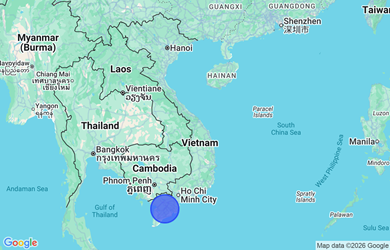
Mekong Delta Region
Mekong Delta region: water plants cannot meet development needs, backward technology, operating at 70% of total capacity. Many factories have been built for a long, and degraded, so the loss rate is high (25% average loss). High population appealing to investors (31)
SECTOR SOURCES
2) https://moc.gov.vn/Images/FileVanBan/BXD_12-VBHN-BXD_27042020.pdf
7) https://www.undp.org/sites/g/files/zskgke326/files/migration/vn/Bao-cao-QG-SDG_VN.pdf
9) http://dwrm.gov.vn/uploads/news/2020_11/bao-cao-hien-trang-moi-truong-2019.pdf
11) https://chinhphu.vn/default.aspx?pageid=27160&docid=152934
14) https://vneconomy.vn/bo-quen-nha-o-cho-nguoi-thu-nhap-thap.htm
15) https://www.mordorintelligence.com/industry-reports/vietnam-waste-management-market-study
16) https://tapchitaichinh.vn/tai-chinh-kinh-doanh/nang-luong-tai-tao-dung-chi-la-tiem-nang-343352.html
IOA SOURCES
3): https://finance.vietstock.vn/BWE/co-cau-so-huu.htm
10) https://tapchitaichinh.vn/tai-chinh-kinh-doanh/nang-luong-tai-tao-dung-chi-la-tiem-nang-343352.html
21) https://nhandan.vn/doi-song-xa-hoi/30-nam-vi-su-nghiep-phat-trien-nganh-nuoc-346059/
23) https://ntm.thainguyen.gov.vn/-/thi-xa-pho-yen-hieu-qua-tu-cac-cong-trinh-nuoc-sach-nong-thon
24) http://moc.gov.vn/vn/Pages/ChiTietVanBan.aspx?vID=759&TypeVB=0
32) https://nhadautu.vn/he-sinh-thai-nghin-ty-aqua-one-group-cua-ba-do-thi-kim-lien-d29128.html
33): https://vanban.chinhphu.vn/default.aspx?pageid=27160&docid=162986
34) https://datafiles.chinhphu.vn/cpp/files/vbpq/2021/06/44-btc.pdf
36) http://www.molisa.gov.vn/Pages/tintuc/chitiet.aspx?tintucID=29769