
Explore the country and target locations of the investment opportunity.
Country
Vietnam
Region
- Highland
- Mekong Delta Region
- Red River Delta
Situate the investment opportunity within sustainability focused sector, subsector and industry classifications.
Sector
Food and Beverage
Development needs
In 2021, The Global Food Security Index of Vietnam is ranked 65/113, indicating high food insecurity and poor food nutrition (1); very low labor productivity in agriculture production, for instance, 2.4 and 2.1 times less than Indonesia and Thailand respectively (2); Seriously affected by climate change, the impact of floods alone causes a loss of 2.3% of GDP every year (3)
Policy priority
Strong support from the government for rural development (The resolution 26-NQ/TW/2008), including the activities in agricultural value chains, e.g market access, technology transfer, access to capital, human resource improvement, infrastructure investment, and business model development (4); food safety for the population (5)
Gender inequalities and marginalization issues
26 m female labor force in the agriculture sector have unstable jobs, low income, and limited access to social welfare (6); a high malnutrition ratio for under-five children in rural areas, being 23.7% as opposed to 6.2% in urban areas (7)
Investment opportunities
Mass production in various crops and livestock, for example, 12.6 million tons of fruits, 22 million pigs, and 512 million poultry (2020) (8); USD 48 billion agricultural/ aquacultural export value in 2021 (9) Post-harvest processing technology - processed products with high added value accounts for only 10-40% of the farm output (10)
Key bottlenecks
Inefficient long supply chain, the under-developed infrastructure of the supply chain, unstandardized production processes leading to challenges in quality control, and lack of human resources.
Sub Sector
Food and Agriculture
Development need
More than 50% of farmers overuse pesticides, negatively impacting human health (11). Limited processing capacity with equipment renewal coefficient is only 7%/year (equivalent to 1/2 - 1/3 of the minimum level of other countries), leading to a low income of USD 210 - 340/month for 1.6 m workers in the sector (12) and a high post-harvest loss rate of 10-20%. (7)
Policy priority
Decree 57/2018/ND-CP encourages investment in agriculture and rural areas (15), and Resolution 48/NQ-CP/2008 provides supports solutions to minimize post-harvest losses for key agricultural products to improve production efficiency and farmers' income (14); Ensuring food safety by supply chain control is set in the National Food Safety Strategy 2011-2020, vision for 2030 (16).
Gender inequalities and marginalization issues
Post-harvest loss and overuse of chemical pesticides are translated into a reduced income for, and a negative impact on the health of, millions of households, including women, children, and ethnic minorities. E.g, chemical pesticide overuse in Binh Thuan province affects over 35,000 households that are on dragon fruit plantations, among which women count as half of the laborers. (17)
Investment opportunities
Estimated USD 300m market for agri-tech solutions, including distribution and retailing (19), more than 100,000 tons of pesticides are imported into Vietnam annually (18). Low fruit processing capacity, being estimated at 600,000 tons, versus total national production of more than 12m tons (20).
Key bottlenecks
Access to land or land acquisition may be costly. Challenges exist in securing enough input supply at desired quality/quantity for processing factories, and in setting up distribution networks for production inputs or finished products.
Industry
Agricultural Products
Discover the investment opportunity and its corresponding business model.
Investment Opportunity Area
Bio-pesticides production for farming
Business Model
B2B model for the production of bio-pesticides for farming. The investment may also include the distribution business (B2B, and B2C). Examples of companies active in this space are:
Vietnam Fumigation produces, processes, and trades disinfectant and agro-pharmaceutical products in Vietnam. The company offers pesticides, herbicides, medication, fertilizers, and rice seeds for farmers. The PAN Group made an offer to acquire an additional 15% stake in Vietnam Fumigation for approximately USD 10m on August 31, 2020.
Learn about the investment opportunity’s business metrics and market risks.
Market Size and Environment
Market Size (USD)
USD 50 million - USD 100 million
CAGR
15% - 20%
Critical IOA Unit
Annual import of pesticides in Vietnam: 100,000 - 120,000 tons (15% is bio-pesticides) (23)
In 2019, Vietnam imported more than 16,100 tons of biological pesticides (about 50.8 million USD), accounting for 17% of the volume of imported pesticides (24)
Globally, the average annual growth rate of biological pesticides was 24% between 2014 to 2017. In 2017, biological pesticides were valued at 3.36 billion USD, forecasted to reach 6.42 billion USD in 2023 and 10.19 billion USD in 2025 (24)
Indicative Return
GPM
20% - 25%
The pesticide market is in a saturated phase, with an ROE of less than 5%. The strong trend of organic agriculture creates opportunities for sustainable farming, which is in turn translated into increasing demand for bio-pesticides. The average gross margin generated by pesticide businesses in Vietnam is 25% (25)
Investment Timeframe
Timeframe
Medium Term (5–10 years)
Decided based on the mode of entry & the products. If the investment is in a business with an already established distribution network, the breakeven can be achieved within less than 36 months.
In the face of strong competition from current chemical products, significant time will be consumed in establishing commercial brands of products in the market.
Ticket Size
Average Ticket Size (USD)
Investment can be through private placement (recommended) in already operating businesses. Size of investment may vary based on the target investment level.
Market Risks & Scale Obstacles
Market - High Level of Competition
Bio-pesticides have to compete with several other chemical products in the market.
Read about impact metrics and social and environmental risks of the investment opportunity.
Sustainable Development Need
The use of bio-pesticides will contribute to reducing the chemical input amount for agricultural production, hence decreasing the proportion of degraded land and improving the area of productive and sustainable agriculture.
The use of bio-pesticides reduces farmers' exposure to chemical pesticides that would be applied otherwise, and so, improving farmers' health via improved production conditions on the field.
Gender & Marginalisation
Reduce the magnitude of health risks associated with the use of chemical pesticides that many women are exposed to during the production of various crops. Such risks are pulmonary dysfunction, severe liver damage, birth defects, suppression of the immune system, and other acute toxicity (34)
Expected Development Outcome
Reduce environmental degradation resulting from the usage of chemical inputs in agriculture production; adapt to climate change, and promote "green growth".
Improve living conditions for the local communities that are exposed to chemical pesticides
Improve food safety for consumers of agricultural products.
Gender & Marginalisation
Improve working conditions for women in agricultural areas. Women account for 64.3% of the labor force and play dominant roles in the production of several crops. For example, women are the main source of labor in the tea value chain, with 120,000 ha plantations in Vietnam.
Primary SDGs addressed
2 - Zero Hunger
2.4.1 Proportion of agricultural area under productive and sustainable agriculture
Current Value
By 2020, out of 14.4 m ha of the plantation, less than 0.3% of this (170.000 ha of plantation) has been certified for VietGAP, which is currently considered a sustainability standard; In aquaculture, only 6.363 ha out of 1.1m ha in total is VietGAP (7)
Target Value
The sustainable agricultural land increases by 10-15% annually (7)
9 - Industry, Innovation and Infrastructure
9.4.1 CO2 emission per unit of value added
Current Value
0.169 tons of CO2eq/1000 USD GDP - 2020 (33)
Target Value
Vietnam's NDC has committed a reduction of 9% carbon emission by 2030 in the case of the normal scenario of carbon emission with domestic resources and up to 27% with international support (21); 0.160 tons of CO2 eq/1000 USD GDP 2030 (33)
Directly impacted stakeholders
People
Farmers who use pesticides input for crop plantations will have less exposure to harmful chemical pesticides, and consumers of agricultural outputs will have safer products cultivated using bio-inputs.
Gender inequality and/or marginalization
Reduce urban and rural disparities in terms of working conditions by eliminating women's exposure to chemical toxic in agriculture activities.
Planet
Reduced degraded land area, improved quality of water (affected by over-use of chemicals on fields), and reduced carbon footprint help in environment conservation.
Corporates
Companies and businesses in the supply chain enjoy better quality products, and higher productivity
Public sector
Reduce the government's budget allocated for addressing environmental issues caused by over-use of chemical inputs in agriculture (e.g. water source and land pollution)
Indirectly impacted stakeholders
People
Local communities will benefit from the improved environment which could be polluted by the use of chemical agriculture inputs (e.g. water source or air pollution)
Gender inequality and/or marginalization
Reduce urban and rural disparities in terms of working conditions by eliminating women's exposure to chemical toxic in agriculture activities.
Planet
Contribute to overall biodiversity and natural resources conservation.
Corporates
Create opportunities for developing new products (bio-pesticides) for companies with a focus on innovation.
Public sector
Reduce the burden on the local government's budget to deal with the negative impact of chemical pesticide use on the environment.
Outcome Risks
The bio-pesticides cannot justify their economic benefits (benefits outweigh the cost), and are thus, less attractive for farmers.
The manufacturer of the products may not be capable of or have sufficient resources for marketing the products to end-users.
Gender inequality and/or marginalization risk: limited perception of the bio-pesticides values in terms of health and environment can limit the use of bio-pesticides by women and marginalized groups.
Impact Risks
Induced by tradition or habit, or due to low awareness about bio-products, farmers continue to use chemical products, making the agricultural practice unsustainable.
The time for the products to establish solid market positions can be prolonged, slowing down the business scaleup
Impact Classification
A—Act to Avoid Harm
What
Bio-pesticides reduce the use/over-use of chemical pesticides which are harmful for farmers and consumers of agri-products
Who
Farmers who use pesticides, the locals who live in the plantation areas, and consumers of the agri-products
Risk
Farmers may resist switching to bio-pesticides due to high cost factor or lack of knowledge about the benefits of bio-pesticides
Contribution
GoV has committed to agricultural bio-industrial development to 2030, of which the budget will be derived from the State and various sources, including private sectors (35)
How Much
10,000 - 15,000 tons of bio-pesticides are needed from this IOA to lift up the share of bio-pesticides from 15% to 25% in Vietnam (23)
Impact Thesis
The use of bio-pesticides will contribute to improving the working conditions for farmers, among which women account for a majority, and reduce the health risks for consumers.
Explore policy, regulatory and financial factors relevant for the investment opportunity.
Policy Environment
National Strategy for sustainable agriculture and rural development: set out strategies for agriculture and rural development to increase productivity, reduce poverty, apply green technology, and develop new rural communities (30)
GoV, Decree 109/2018/NĐ-CP: Encourage the organic agriculture development in Vietnam, set out standards for organic production practices, organic product certification, and quality control of organic products
The Ministry of Agriculture and Rural Development has set a goal by 2025 to increase the number of registered biological pesticides to 30%, and the rate of actual use of biological pesticides to reach 20% (31)
Financial Environment
GoV, Decree 57/2018/NĐ-CP: incentives for businesses to invest in agriculture and rural areas, including support for access to land/ water surface, reduced income taxes, research and technology transfer, human resource development, processing facilities, and so on (28)
Financial incentives: Financial package of 4,37b USD is offered by the State Bank & other banks for hi-tech business (26) If the newly established enterprise in an area with difficult or extremely difficult socio-economic conditions is entitled to the reduced corporate income tax rate (32)
Regulatory Environment
Law on plant protection and quarantine, 2013: provide legal information on the state management of plant protection and pesticides (29)
GoV, Circular 21/2015/TT-BNNPTNT: Regulation on the state management of plant protection products, including pesticides, specifies the products that are allowed or not allowed in Vietnam (27)
Discover examples of public and private stakeholders active in this investment opportunity that were identified through secondary research and consultations.
Private Sector
Agricultural production input suppliers/manufacturers - Loc Troi, Vipesco, Saigon Pesticides, Dong Duoc HAI, TSC Can Tho, Central Plant Protection Company 1, Vietnam Fumigation JSC Company, Golden Rice Agro-Chemical Company, Beyer.
Government
Local governments (at the district and commune level) play an important role (e.g connecting to users, supporting training and marketing of new products), Plant Protection Division (PPD) - under the Ministry of Agriculture and Rural Development (MARD)
Multilaterals
European Union (EU, Development Programme (UNDP), World Health Organization (WHO), World Bank (WB), The Food and Agriculture Organization (FAO)
Non-Profit
Vietnam Organic Association, Vietnam Pesticides Association, Association of Food Transparency (AFT), Vietnam Consumer Protection Association (VICOPRO), Farmers Union (FU), Women Union (WU)
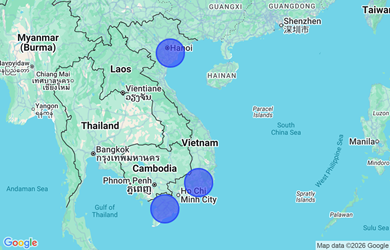
See what country regions are most suitable for the investment opportunity. All references to Kosovo shall be understood to be in the context of the Security Council Resolution 1244 (1999)
Rural
Highland
There are areas in the highland region where high-value agricultural production concentrates. In such areas, the demand for bio-pesticides is of high potential. The production facilities can be in areas close to the target market and have infrastructure suitable to the business conditions.
Rural
Mekong Delta Region
There are areas in the highland region where high-value agricultural production concentrates. In such areas, the demand for bio-pesticides is of high potential. The production facilities can be in areas close to the target market and have infrastructure suitable to the business conditions.
Rural
Red River Delta
There are areas in the highland region where high-value agricultural production concentrates. In such areas, the demand for bio-pesticides is of high potential. The production facilities can be in areas close to the target market and have infrastructure suitable to the business conditions.
SECTOR SOURCES
1) https://impact:.economist.com/sustainability/project/food-security-index/Index
2) https://tiasang.com.vn/-quan-ly-khoa-hoc/Nong-nghiep-Viet-Nam-Nhung-van-de-ton-tai-26635
5) https://datafiles.chinhphu.vn/cpp/files/vbpq/2020/02/41.signed.pdf
6) https://thoibaotaichinhvietnam.vn/chat-luong-viec-lam-cua-lao-dong-nu-nong-thon-con-thap-72150.html
7) https://www.undp.org/sites/g/files/zskgke326/files/migration/vn/Bao-cao-QG-SDG_VN.pdf
8) General Statistic Office (2020)
11) https://quochoi.vn/hoatdongdbqh/Pages/home.aspx?ItemID=50492
13) https://thuonghieucongluan.com.vn/bat-dong-san-kho-lanh-nhu-cau-tang-nhung-nguon-cung-it-a157631.html#:~:text=Savills%20Vi%E1%BB%87t%20Nam%20nh%E1%BA%ADn%20%C4%91%E1%BB%8Bnh,c%E1%BA%A5p%20kho%20l%E1%BA%A1nh%20v%E1%BA%ABn%20%C3%ADt 14) https://vbpl.vn/bonongnghiep/Pages/vbpq-toanvan.aspx?ItemID=85611
15) https://datafiles.chinhphu.vn/cpp/files/vbpq/2018/04/57.signed.pdf
17) https://vusta.vn/binh-thuan-su-dung-thuoc-bvtv-theo-huong-ben-vung-cho-thanh-long-p67248.html
18) https://nongnghiep.vn/thoi-cua-thuoc-bao-ve-sinh-hoc-d305995.html
19) https://britchamvn.com/wp-content/uploads/2021/09/Agri-Tech-Sector-Report.pdf
IOA SOURCES
13) https://thuonghieucongluan.com.vn/bat-dong-san-kho-lanh-nhu-cau-tang-nhung-nguon-cung-it-a157631.html#:~:text=Savills%20Vi%E1%BB%87t%20Nam%20nh%E1%BA%ADn%20%C4%91%E1%BB%8Bnh,c%E1%BA%A5p%20kho%20l%E1%BA%A1nh%20v%E1%BA%ABn%20%C3%ADt 19) https://britchamvn.com/wp-content/uploads/2021/09/Agri-Tech-Sector-Report.pdf
21) https://tuoitre.vn/thuoc-bao-ve-thuc-vat-sinh-hoc-nang-cao-chat-luong-nong-san-20211126185127847.htm
24) https://nongnghiep.vn/thoi-cua-thuoc-bao-ve-sinh-hoc-d305995.html
25) http://www.fpts.com.vn/FileStore2/File/2020/05/27/LTGValuation_RptMay2020_6908846d.pdf
27) https://datafiles.chinhphu.vn/cpp/files/vbpq/2018/08/109-2018-nd-cp.signed.pdf
28) https://datafiles.chinhphu.vn/cpp/files/vbpq/2018/04/57.signed.pdf
29) https://datafiles.chinhphu.vn/cpp/files/vbpq/2013/12/41_kiemdich_thucvat.pdf
31) https://nhandan.vn/bandoc/go-kho-cho-san-xuat-va-su-dung-thuoc-bao-ve-thuc-vat-sinh-hoc-666607/
32) https://chinhphu.vn/default.aspx?pageid=27160&docid=81476
34) https://plo.vn/tiep-xuc-voi-thuoc-tru-sau-co-the-dan-den-tram-cam-post535887.html#:~:text=Ngo%C3%A0i%20vi%E1%BB%87c%20c%E1%BA%A3n%20tr%E1%BB%9F%20n%C3%A3o,v%C3%A0%20suy%20nh%C6%B0%E1%BB%A3c%20c%C6%A1%20th%E1%BB%83. 35) https://thuvienphapluat.vn/van-ban/Linh-vuc-khac/Quyet-dinh-429-QD-TTg-2021-phat-trien-cong-nghiep-sinh-hoc-nganh-nong-nghiep-den-2030-468663.aspx