
Explore the country and target locations of the investment opportunity.
Country
Lao PDR
Region
- Vientiane Province
- Savannakhet Province
- Champasak Province
- Oudomxay Province
Situate the investment opportunity within sustainability focused sector, subsector and industry classifications.
Sector
Food and Beverage
Development need
Lao PDR still faces high rates of food insecurity and malnutrition, with 11.8% of the population undernourished and 33% of children under 5 suffering from stunting. The sector is hampered by its heavy dependence on imports, including seeds, fertilizers, and pesticides. Food system is vulnerable to climate change, that can lead to crop failures and food shortages. (1)(2)(3)
Policy priority
Lao PDR aims to improve the food and beverage sector through the National Development Plan (2018-2022), which prioritizes technical assistance to 4,000 companies and allocates at least 50% of sector investment for producer access to productive assets. The plan also aims to increase domestic food production and improve food security. (4)
Gender inequalities and marginalization issues
Despite women's 54.4% participation rate in Lao PDR's agriculture sector, they only own 18% of agricultural land, receive 84% of the pay compared to men, and have limited access to credit, with only 5% accessing formal credit. Women in senior management positions are only 10%. Addressing these challenges could improve productivity, inclusivity in the agricultural workforce and overall drive long term and sustainable growth of the sector.(5)
The agriculture sector in Lao PDR contributes 16% to the GDP. Lao PDR's investment opportunities include agricultural cold storage, microfinancing for high-quality seeds, agro-industrial processing, and animal feed production. The government is seeking agricultural sector growth of 2.5% by 2025 and has conducted a major agricultural census.(4)
Key bottlenecks
Most rural Lao people are subsistence farmers, and only 10% of the country's land area is dedicated to agriculture. Lao PDR has an agricultural development strategy for 2025, seeking a 2.5% agricultural sector growth to improve nutrition production and secure access to domestic, regional, and international markets. (4)
Sub Sector
Food and Agriculture
Development need
Despite Laos' agricultural potential, the sector is underutilized due to limited access to quality seeds, fertilizers, and pesticides, leading to low crop diversity and yields. The country's livestock sector has shown significant growth, particularly in pigs, cattle, and goats, which could be further enhanced with improved animal feed production and distribution. (4)(6)
Policy priority
The Lao PDR government's National Development Plan (2018-2022) and the 9th NSEDP are addressing these issues by offering technical assistance to farmers, promoting high-quality seeds and modern farming techniques, and enhancing credit access for agricultural enterprises, all aimed at boosting agricultural productivity and improving food security (7)(8)
Gender inequalities and marginalization issues
Women in Lao PDR, particularly in rural areas, face multiple challenges, including limited access to credit and land ownership. Participation in the value chain of Animal feed production can empower women economically and help bridge the gender gap in the sector."
Investment opportunities
The subsector offers opportunities in improving feed production and distribution infrastructure, developing cost-effective feed solutions, and enhancing supply chain efficiencies. These align with the government's 2025 agricultural development strategy, aiming to stimulate sector growth.
Key bottlenecks
Challenges include feed and resource shortages, high costs, and limited access to modern production and distribution technologies.
Industry
Agricultural Products
Discover the investment opportunity and its corresponding business model.
Investment Opportunity Area
Animal Feed Production and Distribution
Business Model
Invest in the manufacturing and distribution of nutrient-rich, sustainable animal feed by utilizing local agricultural by-products, thereby establishing a robust supply chain connecting last-mile farmers. Illustrative examples of enterprises working in this space are:
C.P. Laos: A subsidiary of the Thai conglomerate Charoen Pokphand Foods, C.P. Laos operates a feed mill with a capacity of 6,000 tonnes per month on an area of 100,000 square meters of land. The company also engages in animal farming businesses, including swine and chicken, on 322,000 square meters of land. (10)
Greenfeed Vietnam Corporation: Established in 2003, Greenfeed is a fully integrated clean food chain FEED-FARM-FOOD company. While the company is based in Vietnam, it has operations in Lao PDR and has been recognized by the President of Lao PDR and the government delegation. (11)
Learn about the investment opportunity’s business metrics and market risks.
Market Size and Environment
Market Size (USD)
< USD 50 million
CAGR
5% - 10%
Critical IOA Unit
924,854 tons of Animal Feed produced in 2022 with a market value of $ 16.3 million . [12]
The Lao PDR animal feed market is estimated at around $150 million, according to a 2020 report by the United Nations Food and Agriculture Organization (FAO) (13)
The report also predicts that the market will grow at a CAGR of approximately 6% due to increasing demand from the growing livestock sector and rising awareness about the benefits of quality feed. (14)
Lao PDR produces around 450,000 tonnes of animal feed annually as per the Ministry of Agriculture and Forestry.
Indicative Return
IRR
5% - 10%
The meat consumption per capita increased by 25% from 2017 to 2020. Given the current macroeconomic events in the country, a 5 to 10% return is possible.
Investment Timeframe
Timeframe
Medium Term (5–10 years)
Only 60% of the current demand for animal feed production is met. Investment in this IOA would generate faster returns due to existing demand in the market. (12)
The timeframe also considers the cyclical nature of the agricultural industry and the time needed for adoption of new feed products by farmers (14)
Ticket Size
Average Ticket Size (USD)
> USD 10 million
Market Risks & Scale Obstacles
Business - Supply Chain Constraints
The animal feed production industry in Lao PDR can face challenges due to the lack of developed infrastructure and logistics, which could affect the procurement of raw materials and distribution of the finished product. (16)
Capital - CapEx Intensive
Starting an animal feed production business requires significant upfront investment in manufacturing facilities, machinery, and equipment, which may deter some investors (15)
Market - Highly Regulated
The animal feed industry is subject to strict regulations concerning the safety and quality of the products. Compliance with these regulations can pose challenges, particularly for new entrants
Read about impact metrics and social and environmental risks of the investment opportunity.
Sustainable Development Need
Limited access to affordable and high-quality animal feed for farmers in rural areas (17)
Unsustainable farming practices lead to soil degradation and water pollution. (18)
Insufficient knowledge and skills among farmers regarding sustainable agriculture practices. (19)
Gender & Marginalisation
Limited participation of women and marginalized groups in decision-making processes. (4)
Limited access to resources, including land and credit, for women and marginalized groups. (4)
Gender-based violence and discrimination against women in the agriculture sector. (4)
Expected Development Outcome
Increased availability of affordable and high-quality animal feed for rural farmers leads to improved animal health and productivity. (4)
Adoption of sustainable farming practices leads to reduced soil degradation and water pollution. (4)
Increased knowledge and skills among farmers regarding sustainable agriculture practices, leading to improved livelihoods and food security. (19)
Gender & Marginalisation
Improvement in livelihood of women through employment opportunities will promote their participation in decision-making roles. (4)
Access to stable income streams through employment opportunities improves access to low-interest credit from local financial institutions. (20)
Reduced gender-based violence and discrimination against women in the agriculture sector. (21)
Primary SDGs addressed
2 - Zero Hunger
2.3.1 Volume of production per labour unit by classes of farming/pastoral/forestry enterprise size
Current Value
In Lao PDR, the prevalence of undernourishment was 11.3% in 2020. (22)
Target Value
Lao PDR aims to reduce the prevalence of undernourishment to less than 5% by 2030. (23)
12 - Responsible Consumption and Production
12.2.2 Domestic material consumption
Current Value
In Lao PDR, the adoption of sustainable practices in agriculture remains low, with many farmers still relying on traditional farming methods and using chemical fertilizers and pesticides. (4)
Target Value
Lao PDR aims to increase the adoption of sustainable practices in agriculture, including organic farming and agroforestry, with a target of 70% of farmers using sustainable practices by 2025. (4)
Secondary SDGs addressed
3 - Good Health and Well-Being
5 - Gender Equality
10 - Reduced Inequalities
Directly impacted stakeholders
People
Farmers and their families are directly impacted by the IOA's animal feed production and distribution business model.
Planet
The natural environment in Lao PDR is directly impacted by the IOA's business model, including through the potential negative environmental impacts of unsustainable agriculture practices such as deforestation and water pollution.
Corporates
The IOA's business model directly impacts other corporate actors in the animal feed production and distribution value chain, such as suppliers of raw materials and equipment, and potential buyers of animal products.
Public sector
The Lao government and its agencies, such as the Department of Livestock and Fisheries, are directly impacted by the IOA's business model through its contributions to sustainable development and potential alignment with national development strategies.
Indirectly impacted stakeholders
People
Consumers of animal products in Lao PDR and potentially beyond may be indirectly impacted by the IOA's business model, through the availability of affordable and high-quality animal products.
Gender inequality and/or marginalization
Improved livelihood through stable income streams will reduce gender-based violence in farm households in rural areas.
Planet
The wider global community is indirectly impacted by the IOA's business model through its potential contributions to climate change mitigation and biodiversity conservation.
Corporates
Other corporate actors, such as retailers and food processors, may be indirectly impacted by the IOA's business model through its potential contributions to the availability and affordability of animal products.
Public sector
The wider global community, including international development agencies and organizations, may be indirectly impacted by the IOA's contributions to sustainable development and potential alignment with global development goals such as the SDGs.
Outcome Risks
Increased demand for animal feed leading to increased deforestation and land use change, contributing to habitat destruction and loss of biodiversity.
Dependency on external markets for raw materials, potentially leading to supply chain disruptions and price volatility.
Increased greenhouse gas emissions from animal agriculture, contributing to climate change.
Gender inequality and/or marginalization risk: Women and marginalized groups may face barriers, including access to training, employment, and financial resources.
Impact Risks
The IOA's business model may not lead to improvements in animal health and productivity, potentially reducing the income and livelihoods of farmers and negatively impacting food security.
Negative environmental impacts of unsustainable agriculture practices such as deforestation and water pollution could lead to reduced biodiversity and ecosystem services.
Adoption of unsustainable farming practices by the IOA or its customers could lead to soil degradation and reduced land productivity.
Expansion of the animal feed production and distribution value chain may lead to land grabbing and displacement of local communities, potentially exacerbating social inequalities.
Gender inequality and/or marginalization risk: Women and marginalized groups may not benefit from the IOA's business model, potentially exacerbating gender and social inequalities.
Impact Classification
B—Benefit Stakeholders
What
Increased availability and affordability of high-quality animal feed in Lao PDR, contributing to improved animal health and productivity and increased income for farmers.
Who
Farmers and their families, women and marginalized groups, corporate actors in the animal feed production and distribution value chain.
Risk
Potential negative environmental impacts of unsustainable agriculture practices and potential marginalization of small-scale farmers and local communities due to competition.
Contribution
In Lao PDR, 13.9% of the population faces food insecurity. IOA can enhance livelihood, improving food security. [25]
How Much
Poverty in Lao PDR declined from 33.5% to 23.2% in the last decade. IOA can further reduce poverty by boosting livestock productivity and farmers' income. (26)
Impact Thesis
Expected to increase access to high-quality animal feed, promoting sustainable agriculture and improving rural livelihoods in Lao PDR.
Explore policy, regulatory and financial factors relevant for the investment opportunity.
Policy Environment
National Agriculture Development Strategy 2021-2025: aims to promote sustainable agriculture practices and increase productivity in the agriculture sector, which is directly relevant to the IOA's business model. (27)
National Livestock Development Strategy 2015-2025: outlines strategies for improving livestock production and health, which is directly relevant to the IOA's business model. (28)
Law on Livestock Production and Veterinary Matters (2018): regulates animal feed production and distribution in Lao PDR, which directly affects the IOA's operations. (29)
National Strategy for Small and Medium Enterprise Promotion 2016-2025: aims to promote and support the growth of small and medium enterprises, including those in the agriculture sector. (30)
Financial Environment
Investment Promotion Law (2016): provides tax incentives and other benefits for businesses investing in Lao PDR, which may be relevant to the IOA's operations.(34)
Decree on Incentives for Investment Promotion (2017): provides specific tax incentives for businesses investing in priority sectors, including agriculture, which may be relevant to the IOA's operations.(35)
Small and Medium Enterprise Promotion Fund: provides financing and technical support for small and medium enterprises, including those in the agriculture sector, which may be relevant to the IOA's operations. (36)
Regulatory Environment
Decree on Livestock Feed Quality Control (2016): establishes standards and regulations for animal feed production and distribution in Lao PDR, which directly affects the IOA's operations. (31)
Decree on Livestock and Aquatic Animal Health and Disease Control (2016): regulates animal health and disease control in Lao PDR, which indirectly affects the IOA's operations. (32)
Decree on the Management of Hazardous Chemicals (2018): regulates the handling and disposal of hazardous chemicals, which may be relevant to the IOA's operations. (33)
Discover examples of public and private stakeholders active in this investment opportunity that were identified through secondary research and consultations.
Private Sector
Charoen Pokphand Foods, Betagro, Cargill, Mitr Phol Group, New Hope Group, Greenfeed Lao
Government
Ministry of Agriculture and Forestry, Ministry of Industry and Commerce, Ministry of Natural Resources and Environment
Multilaterals
International Fund for Agricultural Development (IFAD), World Bank, Asian Development Bank (ADB)
Non-Profit
World Wildlife Fund (WWF), Oxfam, Care International
Public-Private Partnership
Lao PDR Livestock and Fisheries Sector Development Project, ASEAN Sustainable Agrifood Systems
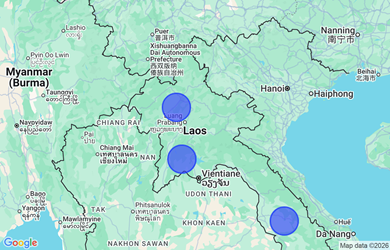
See what country regions are most suitable for the investment opportunity. All references to Kosovo shall be understood to be in the context of the Security Council Resolution 1244 (1999)
Semi-urban
Vientiane Province
Being close to the national capital, this region has good infrastructure and access to markets, making it an ideal location for animal feed production and distribution.
Semi-urban
Savannakhet Province
Savannakhet province has a significant area under both temporary and permanent crops, with 197,200 hectares under temporary crops and 113,260 hectares under permanent crops.
Semi-urban
Champasak Province
The province has a total of 17,630 farm households.[37]
Semi-urban
Oudomxay Province
With a strategic location near China and Vietnam, animal feed production in this area will provide access to both the north-south and east-west economic corridors.
(1) European Union Centre for Socio-Economic Science and Policy Research (CSPR) & National Institute of Economic Research (NIER). (2021). Economic Consequences of Malnutrition in Lao PDR A Damage Assessment Report (DAR). https://nipn.lsb.gov.la/wp-content/uploads/2021/12/UNICEF-Lao-Economic-Consequences-Report-FINAL-WEB.pdf
(2) World Food Programme. (n.d.). Lao People’s Democratic Republic - UN World Food Programme (WFP). https://www.wfp.org/countries/lao-peoples-democratic-republic
(3) UNICEF. (2018, October 18). Preventing malnutrition in Laos. https://www.unicef.org/stories/preventing-harmful-effects-malnutrition-lao-pdr
(4) Asian Development Bank. “Lao People’s Democratic Republic: Agriculture, Natural Resources, and Environment Sector Assessment, Strategy, and Road Map.” Asian Development Bank, 2016, https://www.adb.org/sites/default/files/institutional-document/480141/lao-pdr-agriculture-assessment-strategy-road-map.pdf.
(5) Food and Agriculture Organization of the United Nations. “Gender in the Lao PDR on the Agriculture Sector.” FAO, 2012, https://www.fao.org/fileadmin/templates/rap/files/meetings/2012/121113_laos.pdf.
(6) Access to Seeds Index. “Smallholder Farmers Lack Access to Quality Seeds, Study Shows.” Alliance for Science, 2019, https://allianceforscience.org/blog/2019/02/smallholder-farmers-lack-access-quality-seeds-study-shows/
(7) Government of Lao PDR and development partners. “Government of Lao PDR and Development Partners Validate the Financing Strategy for the 9th NSEDP.” United Nations Lao People’s Democratic Republic, 2022, https://laopdr.un.org/en/201859-government-lao-pdr-and-development-partners-validate-financing-strategy-9th-nsedp.
(8) Government of Lao PDR. “Lao PDR’s Development Policy Priorities for the Next 5 Years: High-Level Consultation on the 9th NSEDP Underway.” United Nations Lao People’s Democratic Republic, 2021, https://laopdr.un.org/en/105110-lao-pdr%E2%80%99s-development-policy-priorities-next-5-years-high-level-consultation-9th-nsedp-under.
(9) World Food Programme, & Food and Agriculture Organization. (2023). Lao PDR - Food security situation, a slow burning crisis. https://reliefweb.int/report/lao-peoples-democratic-republic/lao-pdr-food-security-situation-slow-burning-crisis-wfp-fao-cfsam-echo-daily-flash-10-march-2023
(10) Charoen Pokphand Foods. “Laos.” Charoen Pokphand Foods, 2022, https://www.cpfworldwide.com/en/overseas-operation/laos
(11) Greenfeed Vietnam Corporation. “Home.” Greenfeed Vietnam Corporation, 2022, https://www.greenfeed.com.vn/en/
(12) Laos govt makes call for increased production of fertiliser and animal feed.” The Star Online, 17 July 2022. https://www.thestar.com.my/aseanplus/aseanplus-news/2022/07/17/laos-govt-makes-call-for-increased-production-of-fertiliser-and-animal-feed
(13) Food and Agriculture Organization of the United Nations. (2020). FAO Country Profiles: Laos. https://www.fao.org/countryprofiles/index/en/?iso3=LAO
(14) International Food Policy Research Institute (IFPRI). (2020, March 16). Circular agriculture: A vision for sustainability. IFPRI Blog. https://www.ifpri.org/blog/circular-agriculture-vision-sustainability
(15) Vosloh, C. J. (1976). Feed Manufacturing Costs and Capital Requirements. Economic Research Service, U.S. Department of Agriculture. Agricultural Economic Report No. 335. https://naldc.nal.usda.gov/download/CAT77678659/PDF
(16) Food and Agriculture Organization of the United Nations. (2018). Lao People’s Democratic Republic: Agriculture, Natural Resources, and Environment Sector Assessment, Strategy, and Road Map. https://www.adb.org/sites/default/files/institutional-document/480141/lao-pdr-agriculture-assessment-strategy-road-map.pdf
(17) Food and Agriculture Organization of the United Nations. (2018). Lao People’s Democratic Republic: Agriculture, Natural Resources, and Environment Sector Assessment, Strategy, and Road Map. https://www.adb.org/sites/default/files/institutional-document/480141/lao-pdr-agriculture-assessment-strategy-road-map.pdf
(18) European Environment Agency (EEA). (2020). Land and soil pollution — widespread, harmful and growing. https://www.eea.europa.eu/signals/signals-2020/articles/land-and-soil-pollution
(19) Delecourt, E., Joannon, A., & Meynard, J.-M. (2019). Work-related information needed by farmers for changing to sustainable cropping practices. Agronomy for Sustainable Development, 39(2). https://doi.org/10.1007/s13593-019-0571-5
(20) United Nations. (n.d.). Economic empowerment. https://www.unwomen.org/en/what-we-do/economic-empowerment
(21) Agrilinks. (n.d.). Women’s work in agribusinesses and gender-based violence: What do we know? https://agrilinks.org/post/womens-work-agribusinesses-and-gender-based-violence-what-do-we-know
(22) Sachs, J., Schmidt-Traub, G., Kroll, C., Lafortune, G., & Fuller, G. (2019). Sustainable Development Report 2019. Bertelsmann Stiftung and Sustainable Development Solutions Network (SDSN). https://knoema.com/SDGIX2019/sustainable-development-goal-index?country=1000920-lao-pdr&indicator=1000070-prevalence-of-undernourishment
(23) Our World in Data. (n.d.). Hunger and undernourishment. https://ourworldindata.org/hunger-and-undernourishment
(24) World Bank. (2020). Lao PDR Forest Note. https://openknowledge.worldbank.org/bitstream/handle/10986/34094/Lao-PDR-Forest-Note-Toward-Sustainable-Forest-Landscapes-for-Green-Growth-Jobs-and-Resilience.pdf?sequence=4
(25) United Nations in Lao PDR. “Pathways to Sustainable Food Systems in Lao PDR: Report Launch on the Margins of the 13th High-Level Round Table Meeting.” United Nations in Lao PDR, 9 Nov. 2021, laopdr.un.org/en/157342-pathways-sustainable-food-systems-lao-pdr-report-launch-margins-13th-high-level-round-table.
(26) World Bank Group. “Lao PDR Poverty Profile and Poverty Assessment 2020.” World Bank Group, 20 Oct. 2020, www.worldbank.org/en/country/lao/publication/lao-pdr-poverty-profile-and-poverty-assessment-2020.
(27) “Agriculture Development Strategy to 2025 and Vision to 2030.” Leap UN Environment Programme, https://www.fao.org/faolex/results/details/en/c/LEX-FAOC163566/
(28) National Assembly. “LAW ON LIVESTOCK PRODUCTION AND VETERINARY MATTERS.” World Trade Organization, 25 July 2008, www.wto.org/english/thewto_e/acc_e/lao_e/WTACCLAO17A1_LEG_1.pdf. " "30) Ministry of Industry and Commerce. “National Strategy for Small and Medium Enterprise Promotion 2016-2025.” Ministry of Industry and Commerce, 2016.
(29) Ministry of Agriculture and Forestry. “Decree on Livestock Feed Quality Control.” Ministry of Agriculture and Forestry, 2016.
(30) Ministry of Agriculture and Forestry. “Decree on Livestock and Aquatic Animal Health and Disease Control.” Ministry of Agriculture and Forestry, 2016.
(31) Ministry of Natural Resources and Environment. “Decree on the Management of Hazardous Chemicals.” Ministry of Natural Resources and Environment, 2018.
(32) National Assembly. “Investment Promotion Law.” National Assembly, 2016.
(33) Prime Minister’s Office. “Decree on Incentives for Investment Promotion.” Prime Minister’s Office, 2017.
(34) Ministry of Industry and Commerce. “Small and Medium Enterprise Promotion Fund.” Ministry of Industry and Commerce, 2016.https://unctad.org/system/files/non-official-document/comm2020-10-13_laoPDR_PPT_Insarn_en.pdf