
Explore the country and target locations of the investment opportunity.
Country
Lao PDR
Region
- Vientiane Capital
- Champasak Province
- Luang Prabang Province
- Khammouane Province
- Luang Namtha Province
Situate the investment opportunity within sustainability focused sector, subsector and industry classifications.
Sector
Services
Development need
In 2019, the service sector accounted for 41.9% of Lao PDR's GDP. This sector contributes significantly to the country's GDP and, thus, plays an essential role in economic diversification and job creation. However, challenges such as limited access to finance and skilled labor shortage need to be addressed to ensure the sector's sustainable growth. (1)
Policy priority
The government of Lao PDR has prioritized sustainable development and the promotion of public-private partnerships in its policy initiatives. The government aims to provide support and incentives for further service sector development, aligning with the Lao PDR Vision 2030 and the National Socio-Economic Development Plan. (2)
Gender inequalities and marginalization issues
Despite formal equality, gender inequality persists in Lao PDR, with women facing barriers to entry and advancement in the service sector. Policies and laws do not sufficiently address gender disparities or provide for the specific engagement of women in institutional processes. (3)
Investment opportunities
The service sector in Lao PDR, encompassing areas such as tourism, information technology, and financial services, offers considerable investment potential. As the country continues to diversify its economy away from a traditional agriculture-based model, opportunities for investment in these and other services are expected to grow. (4)
Key bottlenecks
The service sector in Lao PDR faces several bottlenecks that could hinder its growth. Limited access to finance, inadequate infrastructure, and a shortage of skilled labor have been identified as major challenges. Tackling these issues is crucial for the sustainable development of the sector.(5)
Sub Sector
Hospitality and Recreation
The COVID-19 pandemic has had a profound impact on the tourism sector in Lao PDR, which was already grappling with limited job opportunities beyond agriculture. Agro-tourism, a subsector that blends agriculture and tourism, has been identified as a potential area for synergistic development. The pandemic has further emphasized the need for diversification within the tourism sector, making agro-tourism a critical focus.
In response to the pandemic, the Lao government, with support from UNDP, has outlined a Tourism COVID-19 Recovery Roadmap for 2021-2025. This roadmap should extend its focus to include agro-tourism as a priority. The strategy aims to revitalize the hospitality and recreation sector while emphasizing sustainable tourism development, which aligns well with agro-tourism principles [3].
Women make up a significant portion of the tourism sector workforce and are particularly vulnerable due to the pandemic. Since agro-tourism often involves community-based activities, a gender-responsive approach in this subsector could provide more equitable opportunities for women [4].
As Lao PDR aims to recover from the pandemic, agro-tourism presents plenty of investment opportunities. These range from eco-tourism farms to cultural experiences centered around local agriculture. Such diversification enriches the tourism experience and creates more resilient income streams [5].
Key bottlenecks
The challenges facing the agro-tourism subsector include inadequate infrastructure, limited access to finance, and a lack of skilled labor. The pandemic has likely exacerbated these bottlenecks and should be a focal point in any development strategy for agro-tourism [2].
Industry
Hotels and Lodging
Discover the investment opportunity and its corresponding business model.
Investment Opportunity Area
Agro Tourism
Business Model
Invest in the development and promotion of agro-tourism by integrating agricultural practices with tourism activities. This includes creating experiences like farm visits, workshops, local food tasting and stays in rural settings to provide tourists with an immersive and educational experience about local agriculture and culture. Illustrative examples of companies working in this space are:
Living Land Company, Laos is a community-run farm in Luang Prabang that offers hands-on rice farming experience to tourists. Visitors learn about traditional farming methods, contributing to sustainable tourism and local economy
The Gibbon Experience, Laos is an eco-tourism project in Bokeo Nature Reserve, providing visitors with a unique experience of staying in tree houses and zip-lining, while promoting forest conservation and providing local employment
Organic Farm Vang Vieng, Laos is a farm promoting sustainable practices such as organic farming and mulberry paper production. Tourists can stay, volunteer, and learn about their methods, contributing to local community development
Laos Buffalo Dairy, Luang Prabang is a social enterprise offering a unique agro-tourism experience with a dairy farm. Visitors can learn about dairy production, feed animals, and taste local dairy products, supporting local farmers and sustainable agriculture
Kamulodge, Laos: A lodge in the Lao jungle offering an eco-tourism experience with organic farming, local craft workshops, and sustainable practices like using renewable energy.
Learn about the investment opportunity’s business metrics and market risks.
Market Size and Environment
Market Size (USD)
USD 100 million - USD 1 billion
Critical IOA Unit
29,400 jobs in the service sector lost due to the covid19 pandemic.
The tourism sector in Lao PDR has seen a substantial growth over the years. According to the World Travel and Tourism Council, the direct contribution of travel and tourism to Lao PDR's GDP was around $575 million in 2019[16]. It was forecasted to rise by 6.9% per year from 2020-2030[17].
However, the COVID-19 pandemic has caused a temporary decline in tourism worldwide. As the world recovers from the pandemic, nature-based tourism is expected to play a significant role in the revival of the sector in Lao PDR.
Indicative Return
IRR
15% - 20%
The tourism industry in Lao PDR is projected to grow back to pre covid 19 levels where tourism accounted for 12% of the country's GDP
Investment Timeframe
Timeframe
Short Term (0–5 years)
Tourism is expected to become the dominant industry in Lao PDR in the upcoming years.
Ticket Size
Average Ticket Size (USD)
USD 1 million - USD 10 million
Market Risks & Scale Obstacles
Business - Business Model Unproven
While agro-tourism aligns with the global trend towards eco-tourism, it remains relatively untested in Laos.
Business - Supply Chain Constraints
Particularly in rural areas of Laos, infrastructure deficits such as limited road access and weak internet connectivity could hinder agro-tourism expansion.
Capital - CapEx Intensive
Agro-tourism ventures often require substantial upfront investment for infrastructure development and training, posing a scaling obstacle.
Read about impact metrics and social and environmental risks of the investment opportunity.
Sustainable Development Need
Economic Diversification: Rural areas in Laos are heavily dependent on agriculture, which is subject to climate risks. There's a need to diversify rural economies to increase resilience.
Environmental Conservation: Uncontrolled tourism in some areas has led to the natural and cultural heritage degradation. There's a need for sustainable tourism models to conserve these resources.
Rural Poverty: Poverty rates in rural areas of Laos are higher than in urban areas. There's a need to create additional income streams to alleviate rural poverty.
Gender & Marginalisation
Gender Inequality: Women in rural Laos face limited employment opportunities, resulting in economic and social inequality.
Geographic Marginalisation: Rural communities, particularly those in remote areas, often lack access to economic opportunities and basic services.
Expected Development Outcome
Economic Resilience: By promoting agro-tourism, rural communities can diversify their income sources, reducing their vulnerability to climate risks and economic shocks.
Environmental Stewardship: Agro-tourism promotes sustainable use of natural and cultural resources, fostering environmental conservation and cultural preservation.
Poverty Reduction: Agro-tourism can boost local economies by creating jobs and stimulating investment in rural areas, contributing to poverty reduction.
Gender & Marginalisation
Women Empowerment: Agro-tourism can provide women with income-generating opportunities, thereby promoting gender equality.
Rural Development: By bringing economic activities to remote areas, agro-tourism can help alleviate geographic marginalisation, improving access to services and opportunities.
Primary SDGs addressed
8 - Decent Work and Economic Growth
8.3.1 Proportion of informal employment in total employment, by sector and sex
Current Value
Lao PDR’s informal employment, female (% of total non-agricultural employment) was 79.63% in 2017.
Target Value
Reduction in the ratio of informal employment through the creation of formal job opportunities
12 - Responsible Consumption and Production
12.b.1 Implementation of standard accounting tools to monitor the economic and environmental aspects of tourism sustainability
Current Value
The government has begun formulating sustainable tourism policies, but implementation is still in the early stages
Target Value
Full implementation of sustainable tourism strategies and action plans
Secondary SDGs addressed
5 - Gender Equality
10 - Reduced Inequalities
11 - Sustainable Cities and Communities
Directly impacted stakeholders
People
Local community members, particularly small-scale farmers and artisans, will directly benefit from increased income and employment opportunities.
Gender inequality and/or marginalization
Women will have greater access to employment opportunities in the service sector, thus empowering them economically.
Planet
Local ecosystems are positively impacted by sustainable farming and eco-tourism practices.
Corporates
Local businesses within the tourism industry will benefit from increased tourism.
Public sector
Local and national government entities benefit from increased tax revenue and employment.
Indirectly impacted stakeholders
People
The wider community who will benefit indirectly from an improved local economy.
Planet
The wider environment that will benefit from reduced deforestation and pollution.
Corporates
Businesses in the supply chain or those providing services to the tourism industry.
Public sector
Departments responsible for environmental protection, rural development, and labor.
Outcome Risks
Exclusion risk: There's a risk of exclusion of marginalized groups if they are not adequately considered in program design. This could result in a widening of the income gap.
Environmental harm: There's a risk of negative environmental impact if sustainable practices are not strictly adhered to, potentially leading to deforestation.
Over-tourism: If not appropriately managed, increased tourism can strain local resources, damage the environment, and reduce the quality of life for residents.
Impact Risks
External risk: External factors such as political instability, economic downturns, or natural disasters could disrupt the expected impact.
Stakeholder participation risk: Misunderstanding stakeholder expectations or experiences could lead to unintended negative consequences, reducing the program's overall impact.
Drop-off risk: There's a risk that the positive impact may not endure due to a lack of long-term planning or follow-through.
Execution risk: There is a risk that activities are not delivered as planned. This could be due to operational challenges, lack of adequate skills among the team, or unforeseen obstacles.
Gender inequality risk: If not well managed, the program may fail to adequately address gender inequality, resulting in a missed opportunity to empower women and promote gender equality.
Impact Classification
C—Contribute to Solutions
What
The IOA aims to boost local economies through sustainable tourism, providing income to locals while conserving the environment.
Who
The primary beneficiaries are the local communities, who are currently underserved in terms of economic opportunities, and the tourists.
Risk
There's a risk of over-tourism, exclusion of marginalized groups, and environmental harm if the IOA is not managed properly.
Contribution
The IOA is expected to generate new economic opportunities and enhance environmental conservation, which would not have occurred without the initiative.
How Much
29,400 workers in the service sector lost employment due to the covid-19 pandemic. This IOA aims to provide employment opportunities to reduce this number.
Impact Thesis
IOA fosters sustainable growth in local communities via agro-tourism, which through employment opportunities promotes gender equality and inclusion.
Explore policy, regulatory and financial factors relevant for the investment opportunity.
Policy Environment
"National Agro-Tourism Development Plan 2020-2030." This plan aims to develop agro-tourism as a sustainable economic activity in rural areas.
"National Agriculture Policy 2020." This policy aims to modernize the agricultural sector and supports the development of agro-tourism.
"National Rural Development Strategy 2020-2025." This strategy focuses on developing the rural economy, including agro-tourism.
Financial Environment
"Agro-Tourism Development Grant." Government grants for developing agro-tourism projects.
"Agro-Tourism Tax Incentives." Tax breaks for agro-tourism businesses.
"Agro-Tourism Loan Scheme." Reduced interest rates for loans to agro-tourism businesses.
Regulatory Environment
"Law on Forestry No. 06/NA." National Assembly of Lao PDR, 2007. This law regulates forest management, utilization, protection, and restoration.
"Agriculture Act 2020."This act governs agricultural activities and impacts the agro-tourism sector.
"Tourism Act 2020." This act regulates tourism activities, including agro-tourism.
"Environmental Management Act 2020."This act mandates environmentally sustainable practices for businesses, including agro-tourism enterprises.
Discover examples of public and private stakeholders active in this investment opportunity that were identified through secondary research and consultations.
Private Sector
"Green Acres Agro-Tourism," "Farm Life Tours,", "Rustic Holidays Agro-Tourism, Green Discovery Lao and LCC group
Government
"Ministry of Agriculture and Forestry," "Ministry of Tourism and Culture."
Multilaterals
"Food and Agriculture Organization (FAO)," "World Tourism Organization (UNWTO)."
Non-Profit
"Rural Development Foundation," "Sustainable Tourism Foundation."
Public-Private Partnership
"National Agro-Tourism Development Project," a government and private sector collaboration.
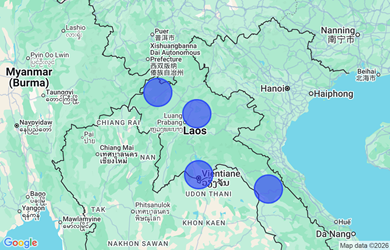
See what country regions are most suitable for the investment opportunity. All references to Kosovo shall be understood to be in the context of the Security Council Resolution 1244 (1999)
Urban
Vientiane Capital
Vientiane, being the capital and largest city of Laos, has well-developed infrastructure and a vibrant cultural scene, making it an ideal location for agro-tourism initiatives. The city's proximity to farming regions allows for easy connection between urban tourists and rural experiences.
Semi-urban
Champasak Province
With its rich agricultural traditions and semi-urban setting, is an excellent location for agro-tourism. The region's farmers can provide authentic experiences to tourists, contributing to the local economy while promoting sustainable practices.
Urban
Luang Prabang Province
The blend of cultural heritage and farming practices makes it a prime location for agro-tourism. Its developed urban environment and access to rural areas create a unique opportunity for visitors to engage with local farming practices and appreciate the city's rich history.
Semi-urban
Khammouane Province
The proximity to both natural resources and farming areas makes it a suitable location for agro-tourism. Visitors can experience local agricultural practices while enjoying the region's natural beauty.
Semi-urban
Luang Namtha Province
Known for its biodiversity and traditional farming methods, offers a rich context for agro-tourism. Its semi-urban setting allows for easy access while providing a gateway to experience the region's unique agricultural heritage.
[1] World Bank. (2019). Tourism for Development in Lao PDR. (https://openknowledge.worldbank.org/handle/10986/31668)
[2] Lao PDR's Eighth National Socio-Economic Development Plan (2021-2025). (https://www.la.undp.org/content/lao_pdr/en/home/library/socio-economic-development-plan.html)
[3] UNDP. (2020). Women's Economic Empowerment in the Tourism Sector in Lao PDR. (https://www.la.undp.org/content/lao_pdr/en/home/library/womens-economic-empowerment-in-the-tourism-sector-in-lao-pdr.html)
[4] Ministry of Natural Resources and Environment, Lao PDR. (https://www.monre.gov.la/index.php/en/)
[5] Asian Development Bank. (2019). Financial Inclusion in Lao PDR. (https://www.adb.org/sites/default/files/publication/513501/financial-inclusion-lao-pdr.pdf)
[6] Laos - United States Department of State. https://www.state.gov/reports/2021-investment-climate-statements/laos/.
[7] COVID-19 to Impact Lao PDR Growth, Debt in 2020: New World Bank Report. https://www.worldbank.org/en/news/press-release/2020/05/20/covid-19-to-impact-lao-pdr-growth-debt-in-2020-new-world-bank-report.
[8] Lao PDR Tourism COVID-19 Recovery Roadmap for 2021-2025. https://www.undp.org/laopdr/publications/lao-pdr-tourism-covid-19-recovery-roadmap-2021-2025.
[9] Women's Economic Empowerment in the Tourism Sector in Lao PDR. https://www.undp.org/laopdr/publications/womens-economic-empowerment-tourism-sector-lao-pdr.
[10] Laos - Investment Climate Statement - International Trade Administration. https://www.trade.gov/country-commercial-guides/laos-investment-climate-statement.