
Explore the country and target locations of the investment opportunity.
Country
Lao PDR
Region
- Vientiane Province
- Oudomxay Province
- Savannakhet Province
- Champasak Province
- Phongsaly Province
Situate the investment opportunity within sustainability focused sector, subsector and industry classifications.
Sector
Food and Beverage
Development need
Lao PDR faces a high rate of food insecurity and malnutrition, with 11.8% of the population undernourished and 33% of children under 5 suffering from stunting. The sector is hampered by its heavy dependence on imports, including seeds, fertilizers, and pesticides. The food production system is vulnerable to climate change, which can lead to crop failures and food shortages. (1)(2)(3)
Policy priority
Lao PDR aims to improve the food and beverage sector through the National Development Plan (2018-2022), which prioritizes technical assistance for 4,000 companies and allocates at least 50% of sector investment for producer access to productive assets. The plan also aims to increase domestic food production and improve food security. (4)
Gender inequalities and marginalization issues
Despite women's 54.4% participation rate in the agriculture sector, they only own 18% of agricultural land and receive 84% of the pay compared to men, and have limited access to credit. Women in senior management positions within the sector are only 10%. Addressing these challenges could improve productivity, inclusivity and sustainability. (5)
Investment opportunities
The agriculture sector in Lao PDR contributes 16% of the national GDP. Lao PDR's investment opportunities in the sector span agricultural cold storage and logistics, and financing for input side needs. The government is seeking agricultural sector growth of 2.5% by 2025 and has conducted a major agricultural census to improve data-driven decision-making. (6)
Key bottlenecks
Despite 80% of Lao's rural population being subsistence farmers, only 10% of the land is used for agriculture. Operational hurdles, including inadequate infrastructure and a lack of skilled labor, farm productivity, and produce quality, restrict agricultural expansion and increase reliance on food imports. (7)
Sub Sector
Food and Agriculture
Development need
In Lao PDR, the Agro-Industrial Processing sector is underdeveloped, with productivity constrained by limited access to capital and skills. The country relies heavily on imports, with 39.71% of the base of food and food products in the CPI basket being import-dependent. Investing in and enhancing the domestic agro-industrial sector can reduce such import dependence. (8)
Policy priority
Policy priority: The Lao PDR government's Country Programming Framework 2022-2026 (CPF), developed with the FAO, focuses on improving people's well-being, promoting inclusive prosperity, and enhancing environmental resilience in the food and agriculture sector. (9)
Gender inequalities and marginalization issues
Women in rural areas of Lao PDR face intersectional hardships both due to their status as indigenous people as well as their gender. Low levels of access to social development services such as health and education further exacerbate gender inequalities and marginalization as they are less likely to be qualified for employment opportunities. (10)(11)
Investment opportunities
AIP exports will increase from US$ 743 million in 2021 to 2 billion by 2025 with potential for growth in cash crops. 5 million hectares of land are suitable for cultivation in Laos, and 1.7 million hectares are currently used for plantation. Improving transport and trade infrastructure along the regional economic corridors connecting China, Thailand, and Vietnam. (12)(13)(14)(15)
Industry
Processed Foods
Discover the investment opportunity and its corresponding business model.
Investment Opportunity Area
Agro-Industrial Processing Facilities
for domestic and international markets
Business Model
Invest in the processing of agricultural produce into value-added products, such as starch, flour, chips, instant coffee, juice, jam, dried fruits, meat, or dairy products with access to market solutions for domestic or regional markets. Illustrative examples of enterprises working in this space are:
Yupaoyan Cassava Processing Co., Ltd. is a leading cassava processing company in Laos, established in 2015 in Luang Namtha province, produces a variety of cassava products, including cassava starch, cassava flour, cassava chips, and ethanol. The company has an annual output of 50,000 tons of cassava starch, 30,000 tons of cassava flour, 10,000 tons of cassava chips, and 5,000 liters of ethanol.
Dao coffee has been operating in Lao PDR for over 20 years. It sources coffee beans from smallholder farmers and processes them before exporting to international markets. (17)
Lao Fruits Processing Factory Co., Ltd. is a fruits processing company established in 2012 in Vientiane capital. The company produces mango juice, pineapple juice, banana chips, dried mango, and frozen fruits, an annual output of 50,000 tons of mango juice, 30,000 tons of pineapple juice, 10,000 tons of banana chips, 5,000 tons of dried mango, and 2,000 tons of frozen fruits. (38)
Learn about the investment opportunity’s business metrics and market risks.
Market Size and Environment
Market Size (USD)
USD 100 million - USD 1 billion
CAGR
15% - 20%
Critical IOA Unit
Laos AIP sector CAGR: 15-30% over 5 years, indicating significant medium-term growth.
Laos' agro-industrial processing sector is estimated to be around $1.5 billion in 2022, representing ~10% of the total value of Laos' agricultural output. The industry has the potential to grow
According to the FAO, total output of sugarcane is expected to increase from ~3.4 m tons (USD~447m) in 2019, to 2 m tones (USD600 m) by 2025 approximately 70% of sugarcane produce in Laos is processed. The remaining 30% is typically either consumed fresh by local farmers and their families or used as animal feed.(28)
The total output of starchy root products is expected to increase from ~1.5 m tons (USD~850 m) in 2019, to 3.5 m tons (USD~875 m) by 2025. Industry experts estimated that only 50% of these products are being processed and added value.(23)
Indicative Return
IRR
10% - 15%
ROI
10% - 15%
GPM
15% - 20%
Lao agro-industrial processing promises high returns: Cassava exports could generate $214M annually with a 15-20% IRR with similar IRRs expected in livestock and tea industries. Government and global investments focus on enhancing this sector's growth.
Investment Timeframe
Timeframe
Medium Term (5–10 years)
Laos Agro-Industrial Processing sector growth needs medium-term investment timeframe for full-scale operations and market integration, backed by viable IRRs and infrastructure to support such as the Laos-China Railway project.
Ticket Size
Average Ticket Size (USD)
USD 1 million - USD 10 million
Market Risks & Scale Obstacles
Business - Supply Chain Constraints
Supply chain constraints include limited access to quality inputs such as seeds, fertilizers, inadequate infrastructure (90% or rural roads unpaved) and limited market access.
Capital - CapEx Intensive
Establishing agro-industrial facilities in Lao PDR is capital intensive due to costs for high-quality equipment, infrastructure, worker training, regulatory compliance, and working capital
Market - Volatile
The prices of agricultural commodities, such as cassava, sugarcane, and maize, are subject to global market fluctuations. The value of the Lao kip (LAK) against other currencies, such as the US dollar (USD), can significantly impact the financial performance of AIP projects
Agricultural production in Laos is influenced by seasonal patterns and weather conditions. Droughts, floods, and other extreme weather events can disrupt supply chains, lead to crop failures, and impact the availability of raw materials for processing.
Read about impact metrics and social and environmental risks of the investment opportunity.
Sustainable Development Need
11.8 % of the population is undernourished and 33% of children in Lao PDR under the age of 5 suffer from stunting.
High rates of poverty in rural areas.
Gender & Marginalisation
Investment in agro-industrial processing in Lao PDR will generate quality job opportunities for women, thereby addressing the issue of low participation of women in the agro-industrial workforce due to gender roles and stereotypes
The employment opportunities provided by the agro-industrial sector will tackle the challenges faced by rural women and ethnic minorities who are marginalized due to their location and limited access to adequate infrastructure, services, and education
Expected Development Outcome
AIP will increase the availability of preserved food, reducing food insecurity in rural areas.
Enhance value addition and food security by investing in modern agro-industrial processing facilities, benefiting both farmers through better prices and consumers through access to higher quality products.
Gender & Marginalisation
Agro-industrial processing can empower women by creating job opportunities in areas traditionally dominated by men
Investment in AIP will improve the livelihood of farmers in rural areas through increased market linkages and employment opportunities
Primary SDGs addressed
1 - No Poverty
1.2.1 Proportion of population living below the national poverty line, by sex and age
Current Value
In Lao PDR, 23.2% of the population lived below the national poverty line in 2017, with higher rates in rural areas and among ethnic minorities
Target Value
No Poverty By 2030, the government of Lao PDR aims to reduce the national poverty rate to less than 10% from 18.6% in 2020
2 - Zero Hunger
2.1.2 Prevalence of moderate or severe food insecurity in the population, based on the Food Insecurity Experience Scale (FIES)
2.2.1 Prevalence of stunting (height for age <-2 standard deviation from the median of the World Health Organization (WHO) Child Growth Standards) among children under 5 years of age
2.2.2 Prevalence of malnutrition (weight for height >+2 or <-2 standard deviation from the median of the WHO Child Growth Standards) among children under 5 years of age, by type (wasting and overweight)
Current Value
In 2020, 22.5% of the Lao population experienced moderate or severe food insecurity, with higher rates in rural areas
The proportion of stunting among under-five children has decreased from 44.2% in 2012 (LSIS 1) to 33% in 2017 (LSIS 2), 32.7% in 2019 and 32.3% in 2020
The proportion of underweight children under five years of age has decreased from 26.6% in 2012 (LSIS 1) to 21.1% in 2017 (LSIS 2), 20.8% in 2019, and in 2020 it is expected to decrease to 20.3%
Target Value
Lao PDR targets significant agricultural growth: Rice to 3.5-4M tonnes, coffee at 175K tonnes, feed corn up 22.9% to 636.9K tonnes, cassava at 3.6M tonnes, sugarcane up 34.3% to 1.6M tonnes, bananas up 1.9% to 753.5K tonnes, plus sweet potatoes, tea, and beans.
National assembly approved target: 32% by 2025
National Assembly approved target: 20% by 2025
9 - Industry, Innovation and Infrastructure
9.2.2 Manufacturing employment as a proportion of total employment
Current Value
Manufacturing accounts for 9% of the employment
Secondary SDGs addressed
5 - Gender Equality
8 - Decent Work and Economic Growth
12 - Responsible Consumption and Production
Directly impacted stakeholders
Gender inequality and/or marginalization
Women and ethnic minorities will benefit from reduced barriers related to societal norms and stereotypes which restrict access to opportunities in the agro-industrial sector
People
Smallholder farmers in rural areas, including women and marginalized groups and low-income groups will benefit from improved AIP techniques, leading to improved productivity, income, and livelihoods. Consumers will have access to affordable and high-quality food products
Planet
AIP will help reduced food waste with new technologies and expertise which can lead to reduced greenhouse gas emissions
Corporates
Input suppliers for AIP will benefit from increased demand for their products. Logistics transportation and warehouse companies will see increased demand
Public sector
The government will benefit through increased tax revenue, job creation, and economic growth. The industry will help reduce import dependency
Indirectly impacted stakeholders
People
Local residents benefit from increased economic opportunities, improved food security and stability and better standards
Gender inequality and/or marginalization
Increased sources of income from agro-industrial processing will decrease gender-based violence in rural areas
Planet
AIP will reduce deforestation by providing farmers with alternative sources of income which would reduce the need to clear land for agriculture and will improve soil health by promoting the use of sustainable agricultural practices
Corporates
Agro-processing will result in enhancing product quality, safety, and reliability, leading to more efficient and reliable sourcing for companies that depend on agricultural products from Lao PDR
Public sector
Regional cooperation and trade can help to foster peace and stability in the region
Outcome Risks
AIP facilities require significant amounts of water for processing and cleaning, straining local water resources.
AIP can generate emissions of greenhouse gases, particulate matter, and volatile organic compounds, contributing to air pollution and its associated health and environmental impacts.
May aggravate environmental pollution and health risks associated with using pesticides, fertilizers, and other chemicals in agro-industrial processing.
Traditional practices of relying on substance farming for livelihood will impacted as increased demand for agro-industrial processing leads to less land available for subsistence farming.
Impact Risks
There could be a potential overreliance on AIP and market dependence and concentration of power and market dominance.
Technological Issues: Failure to maintain, update or adopt new processing technologies can reduce efficiency and quality, affecting the expected impact.
Economic Downturn: Reduced demand for processed goods due to economic decline could adversely affect the initiative, leading to financial instability.
Regulatory Changes: Changes in governmental policies or regulations might affect operational procedures, impacting the overall performance and expected outcomes.
Lack of inclusive policies could result in gender-based discrimination or marginalization, affecting workforce diversity and potentially decreasing productivity and innovation.
Impact Classification
C—Contribute to Solutions
What
Promote agro-industrial processing to enhance the quality of domestic produce and facilitate local producers to benefit from access to improved market linkages.
Who
Domestic agro-industrial processors benefit from the knowledge spillover from FDI investors; domestic consumers benefit from improved availability of quality local products.
Risk
Workplace accidents, injuries due to manual labor, and inadequate safety training are key operational risks in agro-processing.
Contribution
1.7 million people (23%) now live on less than USD 1.25 a day. The IOA can generate jobs in rural areas, thus reducing poverty.
How Much
2.3 million people suffer from moderate or severe food insecurity. The IOA can contribute towards reducing such food insecurity by decreasing food waste and lower food scarcity.
Impact Thesis
To decrease food insecurity, create jobs, and promote social inclusion by enhancing agricultural productivity and reducing import dependence for food.
Explore policy, regulatory and financial factors relevant for the investment opportunity.
Policy Environment
Lao PDR's Ninth National Socio-Economic Development Plan (NSEDP 2021-2025): Outcome 2: Improved quality of human resources to meet development, research capacity, science and technology needs, and create value-added production and services.
Lao PDR's Industrial Development Policy 2016-2025: The policy encourages the formation of consumer cooperatives which could assist agriculture’s ‘sixth industrialisation’ by providing a solid distribution channel for high-quality local products to health/environment-conscious consumers.
Lao PDR's Agriculture Development Strategy to 2025: The strategy promotes the coordination between the Agriculture and Forestry Sector and relevant sectors, aiming at improving and developing production chain related to processing and marketing in a comprehensive system.
Financial Environment
The Lao government provide access to low-interest loans or loan guarantees for AIP businesses, Laos is eligible for funding from international organizations such as the World Bank and the Asian Development Bank, which can be used to support AIP projects
The government provides reduced corporate income tax rates for companies that invest in designated sectors or regions and an exemption from import duties on specific machinery and equipment used in production.
The 9th NSEDP policy clause on infrastructure support and capacity-building initiatives could help mitigate the bottleneck issues in agro-industrial processing by indirectly incentivizing businesses in this sector
Regulatory Environment
Lao PDR Food Law (2004) prohibits using artificial sweeteners, preservatives, cochineal, and adulterated colourants in the production and processing of food in amounts that exceed standards defined by laws and regulations, which directly affects the IOA's focus on quality control.
Lao PDR Labor Law (2013) emphasizes promoting occupational freedom and hiring marginalized groups; Employment in rural areas, daily labor, contractors, temporary workers, and trainees, including those in the agro-industrial processing sector.
Article 24 mandates using clean technology in production and business operations, including agro-industrial processing, to minimize environmental impacts.
Discover examples of public and private stakeholders active in this investment opportunity that were identified through secondary research and consultations.
Private Sector
Companies such as Dao-Heuang Group, Lao Brewery Company Ltd., and Yupaoyan Cassava Processing Co., Ltd. Lao Fruits Processing Factory Co., Ltd. Lao Dairy Farm and Processing Center, Xaoban, Sinouk Coffee.
Government
Ministry of Agriculture and Forestry, Ministry of Industry and Commerce, Ministry of Planning and Investment, Ministry of Natural Resources and Environment.
Multilaterals
Asian Development Bank, World Bank, Food and Agriculture Organization, International Fund for Agriculture Development.
Non-Profit
Oxfam, SNV Netherlands Development Organisation
Public-Private Partnership
One District One Product initiative in Lao PDR is working with smallholder farmers and promoting value-addition practices to their primary agricultural outputs.
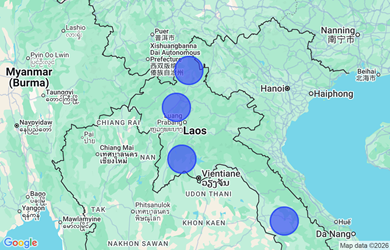
See what country regions are most suitable for the investment opportunity. All references to Kosovo shall be understood to be in the context of the Security Council Resolution 1244 (1999)
Semi-urban
Vientiane Province
Close to the national capital, this region has good infrastructure and access to markets, making it an ideal location for agro-industrial processing initiatives.
Semi-urban
Oudomxay Province
Being one of the major rice-producing provinces, this region has a large rural population engaged in farming, making it suitable for sustainable agricultural practices and agro-industrial development.
Semi-urban
Savannakhet Province
Its strategic location along the East-West Economic Corridor (EWEC) gives it significant potential for trade, making it an ideal place for agro-industrial enterprises seeking to export their products.
Semi-urban
Champasak Province
Champasak has a strong agricultural sector with diverse crops, providing a rich source of raw materials for agro-industrial processing.
Semi-urban
Phongsaly Province
Despite being one of the most remote provinces, it's rich in biodiversity. Agro-industrial initiatives here could leverage local crops, providing income opportunities for local communities.
(1) 2012, “National Strategy on Climate Change of Lao PDR.” United Nations Development Programme, https://www.undp.org/laopdr/publications/national-strategy-climate-change-lao-pdr
(2) 2020, The State of Food and Agriculture in Lao PDR 2020, Food and Agriculture Organization of the United Nations (FAO). https://www.fao.org/lao-people-democratic-republic/en/
(3) “Laos.” World Food Programme, https://www.wfp.org/countries/lao-peoples-democratic-republic
(4) Lao People’s Democratic Republic. National Development Plan (2018-2022). 2018. https://www.wfp.org/operations/la02-lao-peoples-democratic-republic-country-strategic-plan-2022-2026.
(5) Lao People’s Democratic Republic. “Gender in the Lao PDR on the agriculture sector.” FAO, 2012, https://www.fao.org/fileadmin/templates/rap/files/meetings/2012/121113_laos.pdf.
(6) Asian Development Bank. “Lao People’s Democratic Republic: Agriculture, Natural Resources, and Rural Development Sector Assessment, Strategy, and Road Map.” Asian Development Bank, December 2018, https://www.adb.org/sites/default/files/institutional-document/480141/lao-pdr-agriculture-assessment-strategy-road-map.pdf.
(7) Food and Agriculture Organization of the United Nations. “Agriculture Development Strategy to 2025 and Vision to 2030.” UNEP Law and Environment Assistance Platform Home Countries Lao People’s Democratic Republic Agriculture Development Strategy to 2025 and Vision to 2030.