
Explore the country and target locations of the investment opportunity.
Country
Vietnam
Region
- Countrywide
Situate the investment opportunity within sustainability focused sector, subsector and industry classifications.
Sector
Renewable Resources and Alternative Energy
Development need
High volume of investment amounting to ~USD 14 billion/year is needed for the power grid and the power sources. (1) The share of renewable power is set to increase significantly to 42% by 2045 (7) to contribute to addressing the increasing trend of carbon emission per capita, from 1.75 tons in 2010 to 2.81 tons in 2018. (2)
At the COP26 conference, the GoV committed to achieving net-zero carbon emissions by 2050. Vietnam National Power Plan No.8 (being finalized) states that by 2045, total renewable energy sources, including small hydroelectricity, wind power, solar power, and biomass power, will account for 43%. Coal-fired power will reduce from 29% in 2020 to about 13% in 2045. (8)
Gender inequalities and marginalization issues
The energy sector is traditionally dominated by men, mostly engineers; Top posts are usually occupied by men (11). Energy planning continues to be supply-side-driven, focusing more on technology requirements and maintaining prices, rather than demand-driven with a focus on end-users, specifically women and men’s specific energy needs in communities.
Investment opportunities
Annual growth rate of national electricity demand is forecasted to be 8.5%, and 7.5% in the period 2021 – 2025 and 2026 – 2030 respectively; to meet this demand, 130,000 MW is needed by 2030.(4) Expansion of transmission lines, energy-efficient equipment, and electric vehicles, including charging stations, are all also needed.
Key bottlenecks
Regulatory framework is not yet fully developed, limited capacity of the national power grid, logistics support for renewable energy is underdeveloped
Sub Sector
Alternative Energy
Development need
Estimated additional 20 GW of renewable energy is to be installed to deliver the target 25% share of renewable energy by 2030 (10). Capacity constraints hinder the supply from the national grid. The efficiency level of energy consumption is high at 380 koE/1000 USD GDP (2017), i.e. 30% and 40% more than that in Malaysia and Thailand. (2,8)
Policy priority
Resolution 55-NQ/TW of the PolitBureau considers renewable energy a mitigation measure for greenhouse gas (GHG) emissions. Priority is on the development of the RE technology market, providing renewable energy services in the country, and strengthening the potential for research, development, transfer, and application of new forms of renewable energy. (6)
Gender inequalities and marginalization issues
Renewable energy resources are not exploited at various locations to benefit local communities that may include ethnic minorities, low-income groups, and women. Limited information and access to energy-efficient home appliances.
Investment opportunities
Total potential size of large-scale solar power is about 386 GW (3); only 16 GW has been installed (5). The total potential of wind power is more than 130 GW (3), but only 5,7 GW has been installed (5). Vietnam's solar PV equipment market stood at USD 9,209 million in 2020, with a forecasted CAGR of 12.09% in 2021-2025. (9)
Key bottlenecks
incomplete legal framework for renewable energy development, lack of a database for project development, underdeveloped management capacity and infrastructure (e.g. for super-load transportation).
Industry
Solar Technology and Project Developers
Discover the investment opportunity and its corresponding business model.
Investment Opportunity Area
Affordable solar water heaters
Business Model
Invest in the manufacturing of affordable solar water heater equipment for low-income groups. Under a B2B model, this IOA can serve customers including, home appliances distributors, while under a B2C model, businesses can set up their own channels to sell to domestic end-users directly. A combination of B2B and B2C can also work efficiently.
Currently, in Vietnam, there are many businesses participating in the solar water heater market, but mainly in the business of distribution combined with processing and assembling. Most of the main equipment such as solar collectors and/or hot water tanks are imported from China, Japan, Australia, and Italy.
A few businesses, like Son Ha, SolarBK, Tan A Dai Thanh, Toan My, Dapha, and Megasun manufacture solar collectors and/or hot water tanks at a discounted price to suit the actual conditions of Vietnam.
Learn about the investment opportunity’s business metrics and market risks.
Market Size and Environment
Market Size (USD)
USD 50 million - USD 100 million
Critical IOA Unit
Average of over 40 water heaters per 100 households (6), most of which use grid power.
Due to improvements in income and living standards, the demand for hot water in Vietnamese households is increasing. In 2010, there were 13 hot tubs for every 100 households. By 2020, there are more than 42 hot water baths (an increase of 2.8% per year). (23)
In its commitment to reduce greenhouse gas emissions, Vietnam has a target to increase the number of households using solar water heaters by 2030, from 1% in 2014 to 30% in urban areas, and from 0.3% to 5% in rural areas. (24)
Vietnam's population by 2030 is forecasted to reach 105 million people, with about 29 million households, of which 50% live in rural areas. In accordance with Vietnam's commitment to reduce emissions by 2030, there will be over 700,000 households in rural areas with solar water heating equipment (25).
Indicative Return
ROI
10% - 15%
The gross profit margin of companies manufacturing and trading solar water heaters like Son Ha ranges from 12-14% (26)
Investment Timeframe
Timeframe
Short Term (0–5 years)
The distribution system of water heaters has developed widely throughout Vietnam. Development of Adaptable Solar Water Heating is, however, expected to take a long time due to the time involved in research and development, and market study. (27)
Ticket Size
Average Ticket Size (USD)
Driven by the target capacity of the investment
Market Risks & Scale Obstacles
Capital - Limited Investor Interest
Not many investors are yet interested in low-cost solar water heater production.
Read about impact metrics and social and environmental risks of the investment opportunity.
Sustainable Development Need
Solar energy heaters are a solution that contributes to reducing power shortage during peak hours due to the substantial power consumption of water heating (A family of 4 people would consume an average of 1.0-2.2 kWh/day for hot water needs (3))
The use of solar water heaters reduces CO2 emissions by the equivalent of 0.6kg/kWh (12)
Gender & Marginalisation
More affordable solar water heating devices are needed for the customers in rural areas. Most of the installed one million solar water heating devices are for the group of customers in the city area.
Expected Development Outcome
Reduce peak load capacity of the national power system; Contribute to reducing greenhouse gas emissions by reducing the use of thermal power; Increase the percentage of households using clean energy.
Gender & Marginalisation
Improve the quality of life for people in rural areas, especially those who are sensitive to weather conditions, including elderly and children.
Primary SDGs addressed
13 - Climate Action
13.2.2 Total greenhouse gas emissions per year
Target Value
Viet Nam will have reduced its GHG emissions by 9% compared to the Business-As-Usual scenario by 2030 with its own domestic resources (24). The use of solar water heaters reduces CO2 emissions by the equivalent of 0.6kg/kWh (7)
7 - Affordable and Clean Energy
7.1.2 Proportion of population with primary reliance on clean fuels and technology
Secondary SDGs addressed
12 - Responsible Consumption and Production
Directly impacted stakeholders
People
Improvement in quality of life for households in areas with the potential to use solar water heaters.
Gender inequality and/or marginalization
People living in remote areas, including women and marginalized groups, will benefit from savings in power costs, and improvement in quality of life from the use of heating devices.
Planet
Reducing greenhouse gas emissions by reducing the use of grid electricity produced from thermal power
Corporates
Home appliance businesses will have the opportunity to expand their market by providing alternative energy-efficient heating devices. Contribute to reducing power breakdowns at peak hours.
Public sector
Reduce the budget for investment in national grids (owned by the government)
Indirectly impacted stakeholders
People
The population, in general, will benefit from the positive impact of renewable energy on the environment.
Corporates
Commercial businesses that use solar heating devices will benefit from savings in power costs, whilst promoting their brand as of eco-businesses.
Public sector
Reduced pressure on social issues of environmental pollution caused by consumption of coal-firing energy.
Outcome Risks
Changes in the supply chain may increase the cost of production inputs, making the products unaffordable for low-income groups.
The investment fails to take into account the resources for marketing (e.g. educating the market or developing the distribution network to reach out to people in rural areas).
Strong competition by grid-powered water heaters in terms of price, leads to a reduction in demand for solar water heaters.
Impact Risks
Affordable Solar Water Heating Systems, after use, can create non-biodegradable waste that negatively affects the environment.
Impact Classification
C—Contribute to Solutions
What
Contribute to reducing peak load capacity; increasing the rate of clean energy use; reducing greenhouse gas emissions.
Who
The underserved population of low-income people who have difficulty in accessing high-priced solar water heating devices.
Risk
Lack of scale or technology can decrease the financial affordability of the devices.
Contribution
With a complete solar hot water supply system, it is possible to save 60-90% energy compared to other types of traditional water heaters (31)
How Much
There are an average of over 40 water heaters per 100 households (6), most of which use grid power. This number represents potential the market size for solar heaters.
Impact Thesis
This investment contributes to reduction in coal-burning for energy consumption, reducing carbon emissions with cascading impact on the quality of life of the population on the whole.
Explore policy, regulatory and financial factors relevant for the investment opportunity.
Policy Environment
Green Growth Strategy: covers various strategic points for green growth, including the increase of renewable energy and efficient use of energy (29) National Power Planning No 8: This is being finalized. It is proposed that renewable energy (including small hydro, wind, solar, and biomass) will account for 25% and 42% of the country's total power capacity by 2030 and 2045 respectively (7, 10)
GoV, Decision 279/QĐ-TTg: to reduce at least 30% of peak load capacity – approximately 300 MW in 2020, 1,000 MW in 2025, and 2,000 MW in 2030. To continue implementation of the program to promote/ raise awareness about the benefits of using solar water heaters (27)
GoV, 55-NQ/TW: Orientation for development strategy of Vietnam energy to 2030, vision for 2045; by 2030, renewable energy accounts for 15-20% of total primary energy supply; Encourage rooftop and on-water solar power; Energy-saving and efficiency, and environmental protection (28)
Financial Environment
Vietnam State Bank, Decision: 1552/QĐ-NHNN: Capacity building for banks to carry out green credit, develop solutions to promote banking products for green credit, supporting businesses to implement green growth (32)
Vietnam Environment Protection Fund has a preferential loan program for renewable energy projects with up to 80% of the total investment capital of the project, with an interest rate of 2.6-3.6%/year and a maximum term of 10 years (34)"
Regulatory Environment
Law on Environmental Protection 2020: Producers and importers of solar equipment will be responsible for recycling. They will have to either organize the recycling or pay a premium to the Vietnam Environmental Protection Fund.
Currently, Vietnam has no specific program to encourage people to use solar energy water heaters and/or businesses that invest in the production of these devices - especially low-cost products for low-income people.
Discover examples of public and private stakeholders active in this investment opportunity that were identified through secondary research and consultations.
Private Sector
Son Ha, SolarBK, Tan A Dai Thanh, Toan My, Dapha, Megasun, and Ariston
Government
Ministry of Commerce and Trade, Municipal governments
Multilaterals
European Union (EU), United Nations Development Programme (UNDP), Asian Development Bank (ADB), and World Bank (WB).
Non-Profit
Non-Profit: Vietnam Solar Energy, Vietnam Clean Energy Association
See what country regions are most suitable for the investment opportunity. All references to Kosovo shall be understood to be in the context of the Security Council Resolution 1244 (1999)
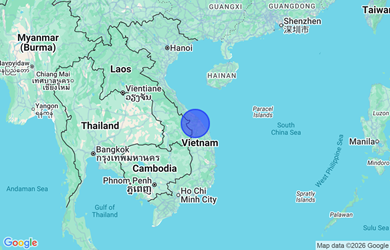
Countrywide
The factory can be located at any place where the enabling conditions are attractive. The target market segment will be the areas where solar energy is available (In the South and various places across the North)
SECTOR SOURCES
2) https://www.undp.org/sites/g/files/zskgke326/files/migration/vn/Bao-cao-QG-SDG_VN.pdf
4) https://baophapluat.vn/du-bao-nhu-cau-nang-luong-cho-nam-2020-dat-235-ty-kwh-dien-post355135.html
5) https://baodautu.vn/nang-luong-tai-tao-tiem-nang-kinh-te-to-lon-cua-viet-nam-d163244.html
7) https://minh.haduong.com/files/LanAnhNguyen.ea-2017-HomePV.pdf
8) https://vnexpress.net/ly-do-viet-nam-van-nguy-co-thieu-dien-du-nhieu-dien-gio-mat-troi-4464960.html
9) https://www.techsciresearch.com/report/vietnam-solar-photovoltaics-equipment-market/4723.html
11) https://pdf.usaid.gov/pdf_docs/PA00SVKB.pdf
IOA SOURCES
12) https://minh.haduong.com/files/LanAnhNguyen.ea-2017-HomePV.pdf
22) https://websosanh.vn/s/b%C3%ACnh+t%E1%BA%AFm+n%C6%B0%E1%BB%9Bc+n%C3%B3ng.htm
26) https://www.sonha.com.vn/wp-content/uploads/2022/03/BCTC-HN-2021-sau-kiem-toan.pdf
31) https://vnexpress.net/thi-truong-may-nuoc-nong-nang-luong-mat-troi-viet-nhieu-tiem-nang-4384471.html