
Explore the country and target locations of the investment opportunity.
Country
Indonesia
Region
- Countrywide
- Sumatra
- Java
Situate the investment opportunity within sustainability focused sector, subsector and industry classifications.
Sector
Infrastructure
Development need
To achieve the GDP growth target, infrastructure spending should reach ~USD 450 bn, while GoI allocated 37% from state budget (1). In 2020, 40.47% population was living in slums, informal settlements or inadequate housing. (2) In 2019, 13.86% Urban Slum Households (growing each year) were unfit for habitation and without proper sanitation facilities. (3)
Policy
2020-24 National Development Agenda states infrastructure development as a priority for economic development. (1) GoI aims to provide accessible affordable housing for low-income households (MBR), including the continuation of programs such as the 1 million urban housing (Sejuta Rumah) program. (4)
Gender inequalities and marginalization issues
Poor quality infrastructure impacts women's mobility often impacting their livelihood choices, increases time spent on activities such as water collection, exposure to household pollution, increased burden to manage waste, among others.
Being the primary managers of water supply in households, women are greatly affected by water scarcity and quality issues, and have higher stakes in resilience-building solutions.
Disasters triggered by natural hazards, including extreme weather impacts, can damage houses in urban areas due to high exposure to hazards, weak construction, and use of substandard materials. Thus, lack of affordable and quality housing is a major concern as location and quality of housing in informal settlements is a key driver of risk for the urban poor. (5)
Investment opportunities
GoI has executed 28 infrastructure projects under Government Cooperation with Business Entity (KPBU) worth USD 17 bn. (6) 2020-2024 RPJMN targets 70% households living in decent housing, i.e. ~11 mn households (1). Through the Sejuta Rumah program, there have been 2 mn housing units that were built by MoPWH in 2020. (7)
Key bottlenecks
Uncontrolled urbanization and unintegrated city-development may cause a hindrance to infrastructure planning. Indonesia bears the highest disaster risk in the world, which necessitates the need for climate resilient housing. (8)
Sub Sector
Real Estate
Development need
Subsidies under housing program benefit middle-income, salaried households. (9) As the population urbanizes, housing backlog reaches 11 mn units (2021). (10) Poor quality housing in urban areas is at high risk during natural hazards (extreme weather) due to weak construction, and use of substandard materials. (5)
Policy
2020-2024 Development Strategies in Urban Infrastructure Sector include development of living environment to increase resilience to disasters and climate change hazard (priority agenda) and access to decent, safe, and affordable housing settlements in cities. (1)
Gender inequalities and marginalization issues
The risks of uncontrolled urbanization, urban sprawl and slums are often greater for women as they are more vulnerable to assault and harassment. Women and children are also particularly affected by natural disasters, accounting for >75% of displaced persons.
Inadequate access to water, sanitation and hygiene facilities disproportionally affect poor women and girls, constraining their educational pursuits, economic productivity and putting their personal safety at risk. (11)
There is high incidence of women-headed households amongst the poorest residents of slums and informal settlements in the Global South. Poor women in the Global South are increasingly living in urban informal settlements, on land subject to potential expropriation, exposing them to the threat of eviction. (12)
Investment opportunities
GoI disbursed ~USD 5.2 bn subsidized housing loans (FLPP) for 943,583 units between 2010 to 2021, (13) including USD 1.3 bn for 178,728 units in 2021.(14) Urban Flats (Sejuta Rumah program), requires funding of USD 27.6, to be funded from State Budget (4% ), Regional Budget (27%), State Owned Enterprise (7%) and Private and Community (62%). (15)
Key bottlenecks
Most of the existing urban and suburban land is controlled by large developers and its designation is not for residential purposes, causing the land price unaffordable.
Industry
Home Builders
Discover the investment opportunity and its corresponding business model.
Investment Opportunity Area
Affordable Housing Development
Business Model
Construct affordable housing complexes for low-income population, offered through low-cost financing schemes. Examples of some companies active in this space are:
PERUMNAS, founded in 1974, is a State-Owned Enterprise (BUMN) providing housing and settlements for the lower-middle income community. It has built >600,000 housing units in >150 cities in Indonesia. In 2016, it raised USD 18.82 mn in an equity round from the Government of Indonesia.
Elang Group, founded in 2007, is engaged in housing development, building thousands of affordable housing units in Bogor and surrounding areas. The group has built >10,000 houses so far and focuses on housing project with Simple Healthy Housing (RSH) concept
PT Waskita Karya Realty, founded in 2014, operates as a subsidiary of PT Waskita Karya (Persero) Tbk (hold 99.99% stake) and invests in, owns and develops real estate properties. As of 2019, it raised total USD 137.13 mn, including USD 1.1 mn in a Venture round PT Waskita Karya (Persero) Tbk.
PT Astra Modern Land, founded in 2016, is a joint venture between PT Mitra Sindo Makmur and PT Astra Land Indonesia. It provides real estate development services.
Learn about the investment opportunity’s business metrics and market risks.
Market Size and Environment
Critical IOA Unit
Affordable housing target - 1 mn units (16) Real estate contribution to GDP - 2.94% (17)
As of October 2021, under the the One Million Houses Program, 871,218 housing units were built throughout Indonesia, including 650,649 units for MBR (Low-Income Communities) and 220,569 units for non-MBR. (16)
Backlog (needs) of housing for the poor in Central Java Province - 419,000 units (2020). (18) Central Java Province built 102,000 housing units in 2019, while only 72,000 houses were constructed in 2020 due to the impact of Covid-19. (18)
In January 2022, 682,255 units of subsidized house were sold, 13,326 subsidized units were booked, and 11,643 housing developers were involved in the Government's house subsidy program. (19).
Indicative Return
ROI
In 2020, Perumnas reported Return on Investment of 0.74% and Return on Equity of 25.96%. (20)
GPM
Perumnas: Gross Profit Margin = Loss -16.98%; [2019 - Profit 29.30%] (20)
Perumnas reported net revenue of USD 48.5 mn in 2020, cash ratio of 55.89% and Net Loss Margin -59.85%. (20)
Private Equity firms target 20-25% IRRs on their investment. Returns depend on stage of investment and the valuation at the time of exit. Example: Seed fund investors will earn a better return if they hold their investment, than the investors who enter at a later stage.
Investment Timeframe
Timeframe
Long Term (10+ years)
Since real estate is a capital intensive sector; and the players in this space are addressing the needs of the low-income group population, generating a substantial return on investment would take more than 10 years.
Ticket Size
Average Ticket Size (USD)
> USD 10 million
Market Risks & Scale Obstacles
Market - Highly Regulated
Majority of the sector is under Government control, and the entry of private players Is limited. Specifically the affordable housing segment depends highly on the subsidies and low-cost financial assistance schemes provided by the government.
Market - Volatile
The sector is highly impacted by market forces (recession, natural calamities, etc.). In Q4-2020, the Commercial Property Price Index grew at 0.12% yoy, slower than in Q3-2020 (0.26% yoy) or Q4-2020 (0.32% yoy) due to a decline in property price growth in the rental and selling categories. (20)
Capital - CapEx Intensive
Development of housing projects requires large amounts of funds which adds to the burden on the government to achieve its target of ensuring quality housing for all population.
Read about impact metrics and social and environmental risks of the investment opportunity.
Sustainable Development Need
>12% of urban population lives in overcrowded houses. (5) Low grade housing facilities is a concern as change in climate increases their vulnerability. Extreme precipitation leads to leaks and rusting, while increased air moisture leads to growth of mold which can have a serious health impact.
Promote home ownership by offering tax-rebates on income tax, in addition to provision of subsidies and incentives by the Government. (21)
Improvement in architectural commitments in Indonesia to meet international standards. The occupancy rate for housing was <36m^2 (national standard) which was still 49%. Only 29% fulfilled national standard and other 21% were above the standard. (22)
Gender & Marginalisation
Need to create a comfortable, healthy environment and quality subsidized housing to realise the ideals of fulfilling housing needs for all levels of society, especially affordable and quality housing for MBR. (16)
Women are considered to be dependent on their partners and the assets (such as land) are prioritized for men. In general, men receive a larger inheritance than women. In addition, the majority of Indonesian people follow the patrilineal ownership patterns that see men as inheritors. (23)
Expected Development Outcome
Improve quality of life of the population by offering essential amenities to support development of housing complexes. With PSU assistance in Kalimantan, as many as 4,326 units were covered under their distribution drive to provide adequate facilities. (16)
Provide low-cost (low-interest based) financial assistance to encourage home-ownership in Indonesia.
Ensure residential development to support commercial development, i.e. providing quality housing solutions near factories, etc. (21)
Gender & Marginalisation
Promote sustainable development through ensuring quality and affordable housing for all sections of the population.
Increase in proportion of women owned properties. Based on data from the National Land Agency (BPN), only 24.2% of the total land in Indonesia is registered in the name of women. (23)
Rehabilitation of substandard units and addressing infrastructure deficiencies to ensure quality and climate resilient housing is promised to all sections of the population. (21)
Primary SDGs addressed
11 - Sustainable Cities and Communities
11.1.1 Proportion of urban population living in informal, informal settlements or inadequate housing
11.3.1 Ratio of land consumption rate to population growth rate
Current Value
Proportion of households with access to adequate and affordable housing 2019 - 56.51 Male - 56.36; Female - 57.32 2020 - 59.54 Male - 59.28; Female - 60.90 (24)
Proportion of households with access to adequate and affordable housing - Expenditure Quintile 2019 40% lowest- 44.73 40% medium- 58.42 20% highest- 70.34 2020 40% lowest- 48.69 40% medium- 61.21 20% highest- 72.34 (25)
Not available as on January-2022
Target Value
52.18% in 2030 with BAU scenario 68.06% in 2030 with intervention scenario (22)
Not available as on January-2022
Secondary SDGs addressed
1 - No Poverty
10 - Reduced Inequalities
Directly impacted stakeholders
People
Low-income communities and population segments benefit from affordable quality housing complexes.
Gender inequality and/or marginalization
Women benefit from gaining access to affordable housing solutions which allow them to gain land-ownership rights, uplifting their status in society and empowering them
Planet
Construction of climate resilient infrastructure helps in limiting global warming to well below 2°C. (26)
Public sector
Greater private sector participation in affordable housing will reduce government's burden to bear the cost of developing such housing complexes.
Indirectly impacted stakeholders
People
Better quality of life and improved standard of living for population at large with implications on improved social mobility and financial resilience resulting from asset ownership.
Gender inequality and/or marginalization
Women benefit from gaining access to affordable housing solutions which allow them to gain land-ownership rights, uplifting their status in society and empowering them.
Planet
Moving the buildings and construction sector onto a low-carbon pathway will slow climate change. (27)
Corporates
Factories and businesses benefit from housing complexes in city-outskirts, etc. as workers are able to stay close to their workplaces which reduces their time of travel.
Public sector
Government benefits from sustainable development of cities and reduce the infrastructure burden on urban centers.
Outcome Risks
Provision of affordable housing finance assistance (to enable low-income group to afford housing purchases) would increase the costs borne by corporates, thereby delaying the returns for investors.
Provision of additional tax rebates and subsidies by the Government will increase the burden on government spending towards housing for all.
If the rate of growth in housing costs is more than the rate of growth in income, purchasing power of the population to spend on housing will be restricted.
Gender inequality and/or marginalization risk: In the absence of sufficient regulations / controls to maintain quality of construction, vulnerable population may be open to exploitation and poor quality housing projects.
Impact Risks
Inadequate development of affordable housing would hamper the quality of life for vulnerable sections of society.
Absence of well designed housing finance products may hamper access and affordability to quality housing by low income segments.
Gender inequality and/or marginalization risk: Lack of private participation in this sector will aggravate the burden on the Government to expand affordable housing schemes.
Impact Classification
B—Benefit Stakeholders
What
Affordable housing development to ensure quality housing for all sections of society.
Who
Various; Low-income and poor sections of population benefit from gaining access to affordable housing projects.
Risk
Highly impacted by market forces such as Covid-19, natural calamities, recession, etc.
Contribution
Investing in climate resilient infrastructure can help save humanity a whopping USD 4.2 tn (global estimate) from climate change damages. (26)
How Much
Ministry of PUPR aims to achieve its One Million Houses Program (PSR) target through the role of development actors. (16)
Impact Thesis
Promotion of affordable and climate resilient housing development to ensure quality accommodation for all sections of society.
Explore policy, regulatory and financial factors relevant for the investment opportunity.
Policy Environment
RPJMN 2020-2024: Development and management of public housing is one of the major projects under this policy, focused on 6 metropolitan areas to facilitate access for low-income urban residents to decent and affordable housing, including the provision of supportive ecosystems. (1)
Satu Juta Rumah: The GOI runs "one million houses" program for low income population, using the subsidized housing and flats loan scheme (FLPP). (28)
Climate Resilience Development Policy under Presidential Regulation No. 18 of 2020: prescribes licensing and compliance with building reliability standards and the provisions for housing that is compatible with spatial planning and served by the availability of adequate basic infrastructure. (29)
Financial Environment
Financial incentives: The GoI provides subsidized housing loan scheme in cooperation with the implementing bank through either conventional or sharia system, through the MoPWH/PUPR Regulation No.35/2021 (35)
Fiscal incentives: Under MoPWH Regulation No.20/PRT/M/2019, GoI allocated USD 89.7 mn in mortgage subsidies for 175,000 low-income families nationwide. The stimulus was in the form of interest rate subsidies for loan installments (SSB), 54%, and down payment subsidies (SBUM), 46%. (35)
Other incentives: Under Regulation No. 103/PMK.010/2021, 100% VAT DTP incentive is granted for supplies of new landed houses/flats with a maximum selling price of ~USD 138783; 50% VAT DTP incentive applies to supplies of landed houses/flats with selling prices above ~USD 138783 to ~USD 346959. (36)
Regulatory Environment
Government Regulation No.64/2016: stipulates that housing development for low income population is carried out for a land area of 0.5-5 hectares and located in one location designated for the construction of landed houses. (30)
MoPWH Decree No. 242/2020: sets the income level for the target credit/house ownership, the amount of interest rate/margin of subsidy financing, time and term of credit/house financing, price limitations, housing site, area of public flat units, and amount of subsidy for housing deposit. (31)
Government Regulation No. 13/2017: regulates the policy directives for national development regarding national spatial planning and strategies for improving access to urban services, networks of facilities and infrastructure, and environmental functions in a holistic and sustainable manner. (32)
Ministry of Spatial Development/National Land Agency Regulation No. 1/2018: on Guidelines for Spatial Plans at province, city, and district level have listed environmental and social conditions in detail, including potential disasters, natural resources, land capacity, ecosystem balance. (33)
BKPM Regulation Number 4 of 2021: The exception to the minimum investment value requirement for foreign capital states that the total investment should be >USD 0.6 mn, excluding land and buildings. (34)
Discover examples of public and private stakeholders active in this investment opportunity that were identified through secondary research and consultations.
Private Sector
Corporates: PT Waskita Karya Realty, PT Perumnas, PT Nirwana Kharisma, Elang Group Investors: Government of Indonesia
Government
Financial Services Authority (OJK), Ministry of Public Works and Housing, Ministry of Agrarian Affairs and Spatial Planning, National Team for Acceleration of Poverty Reduction (TNP2K), Ministry of National Development Planning, Ministry of Finance, Ministry of Environment and Forestry
Multilaterals
World Bank (WB), International Finance Corporation (IFC), The ASEAN Infrastructure Fund (AIF), The Islamic Development Bank (IsDB), Asia Development Bank (ADB)
Non-Profit
REI (Real Estate Indonesia), APERSI (Asosiasi Pengembang Perumahan dan Permukiman Seluruh Indonesia), HIMPERRA (Himpunan Pengembang Permukiman dan Perumahan Rakyat), Yayasan Lembaga Konsumen Indonesia (YLKI)
Public-Private Partnership
House Subsidy Distribution Through Housing Financing Liquidity Facility KPR (FLPP) Scheme Exceeds Target housing mortgage (KPR) subsidy programs
See what country regions are most suitable for the investment opportunity. All references to Kosovo shall be understood to be in the context of the Security Council Resolution 1244 (1999)
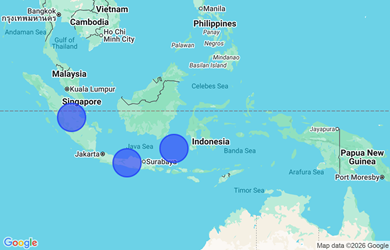
Countrywide
Affordable housing development projects will have to be established across the country, preferably in regions close to factories and other places of work for poor and low-income households.
Sumatra
In 2010, the provinces with home ownership rates < 70% were DKI Jakarta (51.09%) and Riau Islands (67.67%). Provinces with home ownership backlogs >1 mn households were West Java with ~2.3 mn households, DKI Jakarta with ~1.3 mn households, and North Sumatra with ~1.03 mn households. (37)
Java
As of 2022, West Java had a surplus of 45,800 subsidized houses and Riau had a surplus of 1,500 houses. However, Jakarta experiences a backlog with 225 available units, while 701 people still need subsidized houses. Special Region of Yogyakarta also experiences a backlog. (38)
Sector Sources
1) Republic of Indonesia. 2020. Indonesia's 2020-2024 National Medium-Term Development Plan (RPJMN). https://perpustakaan.bappenas.go.id/e-library/file_upload/koleksi/migrasi-data-publikasi/file/RP_RKP/Narasi-RPJMN-2020-2024-versi-Bahasa-Inggris.pdf.
2) Republic of Indonesia. 2021. Voluntary National Review For Implementation of New Urban Agenda (Provisional Report). https://www.urbanagendaplatform.org/sites/default/files/2021-10/INDONESIA_Provisional%20Report%20NUA_signed.pdf
3) Statistics Indonesia (BPS). 2017-2019. Percentage of Urban Slum Households (40% and Below), by Province (Percent), 2017-2019. https://www.bps.go.id/indicator/23/1561/1/persentase-rumah-tangga-kumuh-perkotaan-40-ke-bawah-menurut-provinsi.html
4) Ministry of Public Works and Housing (PUPR) of the Republic of Indonesia. 2022. Tingkatkan Kualitas Hunian, Kementerian PUPR Siapkan Anggaran Rp5,1 Triliun Pada Tahun 2022 di Sektor Perumahan. https://www.pu.go.id/berita/tingkatkan-kualitas-hunian-kementerian-pupr-siapkan-anggaran-rp51-triliun-pada-tahun-2022-di-sektor-perumahan
5) Asian Development Bank (ADB). 2022. Building Resilience of the Urban Poor in Indonesia. https://reliefweb.int/sites/reliefweb.int/files/resources/building-resilience-urban-poor-indonesia.pdf
6) Indonesia.go.id. 2022. Skema KPBU, Inovasi Pembiayaan Pembangunan Infrastruktur. https://www.indonesia.go.id/kategori/editorial/3596/skema-kpbu-inovasi-pembiayaan-pembangunan-infrastruktur
7) Kompas.com. 2022. Pemerintah Targetkan Pembangunan 2 Juta Rumah Per Tahun. https://www.kompas.com/properti/read/2022/01/23/170000221/pemerintah-targetkan-pembangunan-2-juta-rumah-per-tahun?page=all
8) National Disaster Mitigation Agency (BNPB). Potential Disaster Threats. https://www.bnpb.go.id/potensi-ancaman-bencana
9) Harrison, Dao. World Bank Blogs, 2017. Five lessons on affordable housing provision from Indonesia. https://blogs.worldbank.org/sustainablecities/five-lessons-affordable-housing-provision-indonesia
10) Cabinet Secretariat of the Republic of Indonesia. 2021. Wapres Dorong Peran Swasta Atasi Backlog Perumahan. https://setkab.go.id/wapres-dorong-peran-swasta-atasi-backlog-perumahan/
11) OECD Council on SDGs. 2019. Gender Equality and Sustainable Infrastructure. https://www.oecd.org/gov/gender-mainstreaming/gender-equality-and-sustainable-infrastructure-7-march-2019.pdf
12) Elias, J., et al. The University of Warwick, 2018. The Gendered Everyday Political Economy of Kampung Eviction and Resettlement in Jakarta: Final Project Report. https://warwick.ac.uk/fac/soc/pais/research/researchcentres/ipe/jakarta/
13) Ministry of Public Works and Housing (PUPR) of the Republic of Indonesia. 2021. Program Bantuan Rumah Subsidi Kementerian PUPR, Capaian Penyaluran Dana FLPP Tahun 2021 Tertinggi Sejak 2010. https://pu.go.id/berita/program-bantuan-rumah-subsidi-kementerian-pupr-capaian-penyaluran-dana-flpp-tahun-2021-tertinggi-sejak-2010
14) Petriella, Yanita. Bisnis.com, 2021. Pemerintah Siapkan FLPP untuk 200.000 Rumah Tahun Depan. https://ekonomi.bisnis.com/read/20211118/47/1467553/pemerintah-siapkan-flpp-untuk-200000-rumah-tahun-depan
15) Ministry of Public Works and Housing (PUPR) of the Republic of Indonesia. 2020. The Ministry of Public Works and Housing 2020-2024 Strategic Plans. https://pu.go.id/assets/media/1927846278Buku%20Renstra%20Kementerian%20PUPR%202020-2024.pdf
IOA Sources
16) Ministry of Public Works and Housing (PUPR) of the Republic of Indonesia. 2021. Improving Decent Residential Services, Ministry of PUPR Distributes 25,781 Units of Subsidized Housing PSU in 2021. https://pu-go-id.translate.goog/berita/tingkatkan-layanan-hunian-layak-kementerian-pupr-salurkan-psu-rumah-subsidi-sebanyak-25781-unit-tahun-2021?_x_tr_sl=id&_x_tr_tl=en&_x_tr_hl=en&_x_tr_pto=sc
17) Statista. Statista Research Department, 2021. Contribution to GDP Indonesia 2020, by Industry. https://www.statista.com/statistics/1019099/indonesia-gdp-contribution-by-industry/
18) Bahfeini, Suhaiela. Kompas.com, 2021. Backlog of Poor Community Houses in Central Java Reaches 419,000 Units. https://www-kompas-com.translate.goog/properti/read/2021/08/20/210000121/backlog-rumah-masyarakat-miskin-di-jateng-capai-419.000-unit?_x_tr_sl=id&_x_tr_tl=en&_x_tr_hl=en&_x_tr_pto=sc
19) Kementerian Pekerjaan Umum dan Perumahan Rakyat. 2022. TEMUKAN LOKASI PERUMAHAN SUBSIDI BERDASARKAN KRITERIA. https://sikumbang.ppdpp.id/
20) Perum Perumnas. 2020. Laporan Keuangan Perum Perumnas dan Entitas Anak 2020. https://perumnas.co.id/download/Laporan-Keuangan-Perum-Perumnas-2020-Audited.pdf
21) Regional Housing Summit. Identified Barriers to Affordable Housing. http://www.sfrpc.com/ftp/pub/housing/barriers.pdf
22) Republic of Indonesia. 2019. Roadmap of SDGs Indonesia Towards 2030. https://www.unicef.org/indonesia/media/1626/file/Roadmap%20of%20SDGs.pdf.
23) Astri, Carolina, et al. World Resources Institute (WRI) Indonesia, 2020. Land Ownership and Women Empowerment. https://wri-indonesia.org/en/blog/land-ownership-and-women-empowerment
24) Republic of Indonesia. 2021. Voluntary National Review: Annexes. https://sdgs.bappenas.go.id/laporan-voluntary-national-review-vnr-indonesia-2021/
25) Republic of Indonesia. 2021. Voluntary National Review. https://sdgs.bappenas.go.id/laporan-voluntary-national-review-vnr-indonesia-2021/
26) United Nations Environment Programme (UNEP). 2021. 5 Ways to Make Buildings Climate Change Resilient. https://www.unep.org/news-and-stories/story/5-ways-make-buildings-climate-change-resilient
27) United Nations Environment Programme (UNEP). 2020. 2020 Global Status Report for Buildings and Construction: Towards a Zero-emission, Efficient and Resilient Buildings and Construction Sector. https://globalabc.org/sites/default/files/inline-files/2020%20Buildings%20GSR_FULL%20REPORT.pdf
28) Ministry of Public Works and Housing (PUPR) Republic of Indonesia. 2020. Ministry of Public Works and Housing Regulation No.23/2020 concerning the 2020-2024 Minister Strategic Plans. https://pu.go.id/assets/media/1927846278Buku%20Renstra%20Kementerian%20PUPR%202020-2024.pdf
29) Republic of Indonesia. 2021. Presidential Regulation (Perpres) No.18/2020 concerning the 2020-2024 National Medium-Term Development Plan. https://jdih.bappenas.go.id/peraturan/detailperaturan/1037
30) Republic of Indonesia. 2016. Government Regulation (PP) No. 64/2016 concerning the Development of Low-Income Community Housing. https://jdih.pu.go.id/detail-dokumen/2177/1
31) Ministry of Public Works and Housing (PUPR) Republic of Indonesia. 2020. Ministry of Public Works and Housing Decree No.242/2020. https://jdih.pu.go.id/detail-dokumen/2746/1
32) Republic of Indonesia. 2017. Government Regulation (PP) No. 13/2017 concerning Amendments to the Government Regulation No. 26/2008 concerning the National Spatial Plan. https://peraturan.bpk.go.id/Home/Details/51463
33) Ministry of Agrarian Affairs and Spatial Planning/National Land Agency (ATR/BPN) of the Republic of Indonesia. 2018. Minister Regulation No.1/2018 on Guidelines for Spatial Plans. https://peraturan.bpk.go.id/Home/Details/103682/permen-agrariakepala-bpn-no-1-tahun-2018
34) Indonesia Investment Coordinating Board (BKPM). 2021. BKPM Regulation No.4/2021. https://jdih-storage.bkpm.go.id/jdih/userfiles/documents/2021/10/2021PerBKPM004.pdf
35) Ministry of Public Works and Housing (PUPR) Republic of Indonesia. 2021. Ministry of Public Works and Housing Regulation No.35/2021 concerning the Ease and Assistance in Housing Financing for Low-Income Communities. https://jdih.pu.go.id/detail-dokumen/2923/1
36) Ministry of Finance (Kemenkeu) of the Republic of Indonesia. 2022. Ministry of Finance Regulation No.6/2022, revoking Regulation No.103/2021 concerning Value-Added Tax on the Delivery of Land Houses and Residential Units For Fiscal Year 2022. https://jdih.kemenkeu.go.id/in/dokumen/peraturan/5e374f98-f4d8-4f12-6d9e-08d9eab51bf7
37) Pusat Pengelolaan Dana Pembiayaan Perumahan (PPDPP PUPR). Konsep Backlog. https://ppdpp.id/konsep-backlog/
38) Pusat Pengelolaan Dana Pembiayaan Perumahan (PPDPP PUPR). Grafik Penawaran dan Permintaan Per Provinsi. https://sikumbang.ppdpp.id/grafik