
Explore the country and target locations of the investment opportunity.
Country
Indonesia
Region
- Countrywide
Situate the investment opportunity within sustainability focused sector, subsector and industry classifications.
Sector
Education
Development need
Quality of learning outcomes remain low, indicated by low productivity rate which is 1/4th of that of Malaysia's. (1) The workforce is currently dominated by ~50.2 mn (or 39.7%) elementary school graduates or below (2). Based on the World Economic Forum (WEF) Human Capital Index in 2017, Indonesia ranked 65th out of 130 countries, lower than 5 other ASEAN countries. (3)
Policy
2020-24 National Medium-Term Development Plan: prioritizes the improvement of quality of education by focusing on teaching and learning outcomes; increasing equitable access to education services at all levels and accelerating its 12-year compulsory education with assurances to improve the quality of learning outcomes. (2)
Gender inequalities and marginalization issues
Learning inequality is high between regions, schools, and within schools. Indonesia’s net ratio of girls to boys at almost all education levels –except primary, shows higher participation of girls than boys.
The number of male students who dropped out from lower and higher secondary education are nearly thrice and twice of female drop-outs, respectively. (4) By gender, the average years of schooling for girls (8.42) is still below the boys (9.08) (5). 62% of 2.9 mn teachers and educational personnel in Indonesia are women (6).
Pre-COVID-19 disparities related to disabilities, remoteness, sex, and language interference have been exacerbated post-COVID-19. Districts with higher incomes, large urban centers, and greater implementation capacity tend to do better than those with lower income, more rural districts, with lower implementation capacity.
Teachers employed in rural and remote regions continue to be the least qualified (1). In 2021, Gross Participation Rate (APK) for Senior High School was 73.21% in the 1st Quintile (poorest) and 96.74% in the 5th Quintile (most prosperous). Since 2020-2021, Participation Rate was average ~70%. (7)
Investment opportunities
The GoI allocates 20% of its state budget for education sector each year [USD 38 bn in 2021] (8). Annual consumer spending on education is expected to grow at 6% per annum and collectively reached USD 23.6 bn in 2020 (9).
Key bottlenecks
Due to disparity in internet penetration and infrastructure, qualified educators may not be available in remote areas. Investment in Education cannot reap returns in remarkably improved outcomes without adding accountability measures to education reforms and focusing on learning outcomes (1).
Sub Sector
Education Infrastructure
Development need
PAUD participation rate is <40% (>70%-peer countries) due to limited means of families to finance higher education. Dikti participation rate for the lowest quartile in household expenditure is 11% (>60%-highest quartile), i.e. lower than secondary education enrollment rate (70%) for the same quartile. (10) 70% high school graduates don't pursue tertiary education. (11)
Financial Services Authority (OJK) Regulation Number 77/POJK.01/2016 regarding Information Technology-Based Lending and Borrowing Services (LPMUBTI): defines lending-related regulations. (12) Ministry of Education's (MoE) strategy focuses on financing strategies, and increasing the effectiveness of the use of education budget to ensure affordability and increased access. (5)
Gender inequalities and marginalization issues
As of 2019, gender gap in net enrollment rate (NER) in rural areas widened at higher education levels. The NER in rural areas (9.03%) is half of that in urban areas (17.84%), and the lowest at the level of higher education or tertiary education. The NER of women in urban areas was 26.78%, while the NER of women in rural areas was 10.17%.
Rural residents end up paying more to access education services in urban areas (due to associated travel and rent costs) than people living in urban areas (13). >30% of out of school students drop out due to lack of finances, further exacerbated by Covid-19 due to shrinking family incomes. (13)
Investment opportunities
In 2021, the GoI allocated USD 700 mn as a college aid fund, namely Smart Indonesia Card - College (KIP-Kuliah) for 1 mn students from low income households (8).
Key bottlenecks
Collaboration and engagement between private sectors/ industries and universities in higher education development are relatively low. The Willingness to Pay (WTP) and motivation from parents is still not as much as in other countries.
Discover the investment opportunity and its corresponding business model.
Investment Opportunity Area
Affordable Education Loans for Students
Business Model
Deliver financial assistance through B2C models engaged in offering lending solutions to students for both formal and informal education.
> Loans are provided for 100% of total tuition/study costs across education levels/courses, for a maximum tenor of 24 months, with a nominal value of 3-300 mn and flat interest rates of 0%-1.5% per month. > Approval process (including the time for disbursement of loan to the campus account) takes 1-3 days. (14) Examples of some companies active in this space are:
Pintek, founded in 2018, provides access to funds for students and parents for study fees; starting fees, semester fees, tuition or tuition fees, and course fees., and educational institutions in developing facilities, procuring books, and props. In 2021, it raised USD 7 mn in Series A round from Socap Holding Pte. Ltd, bringing the total capital raised to more than USD 35 mn. (15)
PT Inclusive Finance Group (Danacita), founded in 2017, is a technology company that owns and operates a platform, engaged in providing affordable education financing for students and professionals. In February 2021, it raised USD 5 mn in Series A from Monk’s Hill Ventures and Qualgro. (16)
Learn about the investment opportunity’s business metrics and market risks.
Market Size and Environment
CAGR
5% - 10%
Critical IOA Unit
> unbanked population - 60% (18) > cost of tertiary education - USD 1000-5000 per year (19)
Pintek had issued loans of more than USD 1.9 mn to 1,700 students across 25 provinces in Indonesia till January 2020. (20)
Bank Tabungan Negara disbursed USD 2.4 mn to 470 students per July 2019; Bank Mandiri channeled student loans of USD 56,512 per August 2019. (20)
In March 2018, Danacita reported a student loan book of USD 144,000. (21)
Indicative Return
IRR
Market is at a nascent stage and no exits have been observed so far.
GPM
In 9M-2020, Pintek's revenue increased 12x in comparison to its revenue in Jan to Sep-2019. (22)
Pintek issues loans in the range of USD 218 to USD 36,439 with tenures of ~2 years. (20) It charges an interest rate of 0%-1.5% per month, along with fees of ~USD 7 plus 3% of the loan principal. (21) Between May and October 2019, its monthly active users grew 20x. (9)
In 2020, Pintek announced its plans to grow its business by increasing the number of borrowers and loans disbursed by ~10x through: - introduction of new loan products; and - collaboration with vocational schools (20)
Danacita issues loans to cover upto 100% of the tuition fee, carrying interest rates in the range of 1%-1.5% per month, with tenures upto 6 years. (21) In 2020, its revenue was USD 24,000.
Investment Timeframe
Timeframe
Medium Term (5–10 years)
Most Private Equity Funds invest for a period of 5-7 years.
Ticket Size
Average Ticket Size (USD)
USD 500,000 - USD 1 million
Market Risks & Scale Obstacles
Difficult to educate the market about the benefits of student loans. Indonesia has a low gross enrollment ratio (GER) for tertiary education of 31%, well below other Southeast Asian countries such as Malaysia (38%), Thailand (54%), or Singapore (78%). (20)
Majority of the population continues to rely on traditional sources of financing (banks and informal channels including friends, family or informal lenders) for varied reasons such as limited financial awareness, inadequate collateral and lack of trust on alternative sources. (18)
Market - Volatile
More than 50% of people taking out tuition loans are first-time borrowers with no credit history. Risk of non-performing assets (NPAs) or bad debt is high in such scenarios as as no credit history is available for ascertaining the credit score. (19)
Read about impact metrics and social and environmental risks of the investment opportunity.
Sustainable Development Need
Improve GER in tertiary education. Reports suggest that tertiary education in low- and middle-income countries positively impact individual earnings, economic growth, productivity, and technological transfer. (4)
Indonesia ranked 62nd (out of 64 countries) based on math, science, and reading. (23) This highlights the need for offering equal access to education and reduce the impact of learning loss due to Covid-19.
Gender & Marginalisation
Improve GER specifically for women (32.21 GER in tertiary education in 2020) and people in rural areas (19.77 GER in tertiary education in 2020). (24) Boys and children who live in rural areas are more likely to drop out of school than girls and their peers who live in urban areas. (4)
Proper education assistance for underprivileged students. (4) 55% of tertiary-educated students come from the top income quintile (the richest 20%), 24% from the fourth quintile, and only 2.6% from the bottom, clearly demonstrating an income correlation to education access. (25)
Children more likely to drop out due to Covid-19: - older children (due to economic reasons and their ability to support the household financially); - children with disabilities (health issues); and - children from more marginalized regions such as Papua, East Nusa Tenggara and Sulawesi (26)
Expected Development Outcome
Educate people to understand the importance of education and encourage investment in higher education to enable significant upward mobility and unlock a better livelihood for young people. (21)
Reduce drop-out rates in Indonesia which occur due to low level of affordability.
Promote outcome based financial assistance platforms to ensure talent is rewarded with equal opportunity.
Gender & Marginalisation
Fair and equal access to good quality education and jobs regardless of social background, race, gender or religion and increase the GER for female and for the rural population.
Primary SDGs addressed
4 - Quality Education
4.3.1 Participation rate of youth and adults in formal and non-formal education and training in the previous 12 months, by sex
Current Value
Gross Enrolment Rate (GER) in tertiary education in 2020: 30.85 Urban: 38.58; Rural: 19.77 Male: 29.55; Female: 32.21 (24)
Target Value
Not available as on January-2022
Secondary SDGs addressed
10 - Reduced Inequalities
5 - Gender Equality
8 - Decent Work and Economic Growth
Directly impacted stakeholders
People
Students benefit from outcome based financial assistance and an equal opportunity to gain education despite their income backgrounds.
Gender inequality and/or marginalization
Education lending solutions at low or no interest, based on students' academic scores/results help in ensuring equal opportunity for all sections of society.
Corporates
Banks benefit from expanding their loan portfolio by introducing more products; Current borrowers of loans can turn into future customers for buying other bank products (such as fixed deposits, savings/current accounts and insurance products).
Public sector
Government can benefit through equal distribution of resources and improved gross enrolment ratios across all stages of education, thereby improving sustainable development of the country
Indirectly impacted stakeholders
People
Students can benefit from ensuring a better quality of life attained through good educational backgrounds which promise well-paying jobs.
Gender inequality and/or marginalization
Inclusion of all, despite income inequalities, helps in offering better future prospects to all in the form of better work opportunities with fair/equal pay.
Planet
Reduction in CO2 emissions because of reduced burden on transportation services for travelling to banks.
Corporates
Qualified students can serve as a productive workforce in future, thereby improving the performance of companies.
Public sector
More qualified workforce helps in reducing the unemployment rate and improving the gross income for the economy.
Outcome Risks
Growth in qualified workforce should be supported with an equal number of work opportunities to ensure unemployment rate in the country does not get adversely impacted.
Since the students are first time borrowers, it is difficult to ascertain their credit scores. Risk of NPAs and default in repayment of loan is high under such a scenario.
Gender inequality and/or marginalization risk: Addition in workforce must match the addition in jobs. Else, it will increase the financial burden, especially on low income borrowers
Impact Risks
It is important to educate people to view spending on education as an investment, rather than an expenditure, which can enable them to improve the quality of their life in future.
Gender inequality and/or marginalization risk: Lack of regulation / control may lead to exploitation of vulnerable sections by the profit making companies.
Impact Classification
B—Benefit Stakeholders
What
Provide financial assistance to students to promote education and uplift the growing middle income sector
Who
Various; Loans at affordable rates will discourage students from dropping out resulting in a better quality of life; Corporates will benefit from a talented workforce
Risk
Risk of default is high as it is difficult to ascertain the credit scores of first time borrowers
Contribution
There are currently 5.2 mn enrolled tertiary students in Indonesia, in a country of 250 mn people. (27)
How Much
How much: 4th largest education system globally; >50 mn students; 4 mn teachers; ~USD 40 bn opportunity by 2020 (23); Unbanked population - 60% (18)
Impact Thesis
Provision of accessible quality education to enhace quality of education and learning experience, and improve the quality of future workforce
Explore policy, regulatory and financial factors relevant for the investment opportunity.
Policy Environment
"Freedom of Learning" policy: ensures high-quality education for all, characterized by high enrollment rates at all education levels, quality learning outcomes, and equitable quality education both geographically and socio-economically. (5)
The 2020-2024 MOEC Strategic Plans: focuses on financing strategies, and increasing the effectiveness of the use of education budget to ensure affordability and increased access. (5)
The 2020-2024 MOEC Strategic Plans: One of the Program Targets and Program Performance Indicators of the MoEC in 2020 is the Management Support Program and Implementation of Technical Tasks where using Percentage of recipients of financial assistance targeted education as a program indicator. (5)
Financial Services Authority (OJK) Permit and List: Education loan Fintech company 'such as Danacita and Pintek are categorized as Conventional. (12)
Financial Environment
Fiscal incentives: Under VAT Law (UU PPN) Law Number 42 Year 2009, financial services are not subject to VAT. Fintech P2P Lending can be said to include financial services that place funds, borrow funds, or lend funds to other parties by means of telecommunication or other means. (30)
Regulatory Environment
Financial Services Authority Regulation (POJK) Number 77/POJK.01/2016 regarding Information Technology-Based Lending and Borrowing Services (LPMUBTI: contains lending-related regulations (12).
Fintech Lending Operators must obtain a registered sign before carrying out their operational activities as regulated in OJK Regulation 77/POJK.01/2016. A maximum of 1 year after obtaining a registered sign, the Operator is required to submit a permit application to the OJK. (12)
Based on BPS Regulation No. 2 of 2020, Education Financing Fintech would mainly be categorized under Indonesia Standard Industrial Classification subcategory 64951 (Information Technology-Based Lending and Borrowing Services (Fintech P2P Lending) Conventional). (28)
BPS Regulation No. 2 of 2020: This class also includes provision, management, and operation of financial services to bring together lenders and loan recipients in order to enter into lending and borrowing agreements in rupiah currency directly through an electronic system using the internet network. (28)
BI Regulation No. 19/12/PBI/2017 on Financial Technology Organization on Payment System Supporting Market Investment and Risk Management Lending, Financing or Funding, and Capital Rising Other Financial Services: regulates risk management on fintech lending. (29)
Discover examples of public and private stakeholders active in this investment opportunity that were identified through secondary research and consultations.
Private Sector
Corporates: Pintek, Danacita Investors: Global Founders Capital Management GmbH, Accion International, Endowment Arm, Fox Ventures, LLC, Blue 7, s.r.o., Heritas Capital Management Pte. Ltd., Earlsfield Capital Partners LLP, Finch Capital, Accial Capital
Government
Ministry of Education, Culture, Research & Technology, Ministry of Industry, Ministry of Workforce, Bank Indonesia, Financial Service Authority
Multilaterals
United Nations Development Programme (UNDP), United Nations Children's Fund (UNICEF), Asian Development Bank (ADB), World Bank (WB), Japan International Cooperation Agency (JICA)
Non-Profit
YLKI, PGRI, Asosiasi FinTech Indonesia (AFTECH)
See what country regions are most suitable for the investment opportunity. All references to Kosovo shall be understood to be in the context of the Security Council Resolution 1244 (1999)
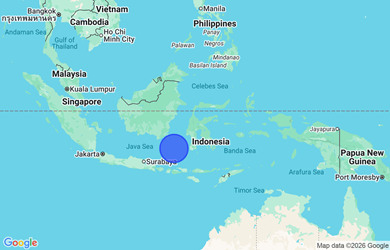
Countrywide
Models must have a last-mile reach to ensure efficiency of the model and achievement of financial inclusion.
Sector Sources
(1) World Bank. 2020. The Promise of Education in Indonesia. https://documents1.worldbank.org/curated/en/658151605203420126/pdf/The-Promise-of-Education-in-Indonesia.pdf
(2) Republic of Indonesia. 2020. Indonesia's 2020-2024 National Medium-Term Development Plan https://katalog.data.go.id/dataset/rpjmn-tahun-2020-2024/resource/23e26880-a84f-4443-a16f-1ddb3b69cfeb.
(3) World Economic Forum. 2017. The Global Human Capital Report 2017. https://www.weforum.org/reports/the-global-human-capital-report-2017
(4) Republic of Indonesia. 2019. Roadmap of SDGs Indonesia Towards 2030. https://www.unicef.org/indonesia/media/1626/file/Roadmap%20of%20SDGs.pdf.
(5) MoEC. 2020. The 2020-2024 MOEC Strategic Plans. https://dikti.kemdikbud.go.id/wp-content/uploads/2020/10/RENSTRA-KEMENDIKBUD-full-version.pdf.
(6) Kementerian Pendidikan dan Kebudayaan. 2021. Dashboard GTK. https://referensi.data.kemdikbud.go.id/dashboardgtk/ptk_jkel.php?id=20
(7) BPS. 2021. Rough Participation Rate (APK) of Senior High School by Revenue Group 2019-2021. https://www.bps.go.id/indicator/28/1343/1/angka-partisipasi-kasar-apk-sma-smk-ma-sederajat-menurut-kelompok-pendapatan.html
(8) Republic of Indonesia. 2021. APBN 2021. https://www.kemenkeu.go.id/media/16835/informasi-apbn-2021.pdf.
(9) The Ravenry. 2020. i360 Report Edutech Industry in Indonesia. https://theravenry.com/wp-content/uploads/2020/08/i360-Report-Edutech-Industry-in-Indonesia.pdf
(10) Ministry of Education and Culture. 2020. MoEC Regulation No.2 of 2020. https://jdih.kemdikbud.go.id/arsip/SALINAN%20PERMENDIKBUD%2022%20TAHUN%202020.pdf
(11) SEKRETARIAT NASIONAL SDGS. 2019. Indonesia's SDG National Action Plans-RAN SDGs 2021-2024. https://sdgs.bappenas.go.id/category/dokumen/rencana-aksi-nasional-ran/.
(12) OJK. 2019. FAQ Fintech Lending. https://www.ojk.go.id/id/kanal/iknb/data-dan-statistik/direktori/fintech/Pages/FAQ-Kategori-Umum.aspx
(13) Ministry of Women Empowerment and Child Protection. 2020. Profil Perempuan Indonesia 2020. https://kemenpppa.go.id/lib/uploads/list/3aaea-buku-profil-perempuan-2020.pdf
IOA Sources
(14) Pintek. 2022. Jawaban Aspirasi Pendidikan - Simulasi Pinjaman. https://pintek.id/pinjaman-pendidikan
(15) Accion. 2021. Pintek Raises $7m Series A to grow its Education Fintech Ecosystem in Indonesia. https://www.accion.org/pintek-raises-7m-series-a-to-grow-its-education-fintech-ecosystem-in-indonesia
(16) Catherine Shu. 2021. ErudiFi raises $5 million Series A to give students in Southeast Asia more education financing options. https://techcrunch.com/2021/02/23/erudifi-raises-5-million-series-a-to-give-students-in-southeast-asia-more-education-financing-options/
(17) Forbes. 2021. Indonesian Edtech Startup Cakap Raises $10 Million From Centauri Fund, Singapore’s Heritas Capital. https://www.forbes.com/sites/yessarrosendar/2021/12/19/indonesian-edtech-startup-cakap-raises-10-million-from-centauri-fund-singapores-heritas-capital/?sh=290bcfd06c0b
(18) Ken Research. 2021. Indonesia Online Loan and Insurance Industry Outlook to 2024 - Changing Landscape of Financial Products Distribution in Indonesia: Ken Research. https://www.globenewswire.com/news-release/2021/09/27/2303425/0/en/Indonesia-Online-Loan-and-Insurance-Industry-Outlook-to-2024-Changing-Landscape-of-Financial-Products-Distribution-in-Indonesia-Ken-Research.html
(19) MicroCapital. 2020. MICROCAPITAL BRIEF: Accion Venture Lab Takes Equity Stake in Pintek of Indonesia, Provider of Online Loans to Students, Schools. https://www.microcapital.org/microcapital-brief-accion-venture-lab-takes-equity-stake-in-pintek-of-indonesia-provider-of-online-loans-to-students-schools/
(20) Khamila Mulia. 2020. Pintek bets on Indonesia’s growing online education loan market. https://www.techinasia.com/pintek-indonesia-education-loan
(21) Yunnie Marzuki. 2018. Need a tertiary education loan? Call Dana Cita. https://www.digitalnewsasia.com/startups/need-tertiary-education-loan-call-dana-cita
(22) Accion. 2020. Scaling up amid COVID-19 outbreak, Pintek closes additional investment led by Finch Capital. https://www.accion.org/scaling-up-amid-covid-19-outbreak-pintek-closes-additional-investment-led-by-finch-capital
(23) Ruangguru. 2021. Indonesia’s largest tech-enabled provider for quality teaching & content. lppm-dev2.ut.ac.id/system/files/artikel/dokumen/files/InnovativeCreative_StephanieHardjo.pdf
(24) Republic of Indonesia. 2021. Annexes Indonesia’s Voluntary National Review . https://sdgs.bappenas.go.id/laporan-voluntary-national-review-vnr-indonesia-2021/
(25) SMERU. 2018. Financing Higher Education in Indonesia: Assessing the Feasibility of an Income-Contingent Loan System. www.smeru.or.id/sites/default/files/publication/studentloanwp_id.pdf
(26) UNICEF and UNESCO. 2021. Indonesia Case Study Situation Analysis on the Effects of and Responses to COVID-19 on the Education Sector in Asia. https://www.unicef.org/eap/media/9326/file/Sit%20An%20-%20Indonesia%20case%20study.pdf
(27) AVPN. 2022. Dana Cita Student Loans. https://avpn.asia/deal-share-platform/dana-cita-student-loans/
(28) BPS. 2020. PERATURAN BADAN PUSAT STATISTIK NOMOR 2 TAHUN 2020 TENTANG KLASIFIKASI BAKU LAPANGAN USAHA INDONESIA. https://legalitas.org/KBLI-2020.pdf.
(29) Bank Indonesia. 2017. Peraturan Bank Indonesia Nomor 19/12/PBI/2017 Tahun 2017. https://peraturan.bpk.go.id/Home/Details/135776/peraturan-bi-no-1912pbi2017-tahun-2017(30) Ministry of Finance. 2019. Fintech Peer-to-Peer (P2P) Lending dan Potensi Pemajakannya. https://www.pajak.go.id/id/artikel/fintech-peer-peer-p2p-lending-dan-potensi-pemajakannya
(30) Ministry of Finance. 2019. Fintech Peer-to-Peer (P2P) Lending dan Potensi Pemajakannya. https://www.pajak.go.id/id/artikel/fintech-peer-peer-p2p-lending-dan-potensi-pemajakannya