
Explore the country and target locations of the investment opportunity.
Country
Lao PDR
Region
- Vientiane Capital
- Savannakhet Province
- Champasak Province
- Luang Prabang Province
- Oudomxay Province
Situate the investment opportunity within sustainability focused sector, subsector and industry classifications.
Sector
Food and Beverage
Development need
Laos' food and beverage sector suffers significant post-harvest losses due to inadequate cold chain infrastructure . Consumers' awareness about food safety remains low, raising their awareness would encourage them to demand and purchase high-quality, safe food products. (1)(2)
Policy priority
The government commits to ensuring food safety and quality throughout the food supply chain by strengthening food safety regulations, monitoring and surveillance, and promoting consumer awareness. The Lao PDR National Trade Facilitation Action Plan (2021-2025) streamlines trade procedures reduces trade costs related to the export of food products, and improves food safety standards and compliance with international regulations.(2)(3)
Gender inequalities and marginalization issues
Women make up over 50% of agricultural workers. However, they hold fewer leadership positions and are underrepresented in decision-making roles within the sector, Women are confined to lower-paid, unskilled tasks, while men dominate higher-paying, technical positions. (4)(5)
Investment opportunities
The agriculture sector in Lao PDR contributes 16.07% to the GDP. The government is seeking agricultural sector growth of 2.5% by 2025 and has conducted a major agricultural census. The food and beverage sector offers promising investment opportunities due to growing demand, favorable government policies, and untapped potential. (8)
Key bottlenecks
63.34% of households are farm households, and only 10% of the country's land area is dedicated to agriculture. Lao PDR has an agricultural development strategy for 2025, seeking a 2.5% agricultural sector growth to improve nutrition production and secure access to domestic, regional, and international markets. (9)(10)
Sub Sector
Food and Agriculture
Development need
The country's food supply chain is underdeveloped with the lack of cold storage and transportation facilities being a major issue within the food supply chain. Food loss in Laos due to inadequate post-harvest, processing, and transportation management is approximately 2% of GDP and is the highest among ASEAN countries.30% of vegetables and fruits are lost during transportation due to heat. (1)
Policy priority
The National Agriculture and Forestry Development Strategy 2016-2030 outlines the government's commitment to developing the food and beverage sector. The National Food Safety Strategy 2016-2030 emphasizes the importance of cold chain infrastructure for ensuring the safety of food products. The strategy calls for developing a national cold chain network that will connect producers, processors, retailers, and consumers.
Gender inequalities and marginalization issues
Women in Lao PDR, particularly in rural areas, face multiple challenges, including limited access to credit and land ownership. Advanced cold chain solutions can allow women to engage in higher-value agricultural activities, such as food processing, that require cold storage. This can empower women economically and help bridge the gender gap in the sector.
Investment opportunities
The government's 2025 strategy offers a conducive environment for investment in advanced cold chain solutions. Tax incentives, land concessions, and a focus on private-sector investment make this an opportune time to invest in cold storage facilities. Additionally, Lao PDR's strategic location in Southeast Asia and its membership in the ASEAN Economic Community offer access to expansive regional markets.
Key bottlenecks
The sector faces several challenges, including inadequate infrastructure, limited access to finance, and a lack of modern farming techniques. Cold chain solutions can address some of these bottlenecks by improving food storage and transportation, enhancing the sector's efficiency and profitability.
Industry
Agricultural Products
Discover the investment opportunity and its corresponding business model.
Investment Opportunity Area
Advanced Cold Chain Solutions For Food Safety And Quality
Business Model
Invest in refrigerated storage facilities, refrigerated transportation vehicles, and cold chain management software for agricultural and meat products. Illustrative examples of enterprises working in this space are:
Vientiane Cold is a premier provider of temperature-controlled warehousing and logistics-related services in Laos. (16)
Pacific Integrated Logistics Laos was founded in 2018 and entered into a joint venture “Sinotrans-PLG” in Laos with both Sinotrans and AMZ Group. (17)
Learn about the investment opportunity’s business metrics and market risks.
Market Size and Environment
Market Size (USD)
USD 50 million - USD 100 million
Critical IOA Unit
Laos AIP sector CAGR: 15-30% over 5 years, indicating significant medium-term growth.
2.3 million people under prevalence of moderate or severe food insecurity (6)
Assuming 20% of the agriculture output is put in cold storage and storage cost is $ 30 per tonne per month, 1,461,078 tonnes (amount of produce for cold storage) x $30 (average cost per ton per month) x 3 months = $131,497,020.
Indicative Return
IRR
20% - 25%
The electricity price in Lao PDR is lowest in the region, as well as the import dependency of the country for food products will lead to higher returns.
Investment Timeframe
Timeframe
Medium Term (5–10 years)
Development of cold storage infrastructure in rural areas can be capital intensive due to lack of supporting infrastructure however low electricity costs will allow for higher returns, thus a medium-term return.
Ticket Size
Average Ticket Size (USD)
> USD 10 million
Market Risks & Scale Obstacles
Business - Supply Chain Constraints
Supply chain disruptions can severely impact operations and profitability; stringent food safety regulations pose compliance risks.
Capital - CapEx Intensive
High upfront costs for land, construction, and equipment make the cold storage industry capital-intensive. In regions with limited access to financing, this becomes a significant barrier to entry. The high costs can discourage new players, reducing competition and slowing down industry growth.
Market - Volatile
Currency volatility, like that of the Kip, can impact both costs and revenues. Fluctuating currency rates can make importing equipment more expensive and affect the profitability of exporting stored goods.
Read about impact metrics and social and environmental risks of the investment opportunity.
Sustainable Development Need
High post-harvest losses: Lack of adequate cold storage facilities leads to significant post-harvest losses, affecting food security and farmer incomes. (7)
Energy Inefficiency: The absence of modern, energy-efficient cold storage systems leads to higher operational costs and energy consumption. (7)
Gender & Marginalisation
Limited Access for Women: Traditional gender roles and lack of training opportunities limit women's participation in the cold storage sector.
Marginalized Communities: Rural and ethnic minority communities often lack access to advanced cold storage facilities, affecting their economic stability.
Expected Development Outcome
Increase food security and reduce food waste by providing efficient cold storage facilities for small and medium farmers, which can reduce post-harvest losses and increase income.
Climate resilient storage solutions for farmers, improving food security in the region.
Economic Upliftment: Cold storage enables farmers to store produce for extended periods, allowing for better pricing and market timing.
Gender & Marginalisation
Improve rural livelihoods and gender equality by providing job opportunities and training for women and marginalized groups in the cold storage industry
Primary SDGs addressed
9 - Industry, Innovation and Infrastructure
9.b.1 Proportion of medium and high-tech industry value added in total value added
Current Value
Lao PDR has a relatively low proportion of medium and high-tech industry value added, which stands at 8.7% of the total value added (World Bank, 2021)
Target Value
The Lao government has set a target to increase the proportion of medium- and high-tech industry value added to 30% by 2030 as part of its efforts to promote economic diversification and upgrade the industrial sector.
2 - Zero Hunger
2.1.1 Prevalence of undernourishment
Current Value
The prevalence of undernourishment in Lao PDR was 13.3% in 2017. Cold storage facilities can help reduce post-harvest losses and increase food availability, which can contribute to reducing undernourishment.
Target Value
As of 2018, the prevalence of undernourishment in Lao PDR was 9.6% of the population. The government of Lao PDR has set a target of reducing this to 5% by 2025 as part of its National Nutrition Strategy.
12 - Responsible Consumption and Production
12.3.1 (a) Food loss index and (b) food waste index
Current Value
Lao PDR has a high level of post-harvest losses, with up to 30% of post harvest losses due to inadequate storage and transportation facilities.
Secondary SDGs addressed
1 - No Poverty

3 - Good Health and Well-Being
13 - Climate Action
Directly impacted stakeholders
People
Farmers, traders, and consumers of perishable goods will benefit from reduced food losses and increased food security.
Planet
Reduction in food wastage and greenhouse gas emissions resulting from improved cold chain management and reduced spoilage of perishable goods.
Public sector
Ministry of Planning and investment responsible for promoting agriculture and rural development, trade and commerce, and environmental sustainability.
Corporates
Private sector players involved in cold storage and logistics, including producers, processors, and retailers of perishable goods.
Indirectly impacted stakeholders
People
Farmers and producers will have access to better storage facilities and markets, and consumers will benefit from increased food availability and reduced food waste.
Gender inequality and/or marginalization
Improved food security and livelihood will reduce gender-based violence in farm households in rural areas.
Planet
Reduced food waste and increased efficiency in the food supply chain will result in a potential reduction of environmental impact from agriculture and food production.
Corporates
Agribusiness companies, logistics, and transportation companies, packaging and equipment manufacturers, and suppliers of refrigeration technology and services.
Public sector
The Lao government may seek to promote and regulate the cold storage industry, and international organizations or development agencies may provide support for related initiatives.
Outcome Risks
Increased reliance on energy and potentially increased greenhouse gas emissions from the operation of cold storage facilities.
Potential negative impact on small-scale farmers and local food systems if they are unable to compete with larger agribusinesses that benefit from the cold storage infrastructure.
Risk of increased waste and pollution from the disposal of refrigerants and packaging materials.
Gender inequality and/or marginalization risk: In the absence of regulations, women in rural areas of Lao PDR may continue to face limited access to financing, land, and markets.
Impact Risks
The use of energy-intensive refrigeration technology may contribute to environmental degradation and climate change.
Risk of exacerbating gender inequalities and marginalization if the benefits of the cold storage industry do not reach marginalized communities.
Impact Classification
C—Contribute to Solutions
What
Enhance food security and reduce waste by providing efficient cold storage solutions. This will extend the shelf life of perishable goods and facilitate better market access for local producers
Who
Target beneficiaries include small and medium-scale farmers who lack access to cold storage, logistics companies, and consumers who will benefit from fresher, longer-lasting produce.
Risk
Key risks involve energy consumption and its environmental impact, as well as potential exclusion of marginalized communities who may not have access to these facilities due to cost or location.
Contribution
2.3 million people face food insecurity. Cold storage can directly address this by reducing food waste and making food supplies more reliable.
How Much
In rural areas, 17% of households face food insecurity compared to 9% in urban areas. Cold storage can bridge this gap by making food supplies more stable and accessible, thereby improving food security.
Impact Thesis
The cold storage industry in Lao PDR aims to improve food security, reduce waste, and foster economic inclusion by extending the shelf life of perishable goods and creating job opportunities in rural areas.
Explore policy, regulatory and financial factors relevant for the investment opportunity.
Policy Environment
Lao PDR National Strategy on Logistics and Transport: Plans to establish dry ports in various locations for efficient logistics and transport, which could potentially be utilized for cold storage.
Lao PDR's 9th Five-Year National Socio-Economic Development Plan (2021-2025)-Focuses on infrastructure for improved food supply chains. (20)
Lao PDR's National Adaptation Programme of Action to Climate Change (NAPA)-Addresses climate change adaptation for resilient food systems. (21)
Lao PDR's Agriculture Development Strategy to 2025 and Vision to 2030: Training to increase knowledge on food storage techniques should be introduced in areas where these methods have not been introduced, especially in the northern highland areas.
Financial Environment
Investment Promotion Law (2016): This law offers tax breaks, import duty exemptions, and other incentives to attract foreign investment in targeted sectors, including cold storage. (26)
VAT Exemption: Cold storage projects may be eligible for VAT exemptions on imported machinery and equipment to reduce costs and promote investment in the sector. (26)
Public-Private Partnership (PPP) Policy: This policy encourages private sector participation in infrastructure development, including cold storage, by sharing risks and costs. (27)
Regulatory Environment
Lao PDR Food Law (2004)The law prohibits using artificial sweeteners, preservatives, cochineal, and adulterated colorants in the production and processing of food in amounts that exceed standards defined by laws and regulations, which directly affects the IOA's focus on quality control. (24)
Lao PDR Customs Law (2011): Concerning rapidly deteriorating goods or goods that are not appropriate for storage, the Customs officers shall conduct auctions according to the laws and regulations.
Discover examples of public and private stakeholders active in this investment opportunity that were identified through secondary research and consultations.
Private Sector
Vientiane Cold, RMA group.
Government
Ministry of Agriculture and Forestry, Ministry of Industry and Commerce, and Ministry of Health
Multilaterals
World Bank, Asian Development Bank (ADB), and United Nations Development Programme (UNDP) support infrastructure development and capacity building projects in Lao PDR.
See what country regions are most suitable for the investment opportunity. All references to Kosovo shall be understood to be in the context of the Security Council Resolution 1244 (1999)
Urban
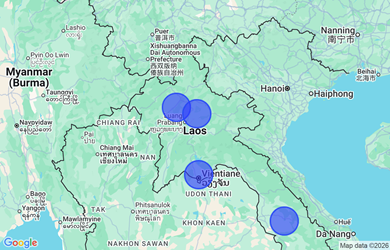
Vientiane Capital
Urban population growth of 2.32% (2021) demands better food distribution and storage systems to address SDGs 1, 3, and 13. Improved cold storage will enhance food security and reduce waste, benefiting various stakeholders.
Urban
Savannakhet Province
With 28.6% of the population living in poverty (2022), investing in cold storage will address SDGs 1 and 3 by reducing food loss and improving incomes for farmers and traders. (39)
Urban
Champasak Province
Agriculture accounts for 22.9% of the provincial GDP (2017), so cold storage investments will support SDGs 1, 3, and 13 by preserving produce quality, reducing waste, and enhancing market access. (40)
Urban
Luang Prabang Province
This region attracted over 1.5 million tourists in 2019 alone.
Urban
Oudomxay Province
With a strategic location near China and Vietnam, cold storage investments will address SDGs 1, 3, and 13 by improving food distribution, supporting local agricultural communities, and enhancing cross-border trade.
(1) World Food Programme. “Food and Nutrition Security in Lao PDR.” WFP, 24 Oct. 2016, https://www.wfp.org/publications/food-and-nutrition-security-lao-pdr
(2) “National Strategy on Climate Change of Lao PDR.” UNDP in Lao PDR, https://www.undp.org/laopdr/publications/national-strategy-climate-change-lao-pdr
(3) Climate Risk Country Profile: Lao PDR.” Asian Development Bank, June 2021, https://www.adb.org/publications/climate-risk-country-profile-lao-pdr.
(4) Asian Development Bank. Lao People’s Democratic Republic: Agriculture, Natural Resources, and Environment Sector Assessment, Strategy, and Road Map. Asian Development Bank, 2015.
(5) World Food Programme. “Lao People’s Democratic Republic Country Strategic Plan (2022–2026).” World Food Programme, 2022, https://www.wfp.org/operations/la02-lao-peoples-democratic-republic-country-strategic-plan-2022-2026.
(8) O’Neill, Aaron. “Laos - share of economic sectors in gross domestic product 2011-2021.” Statista, May 24, 2023. https://www.statista.com/statistics/804979/share-of-economic-sectors-in-the-gdp-in-laos/.
(9) Agricultural land (% of land area) - Lao PDR | Data.” The World Bank. Accessed July 5, 2023. https://data.worldbank.org/indicator/AG.LND.AGRI.ZS?locations=LA. "10)Agriculture Development Strategy to 2025 and Vision to 2030.” United Nations Environment Programme. https://leap.unep.org/countries/la/national-legislation/agriculture-development-strategy-2025-and-vision-2030.
(11) World Bank. “Lao PDR Agriculture and Rural Development Note.” World Bank, 2019, https://openknowledge.worldbank.org/handle/10986/33054.
(12) Asian Development Bank. “Lao PDR: Climate-Friendly Agribusiness Value Chains Sector Project.” Asian Development Bank, 2019, https://www.adb.org/sites/default/files/linked-documents/48409-004-sd-08.pdf.
(13) Food and Agriculture Organization of the United Nations. “Gender in the Lao PDR on the Agriculture Sector.” FAO, 2012, https://www.fao.org/fileadmin/templates/rap/files/meetings/2012/121113_laos.pdf.
(14) Asian Development Bank. “Lao People’s Democratic Republic: Agriculture, Natural Resources, and Environment Sector Assessment, Strategy, and Road Map.” Asian Development Bank, 2017, https://www.adb.org/documents/lao-pdr-agriculture-assessment-strategy-road-map.
(15) World Bank. “Lao PDR Agriculture and Rural Development Note.” World Bank, 2019, https://openknowledge.worldbank.org/handle/10986/33054. "16) Vientiane Cold. “About Us.” Vientiane Cold, 2022, https://vientianecold.com/about-us/. "17) Pacific Integrated Logistics. “About Us.” Pacific Integrated Logistics, 2022, https://www.pacificintegratedlogistics.com/about-us/."
(18) Asian Development Bank. “Lao People’s Democratic Republic: Agriculture, Natural Resources, and Environment Sector Assessment, Strategy, and Road Map.” Asian Development Bank, 2017, https://www.adb.org/sites/default/files/institutional-document/480141/lao-pdr-agriculture-assessment-strategy-road-map.pdf.
(19) Lao PDR Transport Sector Policy Framework Strategy "https://greatermekong.org/sites/default/files/STF25/01.4%20Session%201%20LAO.pdf"
(20) Lao PDR’s 9th Five-Year National Socio-Economic Development Plan (2021-2025).
(21) Lao PDR’s National Adaptation Programme of Action to Climate Change (NAPA).
(22) Lao PDR’s Agriculture Development Strategy to 2025 and Vision to 2030.
(23) Lao PDR’s National Strategy for Disaster Risk Management (2010-2020).
(24) Lao PDR Food Safety Law (2013).
(25) Lao PDR Customs Law (2011).
(26) Investment Promotion Law (2016).