
Explore the country and target locations of the investment opportunity.
Country
Indonesia
Region
- Countrywide
Situate the investment opportunity within sustainability focused sector, subsector and industry classifications.
Sector
Education
Development need
Quality of learning outcomes remain low, indicated by low productivity rate which is 1/4th of that of Malaysia's. (1) The workforce is currently dominated by ~50.2 mn (or 39.7%) elementary school graduates or below (2). Based on the World Economic Forum (WEF) Human Capital Index in 2017, Indonesia ranked 65th out of 130 countries, lower than 5 other ASEAN countries. (3)
Policy
2020-24 National Medium-Term Development Plan: prioritizes the improvement of quality of education by focusing on teaching and learning outcomes; increasing equitable access to education services at all levels and accelerating its 12-year compulsory education with assurances to improve the quality of learning outcomes. (2)
Gender inequalities and marginalization issues
Learning inequality is high between regions, schools, and within schools. Indonesia’s net ratio of girls to boys at almost all education levels –except primary, shows higher participation of girls than boys.
The number of male students who dropped out from lower and higher secondary education are nearly thrice and twice of female drop-outs, respectively. (4) By gender, the average years of schooling for girls (8.42) is still below the boys (9.08) (5). 62% of 2.9 mn teachers and educational personnel in Indonesia are women (6).
Pre-COVID-19 disparities related to disabilities, remoteness, sex, and language interference have been exacerbated post-COVID-19. Districts with higher incomes, large urban centers, and greater implementation capacity tend to do better than those with lower income, more rural districts, with lower implementation capacity.
Teachers employed in rural and remote regions continue to be the least qualified (1). In 2021, Gross Participation Rate (APK) for Senior High School was 73.21% in the 1st Quintile (poorest) and 96.74% in the 5th Quintile (most prosperous). Since 2020-2021, Participation Rate was average ~70%. (7)
Sub Sector
Education Technology
Development need
Skills mismatch is a key challenge in ensuring smooth transition from school-to-work and in ensuring the absorption of young job seekers. (50) Global technology, media, and telecommunication talent is expected to be in deficit in 2030 (10). Covid-19 has lead to an increase in the rate of youth unemployment, resulting in young workers’ potential not being maximized (11).
Policy
The Strategic Plan of the Secretariat General of the Ministry of Education and Culture (MoEC) 2020-24: aims to accelerate digital-based learning programs.(5) Through the Central Bureau of Data and Information Technology, MoEC provides a digital platform to support information and communications technology (ICT)-based learning for elementary-high schools and for teachers and students. (12)
Gender inequalities and marginalization issues
While education and skills development have been improving in Indonesia, regional disparities in the access to and the quality of technical and vocational education and training (TVET) still remain a challenge.
Indonesia's geography, the world largest archipelago, militates against the cost-effective and equitable delivery of TVET in rural and remote areas.
Technologies provide a viable answer to the geographical disparities in skills development opportunities. Digital/distance learning reduces the cost of TVET in rural areas and assures the same quality learning experiences in both urban and rural areas (13).
Investment opportunities
By 2025, underqualified workers are expected to fill ~63% of high-skilled jobs, highlighting significant skills gaps between qualifications and employer’s expectations. A 2016 study showed that 51.5% labor force are underqualified; 40% are well-matched, and 8.5% are considered overqualified for their occupations (14).
Key bottlenecks
Low adoption of technology among educational institutions and personnel may hinder the acceleration of education technology implementation. Scalability for skill development models (coding, technical skills in computer science) is difficult due to the need for higher Willingness to Pay (WTP).
Discover the investment opportunity and its corresponding business model.
Investment Opportunity Area
Virtual Skill Development Facilities at K12 Level and for Professional Workers
Including computer technologies, graphic designing and the like
Business Model
Provide technical expertise to establish: > B2C K12 vocational training centres to improve IT skills > B2C digital platforms for imparting technical, professional and skill development through online classes, workshops and certification programs to improve employability Examples of some companies active in this space are:
PT Hacktivate Teknologi Indonesia, founded in 2016, offers learning programs and coding bootcamp for developers. It provides full time, part time, and online program and curriculum. It raised USD 3 mn in pre-Series A round from East Ventures Pte. Ltd.; Sovereign's Capital; PT Sinar Mas Digital Ventures; AC Ventures; PT Prasetia Dwidharma; Skystar Capital; RMKB Ventures; EverHaüs. (15)
PT Cerdas Digital Nusantara, founded in 2013, operates Cakap, an online learning platform that allows direct 2-way interaction between students and professional teachers around the world to teach English, Chinese, Japanese and Indonesian language learning courses to children and adults. Cakap raised USD 10 mn in a Series B round led by Singapore-based Heritas Capital and Centauri Fund. (16)
PT Codemi Global provides an online learning platform for employees and partners, including online training, course catalog, online test, and learning reward. It serves the insurance, FinTech, financial services, real estate, mining, and retail industries. It raised an undisclosed amount in seed funding from Init 6, a fund led by Bukalapak founder, Achmad Zaky. (17)
Popskul, founded in 2020, owns and operates a skill certification platform. In 2021, it was acquired by Astronaut Technologies Pte Ltd. (a mobile-first recruiting platform) for an undisclosed amount. It also funded USD 2 mn in a pre-Series A round for Popskul (18).
Bahaso (PT. Bahaso Intermedia Cakrawala), founded in 2015, is an online language learning platform for foreign languages. Bahaso provides lessons in English, Mandarin, and any other languages with interactive content. In 2020, Bahaso reported revenue of ~USD 5 mn. (19)
Learn about the investment opportunity’s business metrics and market risks.
Market Size and Environment
Market Size (USD)
Increase in consumer spending on additional training: USD15.4mn- 2015; USD37.5mn- 2019 (9)
CAGR
5% - 10%
Critical IOA Unit
Number of workers required with advanced degrees and new skills by 2030 - ~10 mn (9)
2017: Labor force expansion- 1.7 mn people; skilled workers (university degree or higher)- ~10% (20) Despite a young population (45% below age 25), Indonesia has struggled to fill jobs with skilled talent at all levels. (21)
In 2019, Indonesia reported a youth unemployment rate of ~15% and highlighted a talent shortage of >50%. (22)
To improve the quality of vocational education and to narrow the skills gap, Indonesia’s MoEC aims to increase the ratio of students in General Senior Secondary Schools (SMA) to Vocational Senior Secondary Schools (SMK) from 60:40 in 2009 to 70:30 in 2025. (23)
Indicative Return
IRR
Market is in a nascent stage and no exits have been observed so far.
GPM
Cakap reported 500% year on year (yoy) growth in active students and >1 mn app downloads. (24)
Players in this area generate average USD 50-100 Average Revenue Per Paying User (ARPPU) and the dominant business model is based on live tutoring. (25)
In 2020, Bahaso reported revenue of ~USD 5 mn. (19)
Private Equity firms target 20-25% IRRs on their investment. Returns depend on stage of investment and the valuation at the time of exit. Example: Seed fund investors will earn a better return if they hold their investment, than the investors who enter at a later stage.
Investment Timeframe
Timeframe
Short Term (0–5 years)
Companies in this space can turn profitable in short-medium term Cakap, founded in 2013 (7 years ago), claimed to be profitable since 2019 and has 1.5 mn students (December 2021) using its language learning app (aims to reach 2 mn students). (16)
Ticket Size
Average Ticket Size (USD)
USD 1 million - USD 10 million
Market Risks & Scale Obstacles
Success of the model depends on the learner's ability / WTP, apart from the objective of the sponsor for offering to pay (current job requirement Vs. holistic growth of the learner). 66% of Indonesians are unbanked (26) and 96% do not own credit cards for making payment. (27)
Level of motivation of parents and students to invest in education is low, with minimum wage guarantee from the government (USD 310 per month) resulting in less competition for opportunities. (25)
Business - Supply Chain Constraints
Internet connectivity and infrastructure issues can hinder the process of execution and limit the ability of businesses to reach a larger audience. In 2019, ~21% of people in low-income areas have access to internet in contrast with the 93% in high-income areas like Java. (28)
Read about impact metrics and social and environmental risks of the investment opportunity.
Sustainable Development Need
Reduce the gap between the skill that the workforce has Vs. what the market needs. The potential for upskilling is significant as ~10% of the current workforce holds university degrees or the required skillset to join the workforce. (16)
Language barrier prevents Indonesians from consuming content from global players (9) The proficiency for English in Indonesia is also still very low as it is ranked No. 75 from 100 countries in the EF English Proficiency Index 2020. (16)
Need for technology to empower and retrain teachers so that they can be impactful. As of 2020, ~53% of teachers were not certified educators, which negatively affects the quality of education available to students. (9)
Gender & Marginalisation
Affordable learning solutions that can be accessible by all. A stark disparity was found across income-group levels, with highest group quintile accounting for 59.61% gross enrollment rate (GER) while the lowest-income group accounting for only 5.08%. (4)
Reduce gender divide in digital skills. In 2020, the gender gap for mobile ownership and mobile internet was 10% and 14%, respectively (29), indicating that a majority of women were unfamiliar with digital technology and possessed limited digital skills. (28)
Reduced gender disparity in IT jobs. In ICT companies, the female to male ratio for programmers is ~1:9. (28)
Expected Development Outcome
Improved quality of workforce with reduced skill gap to make them globally competitive and productive. Youth unemployment in Indonesia is 2nd highest in the Asia Pacific, which is caused by a skills mismatch and limited awareness of job opportunities. (30)
Achieve economic growth through holistic development and full-utilization of human capital.
Improve quality of educators by retraining in new methods of teaching.
Gender & Marginalisation
Address the digital gender gap, especially in IT education, in order to promote women empowerment. (31) Proportion of adults (aged 15-59 years) with ICT skills: Female - 60.60; Male - 67.88 (32)
Reduce regional disparity in gross enrolment rate (GER) for tertiary education which stood at 38.58 for urban areas and 19.77 for rural areas in 2020. (32)
Primary SDGs addressed
4 - Quality Education
4.4.1 Proportion of youth and adults with information and communications technology (ICT) skills, by type of skill
4.3.1 Participation rate of youth and adults in formal and non-formal education and training in the previous 12 months, by sex
Current Value
87.17 in 2020; 51.83 in 2015 2020: Rural - 92.97; Urban - 79.36 Female - 87.13; Male - 87.20 (32)
Ages 15-24: 48.66 Urban - 50.90; Rural - 45.72 Female - 48.71; Male - 48.61 Ages 25-64: 2.30 Urban - 2.78; Rural - 1.67 Female - 2.25; Male - 2.34 (32)
Target Value
Not available as on January-2022
Secondary education (Junior High school level) 86.88% BAU Secondary education (Junior High school level) 90.55% BAU (4)
Secondary SDGs addressed
8 - Decent Work and Economic Growth
5 - Gender Equality
1 - No Poverty
Directly impacted stakeholders
People
Students benefit from gaining necessary skills for increasing their employability and competitiveness; Teachers benefit from learning improved and advances methods of training and curriculum
Gender inequality and/or marginalization
Provision of skill development through digital platforms for all, across all regions, helps in reducing gender and regional disparities in skill development.
Planet
Usage of digital platforms will result in reduced usage of paper resulting in protection of environment; Reduce environmental burden as companies can leverage technology.
Corporates
Presence of a skilled workforce will encourage investors and companies to set up businesses in the country and replicate models that have worked and scaled in developed economies.
Public sector
A skilled workforce contributes to the quality of human capital and has direct implications on domestic national growth.
Indirectly impacted stakeholders
People
Population from all regions benefits from inclusive, accessible and high quality skill development programs offered by qualified teachers using standardized global curriculum
Planet
Reduction in CO2 emissions because of reduced burden on transportation services for travelling to school / colleges / institutions.
Corporates
Improved skills can directly impact improved income levels leading to higher consumer spending, thereby encouraging improved value proposition for corporates.
Public sector
Inclusiveness of skill development initiatives helps in ensuring sustainable development of the country (low unemployment rate) and equal distribution of resources across all regions.
Outcome Risks
Respect and credibility of certifications provided needs to be established. Testing procedures, grading systems must be standardized to ensure acceptability.
Regional disparity as lower quality of education outside developed regions (Eg. Java) which lack internet connectivity induces unfair competition among students despite standardized testing systems.
Existing investment in brick-and-mortar models may become obsolete and a sunk cost, resulting in wastage of resources.
Students with low level of ICT skills will require additional training on the usage of the platform, resulting in more effort and expense for the company.
Gender inequality and/or marginalization risk: Areas with better connectivity may benefit over remote areas. Only the population with mobile device and connectivity will be able to benefit.
Impact Risks
Increasing inequality due to unequal distribution of resources can hamper regional progress of such models, resulting in concentration of operations in more developed areas.
Poor understanding of key skills can hamper the ability of educators to equip the next-generation workforce with the required skill-set. (9)
Language barrier prevents Indonesians from consuming content from global players (9)
Cyber crime that may target users from low resource settings (women, people with disability and low-income population) with limited information on registering grievances or on complaint mechanisms.
Gender inequality and/or marginalization risk: Lack of regulation and price control can result in exploitation of consumers by the private sector.
Impact Classification
B—Benefit Stakeholders
What
Bridging the gap between skills that the workforce possesses and the the skills that are required for employability.
Who
Various; Skilled workforce can be globally competitive, resulting in better performance for companies and economy at large. Teachers gain from global curriculums and advanced methods of teaching.
Risk
Responsibility to pay should match the willingness to pay. Employers would focus on training for immediate job requirements, and not on holistic development of learners
Contribution
Consumer spending on skill development increased from USD 15.4 mn in 2015 to USD 37.5 mn in 2019. (9) Skill Academy improved skills of 96% users; 73% users found jobs. (33)
How Much
By 2030, the requirement for workers with advanced degrees and new skills will the ~10 mn (9)
Impact Thesis
Provision of virtual skill development facilities to promote upskilling of the workforce and contribute to economic growth.
Explore policy, regulatory and financial factors relevant for the investment opportunity.
Policy Environment
Indonesia's 2020-2024 National Medium-Term Development Plan: included Vocational Education and Training for Industry 4.0 to increase the skilled workforce that supports the development of industry 4.0 in the list of Strategic Priority Projects. (2)
Article 26 paragraph (4) of Law no. 20 of 2003 concerning the National Education System: includes Course Institutions and Training Institutes as two non-formal education units. (34)
Article 26 paragraph (5): explains that courses and training are held for people who need knowledge, skills, life skills, and attitudes to self-development, professional development, work, independent business, and/or continuing education to a higher level. (34)
Director General of Vocational Education Reg. No. 04 of 2021 concerning Technical Guidelines for Government Assistance for the Job Skills Education Program (PKK): aims to support the implementation of education and training service programs for developing work skills in accordance with industry needs (35).
Regulation of the Director General of Vocational Education Number 04 of 2021: Such skills make students competent in certain skill areas at the operator and technician level with competency certificates so that they can be used as provisions for job opportunities. The program is online, and the GoI welcomes institutions to collaborate (35).
Financial Environment
Financial incentives: Imposition of VAT is intended for educational services provided by commercial educational institutions and educational institutions that do not implement the minimum curriculum required by the Law on the National Education System. (42)
Fiscal incentives: MoF Reg. no. 149/PMK.03/2021 concerning tax Incentives for taxpayers affected by Covid-19, businesses classified as Web Portals and/or Digital Platforms are classified as taxpayers receiving incentives, wherein income tax under PPH 21 and final income tax is borne by GoI. (41)
Other incentives: Vocational super deductions, namely on expenses/costs incurred by taxpayers for work practices, apprenticeships, or learning activities in the development of certain competencies can receive tax incentives (43).
Regulatory Environment
The Ministry of Communication and Informatics facilitates various intermediate level digital skills training called Digital Talent Scholarship (DTS) to implement their Strategic Plan 2020-2024 (36) to accelerate digital transformation. The target increased from 1,000 scholarship recipients in 2018 to 100,000 recipients in 2021. (37)
Regulation of the Minister of Manpower of the Republic of Indonesia Number 6 of 2021, MOEC Regulation No 81 of 2013 concerning the Establishment of Non-formal Education Units: regulates business licence, permit, standard and classification of training institutes (38).
Indonesia Standard Industrial Classification (KBLI) no. 78422: categorizes Training on Information and Communication Technology (39).
Directorate of Course Development and Training Directorate of Early Childhood Education and Community Education (PAUD and Dikmas): > preparing human resource competitiveness > expanding access and training through free 'Kursus Daring' program (for school dropouts and <35 years) (40)
MoF Regulation no. 149/PMK.03/2021: computer education services (private information and communication technology) are included in the classification of business fields for taxpayers who receive incentives for reduction in income tax installments (PPh 25) (41).
Discover examples of public and private stakeholders active in this investment opportunity that were identified through secondary research and consultations.
Private Sector
Corporates: Popskul, PT Cerdas Digital Nusantara, PT Codemi Global, PT Hacktivate Teknologi Indonesia, PT Zona Edukasi Nusantara Investors: Astronaut Technologies Pte Ltd., Investidea Ventures, Heritas Capital, Centauri Fund, East Ventures Pte. Ltd., PT Sinar Mas Digital Ventures
Government
Ministry of Education, Culture, Research and Technology, Ministry of Finance, National Research and Innovation Agency (BRIN), Ministry of Manpower
Multilaterals
United Nations Development Programme (UNDP), United Nations Children's Fund (UNICEF), Asian Development Bank (ADB), World Bank (WB)
Non-Profit
Indonesia teachers association (PGRI)
Public-Private Partnership
Pre-Employment Card program is a productivity improvement program. As an economic stimulus package, it combines temporary social assistance and skill development to help laid-off workers. GoI works with 174 institutions, like Skill Academy by Ruangguru and Cakap. (5.20)
See what country regions are most suitable for the investment opportunity. All references to Kosovo shall be understood to be in the context of the Security Council Resolution 1244 (1999)
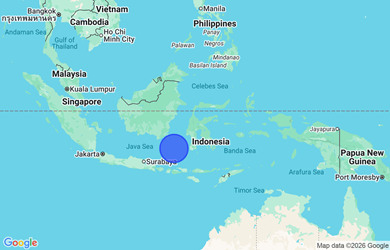
Countrywide
For equal growth and development, businesses should be able to reach last-mile consumers.
Sector Sources
(1) World Bank. 2020. The Promise of Education in Indonesia. https://documents1.worldbank.org/curated/en/658151605203420126/pdf/The-Promise-of-Education-in-Indonesia.pdf (2) Republic of Indonesia. 2020. Indonesia's 2020-2024 National Medium-Term Development Plan https://katalog.data.go.id/dataset/rpjmn-tahun-2020-2024/resource/23e26880-a84f-4443-a16f-1ddb3b69cfeb.
(3) World Economic Forum. 2017. The Global Human Capital Report 2017. https://www.weforum.org/reports/the-global-human-capital-report-2017
(4) Republic of Indonesia. 2019. Roadmap of SDGs Indonesia Towards 2030. https://www.unicef.org/indonesia/media/1626/file/Roadmap%20of%20SDGs.pdf.
(5) MoEC. 2020. The 2020-2024 MOEC Strategic Plans. https://dikti.kemdikbud.go.id/wp-content/uploads/2020/10/RENSTRA-KEMENDIKBUD-full-version.pdf.
(6) Kementerian Pendidikan dan Kebudayaan. 2021. Dashboard GTK. https://referensi.data.kemdikbud.go.id/dashboardgtk/ptk_jkel.php?id=20
(7) BPS. 2021. Rough Participation Rate (APK) of Senior High School by Revenue Group 2019-2021. https://www.bps.go.id/indicator/28/1343/1/angka-partisipasi-kasar-apk-sma-smk-ma-sederajat-menurut-kelompok-pendapatan.html
(8) Republic of Indonesia. 2021. APBN 2021. https://www.kemenkeu.go.id/media/16835/informasi-apbn-2021.pdf.
(9) The Ravenry. 2020. i360 Report Edutech Industry in Indonesia. https://theravenry.com/wp-content/uploads/2020/08/i360-Report-Edutech-Industry-in-Indonesia.pdf
(10) UNICEF. 2020. Strengthening Digital Learning across Indonesia: A Study Brief. https://www.unicef.org/indonesia/media/10531/file/Strengthening%20Digital%20Learning%20across%20Indonesia:%20A%20Study%20Brief.pdf
(11) The Jakarta Post. 2020. Indonesian internet users hit 196 million, still concentrated in Java: APJII survey. https://www.thejakartapost.com/news/2020/11/11/indonesian-internet-users-hit-196-million-still-concentrated-in-java-apjii-survey.html.
(12) Ministry of Education and Culture. 2021. Guru Makin Jago TIK, Belajar Jadi Tambah Seru. https://www.kemdikbud.go.id/main/blog/2021/11/guru-makin-jago-tik-belajar-jadi-tambah-seru
(13) ILO. 2021. Seminar on Indonesia - Australia Cooperation in Online ICT Education. https://www.ilo.org/jakarta/whatwedo/eventsandmeetings/WCMS_796623/lang--en/index.htm
(14) UNICEF. 2019. Study on Skills of the Future. https://www.unicef.org/indonesia/media/6221/file/Study%20on%20skills%20for%20the%20future%20in%20Indonesia.pdf
IOA Sources
(15) EdTechReview. 2020. Indonesian Coding Bootcamp Hacktiv8 Raises $3 Million to Build More Schools, Set Up ISA Program. https://edtechreview.in/news/3826-indonesian-coding-bootcamp-hacktiv8-raises-3-million-to-build-more-schools-set-up-isa-program
(16) Forbes. 2021. Indonesian Edtech Startup Cakap Raises $10 Million From Centauri Fund, Singapore’s Heritas Capital. https://www.forbes.com/sites/yessarrosendar/2021/12/19/indonesian-edtech-startup-cakap-raises-10-million-from-centauri-fund-singapores-heritas-capital/?sh=290bcfd06c0b
(17) Tech in Asia. 2020. Corporate learning platform Codemi secures seed funding from Bukalapak founder’s Init 6. https://www.techinasia.com/corporate-learning-platform-codemi-secures-seed-funding-bukalapak-founders-init-6#:~:text=3%20min%20read-,Corporate%20learning%20platform%20Codemi%20secures%20seed%20funding%20from%20Bukalapak%20founder's,as%20part%20of%20the%20investment.
(18) Incubees. 2021. To accelerate talent digitalisation in Indonesia, Astronaut acquires POPSkul. https://incubees.com/to-accelerate-talent-digitalisation-in-indonesia-astronaut-acquires-popskul/
(19) Rocketreach. 2022. Bahaso Limited Information. https://rocketreach.co/bahaso-limited-profile_b44400b4faaa9682
(20) World Bank. 2019. Indonesia Skills Development Project. https://documents1.worldbank.org/curated/en/594741563369992590/pdf/Concept-Stage-Program-Information-Document-PID-Indonesia-Skills-Development-Project-P166693.pdf
(21) AVPN. 2022. Dana Cita Student Loans. https://avpn.asia/deal-share-platform/dana-cita-student-loans/
(22) Said Irandoust. 2019. Indonesia Must Get Future-Ready. https://theaseanpost.com/article/indonesia-must-get-future-ready
(23) Lee Kuan Yew School of Public Policy. 2016. Microsoft Case Study Series on Technical and Vocational Education and Training. https://lkyspp.nus.edu.sg/docs/default-source/case-studies/lkysppms_case_study__technical_and_vocational_education_and_training_in_indonesia.pdf?sfvrsn=e5c5960b_2
(24) TechNodeGlobal. 2021. Indonesia edtech firm Cakap secures $10M in Series B funding co-led by MDI-KB's Centauri and Heritas Capital. https://technode.global/2021/12/10/indonesia-edtech-firm-cakap-secures-10m-in-series-b-funding-co-led-by-mdi-kbs-centauri-and-heritas-capital/
(25) Old Rope. 2021. EdTech in Indonesia 🇮🇩- The way forward. https://oldrope.substack.com/p/indonesia-edtech?s=r.
(26) Yudistra Nugroho, Ilham Samudera. 2018. All eyes on e-money: The race to reach 180M unbanked Indonesians. https://www.thinkwithgoogle.com/intl/en-apac/future-of-marketing/emerging-technology/all-eyes-e-money-race-reach-180m-unbanked-indonesians/
(27) KPMG. 2017. Retail payments in Indonesia. https://assets.kpmg/content/dam/kpmg/id/pdf/2017/01/id-retail-payments-in-indonesia.pdf
(28) UNICEF. 2021. SITUATIONAL ANALYSIS ON DIGITAL LEARNING LANDSCAPE IN INDONESIA. https://www.unicef.org/indonesia/media/8766/file/Digital%20Learning%20Landscape%20in%20Indonesia.pdf
(29) GSM Association. 2020. The Mobile Gender Gap Report 2020. https://www.gsma.com/mobilefordevelopment/wp-content/uploads/2020/05/GSMA-The-Mobile-Gender-Gap-Report-2020.pdf
(30) UNICEF. 2021. Empowering Adolescents in Indonesia through co-creation of Innovative Digital Solutions. https://www.unicef.org/indonesia/media/10856/file/Empowering%20adolescents%20through%20co-creation%20of%20innovative%20digital%20solutions.pdf
(31) Open Data Labs. 2018. Digital Literacy and Young Girls in Indonesia: Bridging the Gap. https://labs.webfoundation.org/digital-literacy-and-young-girls-in-indonesia-bridging-the-gap/
(32) Republic of Indonesia. 2021. Annexes Indonesia’s Voluntary National Review . https://sdgs.bappenas.go.id/laporan-voluntary-national-review-vnr-indonesia-2021/
(33) Ruangguru. 2020. Annual Impact Report2020. https://f.hubspotusercontent40.net/hubfs/2828691/ruangpeduli/annual-report/%5BEN%5D%20Annual%20Report%202020.pdf?hsCtaTracking=d5b4d8b0-8933-43d9-94ba-4d498b536988%7C3e57e0e3-dd57-4083-9379-42cb2fd739d5
(34) Republic of Indonesia. 2003. Law no. 20 of 2003 concerning the National Education System. https://peraturan.bpk.go.id/Home/Details/43920/uu-no-20-tahun-2003
(35) Ministry of Education and Culture. 2021. Regulation of the Director General of Vocational Education Number 04 of 2021. https://kursus.kemdikbud.go.id/v3/upload/unduh/04_Salinan_Perdirjen_No_4_2021_Juknis_Banpem_Program_Pendidikan_Kecakapan_Kerja_2021.pdf.
(36) Kominfo. 2021. Rencana Strategis Kementerian Kominfo 2020 - 2024 untuk Percepatan Transformasi Digital Nasional. https://www.kominfo.go.id/index.php/content/detail/35108/Rencana+Strategis+Kementerian+Kominfo+2020+2024/0/pengumuman
(37) Kementerian Komunikasi dan Informatika RI. 2021. Jadi Kunci Transformasi, Menkominfo Dorong Pemda Ambil Bagian Cetak Talenta Digital. https://kominfo.go.id/content/detail/38655/siaran-pers-no-439hmkominfo122021-tentang-jadi-kunci-transformasi-menkominfo-dorong-pemda-ambil-bagian-cetak-talenta-digital/0/siaran_pers
(38) Kementerian Ketenagakerjaan. 2021. Peraturan Menteri Ketenagakerjaan Nomor 6 Tahun 2021. https://peraturan.bpk.go.id/Home/Details/171225/permenaker-no-6-tahun-2021
(39) BPS. 2020. PERATURAN BADAN PUSAT STATISTIK NOMOR 2 TAHUN 2020 TENTANG KLASIFIKASI BAKU LAPANGAN USAHA INDONESIA. https://legalitas.org/KBLI-2020.pdf.
(40) Ministry of Education and Culture. 2018. PETUNJUK TEKNIS PENYELENGGARAAN KURSUS DALAM JARINGAN (DARING). repositori.kemdikbud.go.id/13820/1/Juknis%20Kursus%20Online.pdf
(41) Ministry of Finance. 2021. MoH Regulation No.149/PMK.03/2021. https://peraturan.bpk.go.id/Home/Details/185201/pmk-no-149pmk032021.
(42) Ministry of Finance. 2021. Menkeu : PPN Mewujudkan Azas Keadilan. https://www.kemenkeu.go.id/publikasi/berita/menkeu-ppn-mewujudkan-azas-keadilan/
(43) Ministry of Finance. 2021. PPN di Bidang Pendidikan Hanya untuk Jasa Pendidikan Tertentu. https://bppk.kemenkeu.go.id/content/berita/pusdiklat-anggaran-dan-perbendaharaan