
Explore the country and target locations of the investment opportunity.
Country
Indonesia
Region
- Countrywide
Situate the investment opportunity within sustainability focused sector, subsector and industry classifications.
Sector
Education
Development need
Quality of learning outcomes remain low, indicated by low productivity rate which is 1/4th of that of Malaysia's. (1) The workforce is currently dominated by ~50.2 mn (or 39.7%) elementary school graduates or below (2). Based on the World Economic Forum (WEF) Human Capital Index in 2017, Indonesia ranked 65th out of 130 countries, lower than 5 other ASEAN countries. (3)
Policy
2020-24 National Medium-Term Development Plan: prioritizes the improvement of quality of education by focusing on teaching and learning outcomes; increasing equitable access to education services at all levels and accelerating its 12-year compulsory education with assurances to improve the quality of learning outcomes. (2)
Gender inequalities and marginalization issues
Learning inequality is high between regions, schools, and within schools. Indonesia’s net ratio of girls to boys at almost all education levels –except primary, shows higher participation of girls than boys.
The number of male students who dropped out from lower and higher secondary education are nearly thrice and twice of female drop-outs, respectively. (4) By gender, the average years of schooling for girls (8.42) is still below the boys (9.08) (5). 62% of 2.9 mn teachers and educational personnel in Indonesia are women (6).
Pre-COVID-19 disparities related to disabilities, remoteness, sex, and language interference have been exacerbated post-COVID-19. Districts with higher incomes, large urban centers, and greater implementation capacity tend to do better than those with lower income, more rural districts, with lower implementation capacity.
Teachers employed in rural and remote regions continue to be the least qualified (1). In 2021, Gross Participation Rate (APK) for Senior High School was 73.21% in the 1st Quintile (poorest) and 96.74% in the 5th Quintile (most prosperous). Since 2020-2021, Participation Rate was average ~70%. (7)
Investment opportunities
The GoI allocates 20% of its state budget for education sector each year [USD 38 bn in 2021] (8). Annual consumer spending on education is expected to grow at 6% per annum and collectively reached USD 23.6 bn in 2020 (9).
Key bottlenecks
Due to disparity in internet penetration and infrastructure, qualified educators may not be available in remote areas. Investment in Education cannot reap returns in remarkably improved outcomes without adding accountability measures to education reforms and focusing on learning outcomes (1).
Sub Sector
Education Technology
Development need
Due to unaffordable/inaccessible qualified education support, 46.83% and 77.13% of fourth graders perform poorly in reading and mathematics, respectively, based on AKSI (Indonesian Student Competency Assessment) and international benchmarks through TIMSS (Trends International Mathematics and Science Study) scores. (10)
Policy
GoI encourages education sector to optimize the utilization of modern technology in synergizing distance learning models and online learning systems, as well as to prepare Indonesian human resources in the industry 4.0 era (1).
Gender inequalities and marginalization issues
Schools in isolated and remote areas suffer from a lack of trained teachers and resources. This has lead to a disparity in learning outcomes as primary student learning outcomes in such areas were on average two grade levels below the national target. (1)
In reading and mathematics tests, students in eastern part of Indonesia tend to perform poorer than their peers in the western part, which reflects the persisting inequality between the two regions. (10)
Covid-19 induced income losses lead to ~91,000 drop-outs, 530,000 school shutdowns, and ~68 mn students shifting to distance learning (struggle for students; teachers lack digital skills). (11) 40% of schools do not have internet access, mostly at primary level and located in Papua and Maluku (5).
Investment opportunities
Consumer spending on courses beyond the national curriculum grows rapidly from USD 15.4 mn in 2015 to more than USD 37.5 mn in 2019. (9)
Key bottlenecks
Low internet connectivity and adoption of technology among educational institutions and personnel limits the reach of quality education in remote areas. Connectivity is highly concentrated in Java, and ~12,500 villages lack 4G connection, despite Indonesia’s high internet penetration rate 73.7% (2019). (12)
Discover the investment opportunity and its corresponding business model.
Investment Opportunity Area
Digital Platform for Interactive Learning for K12 to Support After School Learning and Development
Business Model
Invest in the development of B2C online marketplaces that connect private tutors and students, offering subscription-based learning videos, private and on-demand tutoring services and online exam tryouts. Examples of some companies active in this space are:
PT. Ruang Raya Indonesia (Ruangguru), founded in 2014, owns and operates an online marketplace that connects private tutors and students. Its Learning Management System makes it easier to organize lessons, student attendance, materials, assignments and communication in class. Its valuation is ~USD 1 bn and has raised funds from The Lippo Group, Nusa Jaya Cipta, Tiger Global Management. (13)
PT Zona Edukasi Nusantara, founded in 2007, provides a digital learning platform, Zenius.net that offers study material videos, practice packages for K-12 and preparation for university entrance exams; and Agora which provides a cloud-based digital learning platform for employee training with modules. It raised USD 20 mn in a Series A round from Northstar Group, Kinesys Group and Beenext. (14)
biMBA AIUEO (BCTA partner), founded in 1996, operates as a franchise marketing system, with its remote/distance learning programs. It aims to support early learning for children (aged 3-6) who lack access to quality education by boosting their reading/writing abilities through fun educational activities and individual mentoring. Its estimated annual revenue is USD 110.2 mn. (15)
Learn about the investment opportunity’s business metrics and market risks.
Market Size and Environment
Market Size (USD)
> USD 1 billion
CAGR
5% - 10%
Critical IOA Unit
4th largest education system globally; >50 mn students; 4 mn teachers; ~USD 40 bn opportunity (17)
GoI allocated USD 38 bn for education sector in 2021 alone. Government expenditure on education was 17.258% of total government spending in 2020 (18) and 2.842% of GDP in 2019. (19)
K12 market for EdTech in the long term is expected to reach USD 5 bn - USD 10 bn. (20)
Indonesia’s high internet penetration rate of 64.8%, is expected to reach 89.3% by 2025, with over 200 mn users. This is likely to be a driver for growing demand for EdTech platforms. (14)
Indicative Return
IRR
Market is at a nascent stage and no exits have been observed so far.
ROI
< 5%
Read about impact metrics and social and environmental risks of the investment opportunity.
Sustainable Development Need
As per McKinsey & Company, Indonesia ranked 62nd (out of 64 countries) based on math, science, and reading. (17) This highlights the need for improvement in learning environment through ensuring equal access to education facilities and reducing learning losses induced by Covid-19.
There is a need to improve the quality of teaching pedagogy by allowing teachers to leverage new technologies to facilitate classroom learning. 60% teachers lack tech-based teaching experience due to a lack of access to adequate IT equipment and retraining for education professionals. (9)
Gender & Marginalisation
Boys and children who live in rural areas are more likely to drop out of school than girls and their peers who live in urban areas. Male students who dropped out from lower and higher secondary education are nearly 3x and 2x of female drop-outs, respectively. (4)
Affordable learning solutions can potentially be accessible by all. In 2021, Gross Participation Rate (APK) for Senior High School was 73.21% in the 1st Quintile (poorest) and 96.74% in the 5th Quintile (most prosperous). Since 2020-2021, Participation Rate was average ~70% (7).
Increasing access to education and jobs for women with a supportive policy framework could help reduce the rate of child-bride to 6.94% in 2030 (lower than its BAU scenario for only reducing it to 10.03%). (4)
Expected Development Outcome
Improved efficiency in education management, increased educational services coverage.
Improved quality of education and educators to ensure high quality of human capital, competitiveness and productivity.
Improved productivity of workforce to ensure gainful employment and work opportunities for all.
Gender & Marginalisation
Inclusive and effective learning environment for boys and girls, fair and equal access to good quality education and jobs regardless of social background, race, gender or religion.
Address the digital gender gap, especially in IT education, in order to promote women's digital independence. (25) To illustrate: The proportion of adults (aged 15-59 years) with information and communications technology (ICT) skills: Female - 60.60; Male - 67.88 (24)
Primary SDGs addressed
4 - Quality Education
4.1.1 Proportion of children and young people (a) in grades 2/3; (b) at the end of primary; and (c) at the end of lower secondary achieving at least a minimum proficiency level in (i) reading and (ii) mathematics, by sex
4.1.2 Completion rate (primary education, lower secondary education, upper secondary education)
4.3.1 Participation rate of youth and adults in formal and non-formal education and training in the previous 12 months, by sex
Current Value
<(a-i) 53.2%; (a-ii) 22.9%; (c-i) 44.6%; (c-ii) 31.4% (2015) (24)/p>
2020: 96% for primary; 87.89% for lower secondary; 63.95% for upper secondary (24)
Ages 15-24: 48.66 Urban - 50.90; Rural - 45.72 Female - 48.71; Male - 48.61 Ages 25-64: 2.30 Urban - 2.78; Rural - 1.67 Female - 2.25; Male - 2.34 (24)
Target Value
(a-i) 67.2%; (a-ii) 35.5%; (c-i) 50.0%; (c-ii) 38.0% (intervention scenario) (4)
Primary: 97.16% in 2021, 97.935 in 2022, 98.41% in 2023, and 98.94% in 2024 Secondary: 89.15% in 2021, 90.54% in 2022, 91.94% in 2023, and 93.33% in 2024 Upper Secondary: 68.69% in 2021, 69.08 in 2022, 70.86% in 2023, and 71.71 in 2024 (26)
Secondary education (Junior High school level) 86.88% BAU Secondary education (Junior High school level) 90.55% BAU (4)
Secondary SDGs addressed
8 - Decent Work and Economic Growth
5 - Gender Equality
1 - No Poverty
Directly impacted stakeholders
People
Students benefit from inclusive and better quality of education; Teachers benefit from improved methods of teaching and upskilling.
Gender inequality and/or marginalization
Digital Platforms enable help in reducing regional disparity by ensuring quality education is accessible to all and in a disable friendly environment.
Planet
Usage of digital platforms will result in reduction in the use of paper leading to potential environmental benefits.
Corporates
Improvement in learning outcomes can potentially lead to gainful school-to-work transition for students thereby attracting better jobs; workers can be hired locally, reducing overhead costs for companies and their investors. Transition to higher education will benefit universities.
Public sector
Quality education will motivate students and their parents to increase participation in local schools / universities, thereby promoting the growth of the education industry in the country.
Indirectly impacted stakeholders
People
Better quality of education enables workforce to become globally competitive
Planet
Potential reduction in CO2 emissions because of reduced burden on transportation services for travelling to school / colleges / institutions and the carbon footprint of traditional brick and mortar structures.
Public sector
Retention of globally competitive, skilled workforce in Indonesia, contributing to economic development and growth of the country.
Outcome Risks
Respect and credibility of certifications provided needs to be established. Testing procedures, grading systems must be standardized to ensure acceptability.
Regional disparity as lower quality of education outside developed regions (Eg. Java) that lack internet connectivity induces unfair competition among students despite standardized testing systems.
Existing investment in brick-and-mortar models may become obsolete and a sunk cost, resulting in wastage of resources.
Students with low level of ICT skills will require additional training on the usage of the platform, resulting in upfront expenses for the company.
Gender inequality and/or marginalization risk: Areas with better connectivity may benefit over remote areas. This may have an implication on access by gender as 72% women own phones vs. 80% men (27)
Impact Risks
Increasing inequality due to unequal distribution of resources can hamper regional progress of such models, resulting in concentration of operations in more developed areas.
Cyber crime that may target users from low resource settings (women, people with disability and low-income population) with limited information on registering grievances or on complaint mechanisms.
Poor understanding of key skills can hamper the ability of educators to equip the next-generation workforce with the required skill-set. (9)
Gender inequality and/or marginalization risk: Lack of regulation and price control can result in exploitation of consumers bye the private sector.
Impact Classification
B—Benefit Stakeholders
What
Efficient and effective digital platforms offering interactive learning to improve quality of education.
Who
Various; Students benefit from better quality of education; Teachers benefit from training in new and globally competitive methods of teachiing
Risk
Acceptance of certifications obtained from such models is not established; regions with better digital infrastructure will benefit over remote areas with less development
Contribution
The GoI allocated USD 38 bn for education sector in 2021. Government expenditure on education was 17.258% of total spending in 2020 (4.3) and 2.842% of GDP in 2019 (19).
How Much
4th largest education system globally; >50 mn students; 4 mn teachers; ~USD 40 bn opportunity (20).
Impact Thesis
Provision of quality education via digital platforms for interactive learning for K-12 to enhance quality of education and learning experience and improve the quality of future workforce
Explore policy, regulatory and financial factors relevant for the investment opportunity.
Policy Environment
Freedom of Learning policy in the 2020-2024 MOEC Strategic Plan: is directed at providing high-quality education for all Indonesian people, characterized by high enrollment rates at all levels of education, quality learning outcomes, and equitable quality education both geographically and socio-economically (5)
In addition, The 2020-2024 MOEC Strategic Plans also state that the focus of education development and the promotion of culture is directed at strengthening the nation's culture and character (5).
Law (RUU) concerning the 5th Amendment to Law Number 6 of 1983: GoI plans to update the Law so that goods and services consumed by public, such as education services would be subject to different tax rates based on commercialization and curriculum. (28)
Financial Environment
Financial incentives: Imposition of value-added tax (VAT) is intended for educational services provided by commercial educational institutions and educational institutions that do not implement the minimum curriculum required by the Law on the National Education System. (28)
Fiscal incentives: MoF Reg. no. 149/PMK.03/2021 concerning tax Incentives for taxpayers affected by Covid-19, businesses classified as Web Portals and/or Digital Platforms are classified as taxpayers receiving incentives, wherein income tax under PPH 21 and final income tax is borne by GoI. (34)
Other incentives: Vocational super deductions, namely on expenses/costs incurred by taxpayers for work practices, apprenticeships, or learning activities in the development of certain competencies can receive tax incentives (35).
Regulatory Environment
The GoI provides 3 types of school operational assistance, namely affirmative (least developed regions), performance (based on performance in delivering the public services) as stated in MOEC Regulation No. 31/2019 (29), and regular (students) in MOEC Regulation No. 6/2021 (30), that are allocated for primary and secondary education units.
MOEC Regulation No. 1177/2020 sets "Program Sekolah Penggerak", that aims to build a stronger education ecosystem that focuses on student learning outcomes which includes strong competencies (literacy and numeracy) and character (31).
MOEC Circulating Letter No. 1/2020 stated that the schools, teachers, and students are encouraged to be more innovative in the learning process through (self-regulated learning) (32).
Regulation Number 26 of 2021: regulates Web Portals and/or Digital Platforms with Commercial Purposes. Such business is considered a micro business with low risk, and is obliged to provide promotional space goods and/or services resulting from domestic production. (33)
Discover examples of public and private stakeholders active in this investment opportunity that were identified through secondary research and consultations.
Private Sector
Corporates: BahasaKita, PT Pahami Cipta Edukasi, PT. Ruang Raya Indonesia, Bimbel AIUEO Investors: UMG Idealab, Shunwei, Inc., Insignia Ventures Partners, GGV Capital, LLC, Tiger Global Management, LLC, UOB Venture Management Private Limited, PT Sinar Mas Digital Ventures
Government
Ministry of Education, Culture, Research and Technology, Ministry of Finance, National Research and Innovation Agency (BRIN), Board for National Standards in Education (BSNP), The Ministry of Manpower, Ministry of Trade
Multilaterals
United Nations Development Programme (UNDP), United Nations Children's Fund (UNICEF), Asian Development Bank (ADB), World Bank (WB)
Non-Profit
Indonesia teachers association (PGRI), SolveEducation!, Ikatan Guru Indonesia, Yayasan Cahaya Anak Negeri Indonesia, Indonesian Information Technology Teachers Association (AGTIFINDO)
See what country regions are most suitable for the investment opportunity. All references to Kosovo shall be understood to be in the context of the Security Council Resolution 1244 (1999)
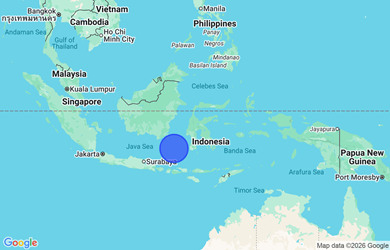
Countrywide
For equitable growth and development, businesses should be able to reach last-mile consumers (parents and students)
Sector Sources
(1) World Bank. 2020. The Promise of Education in Indonesia. https://documents1.worldbank.org/curated/en/658151605203420126/pdf/The-Promise-of-Education-in-Indonesia.pdf
(2) Republic of Indonesia. 2020. Indonesia's 2020-2024 National Medium-Term Development Plan https://katalog.data.go.id/dataset/rpjmn-tahun-2020-2024/resource/23e26880-a84f-4443-a16f-1ddb3b69cfeb.
(3) World Economic Forum. 2017. The Global Human Capital Report 2017. https://www.weforum.org/reports/the-global-human-capital-report-2017
(4) Republic of Indonesia. 2019. Roadmap of SDGs Indonesia Towards 2030. https://www.unicef.org/indonesia/media/1626/file/Roadmap%20of%20SDGs.pdf.
(5) MoEC. 2020. The 2020-2024 MOEC Strategic Plans. https://dikti.kemdikbud.go.id/wp-content/uploads/2020/10/RENSTRA-KEMENDIKBUD-full-version.pdf.
(6) PDSPK. Kementerian Pendidikan dan Kebudayaan. 2021. Dashboard GTK. https://referensi.data.kemdikbud.go.id/dashboardgtk/ptk_jkel.php?id=20
(7) BPS. 2021. Rough Participation Rate (APK) of Senior High School by Revenue Group 2019-2021. https://www.bps.go.id/indicator/28/1343/1/angka-partisipasi-kasar-apk-sma-smk-ma-sederajat-menurut-kelompok-pendapatan.html
(8) Republic of Indonesia. 2021. APBN 2021. https://www.kemenkeu.go.id/media/16835/informasi-apbn-2021.pdf.
(9) The Ravenry. 2020. i360 Report Edutech Industry in Indonesia. https://theravenry.com/wp-content/uploads/2020/08/i360-Report-Edutech-Industry-in-Indonesia.pdf
(10) Republic of Indonesia. 2019. Roadmap of SDGs Indonesia Towards 2030. https://www.unicef.org/indonesia/media/1626/file/Roadmap%20of%20SDGs.pdf.
(11) UNICEF. 2020. Strengthening Digital Learning across Indonesia: A Study Brief. https://www.unicef.org/indonesia/media/10531/file/Strengthening%20Digital%20Learning%20across%20Indonesia:%20A%20Study%20Brief.pdf
(12) The Jakarta Post. 2020. Indonesian internet users hit 196 million, still concentrated in Java: APJII survey. https://www.thejakartapost.com/news/2020/11/11/indonesian-internet-users-hit-196-million-still-concentrated-in-java-apjii-survey.html.
IOA Sources
(13) Mime. 2021. After Recent Funding, Ruangguru Potentially to Become a New Unicorn. https://www.mime.asia/after-recent-funding-ruangguru-potentially-to-become-a-new-unicorn/
(14) Tech in Asia. 2020. Indonesia’s Zenius bags $20m, appoints former Gojek exec as CEO. https://www.techinasia.com/zenius-bags-20m-appoints-ceo
(15) Growjo. 2022. YPAI biMBA-AIUEO Revenue, Competitors and Alternatives. https://growjo.com/company/YPAI_biMBA-AIUEO.
(16) Forbes. 2021. Indonesian Edtech Startup Cakap Raises $10 Million From Centauri Fund, Singapore’s Heritas Capital. https://www.forbes.com/sites/yessarrosendar/2021/12/19/indonesian-edtech-startup-cakap-raises-10-million-from-centauri-fund-singapores-heritas-capital/?sh=290bcfd06c0b
(17) Ruangguru. 2021. Indonesia’s largest tech-enabled provider for quality teaching & content. lppm-dev2.ut.ac.id/system/files/artikel/dokumen/files/InnovativeCreative_StephanieHardjo.pdf
(18) World Bank. 2021. Government expenditure on education, total (% of government expenditure) - Indonesia. https://data.worldbank.org/indicator/SE.XPD.TOTL.GB.ZS?locations=ID
(19) World Bank. 2021. Government expenditure on education, total (% of GDP) - Indonesia. https://data.worldbank.org/indicator/SE.XPD.TOTL.GD.ZS?locations=ID
(20) Old Rope. 2021. EdTech in Indonesia 🇮🇩- The way forward. https://oldrope.substack.com/p/indonesia-edtech?s=r.
(21) Tech in Asia. 2020. Here’s what Ruangguru’s financial numbers don’t tell you. https://www.techinasia.com/heres-ruanggurus-financial-numbers-dont
(22) Digital News Asia. 2020. Indonesian edtech, Zenius raises undisclosed Pre-Series B round. https://www.digitalnewsasia.com/startups/indonesian-edtech-zenius-raises-undisclosed-pre-series-b-round
(23) Tech in Asia. 2021. Ruangguru becomes profitable, revenue grows by 4x. https://www.techinasia.com/ruangguru-becomes-profitable-sales-growth-4x
(24) Republic of Indonesia. 2021. Annexes Indonesia’s Voluntary National Review. https://sdgs.bappenas.go.id/laporan-voluntary-national-review-vnr-indonesia-2021/
(25) Open Data Labs. 2018. Digital Literacy and Young Girls in Indonesia: Bridging the Gap. https://labs.webfoundation.org/digital-literacy-and-young-girls-in-indonesia-bridging-the-gap/
(26) SEKRETARIAT NASIONAL SDGS. 2019. Indonesia's SDG National Action Plans-RAN SDGs 2021-2024. https://sdgs.bappenas.go.id/category/dokumen/rencana-aksi-nasional-ran/.
(27) GSM Association. 2020. The Mobile Gender Gap Report 2020. https://www.gsma.com/mobilefordevelopment/wp-content/uploads/2020/05/GSMA-The-Mobile-Gender-Gap-Report-2020.pdf
(28) Ministry of Finance. 2021. Menkeu : PPN Mewujudkan Azas Keadilan. https://www.kemenkeu.go.id/publikasi/berita/menkeu-ppn-mewujudkan-azas-keadilan/
(29) Ministry of Education and Culture. 2019. MOEC Regulation No. 31/2019 on Technical Instructions for Affirmative and Performance base School Operational Assistance Funds. https://peraturan.bpk.go.id/Home/Details/137740/permendikbud-no-31-tahun-2019.
(30) Ministry of Education and Culture. 2021. MOEC Regulation No. 6/2021 on Technical Instructions for Management of Regular School Operational Assistance Funds. https://www.smpntigacisauk.sch.id/read/63/permendikbud-nomor-6-tahun-2021-tentang-juknis-bos-reguler-2021#:~:text=Dalam%20Permendikbud%20Nomor%206%20Tahun,masing%20daerah%20ditetapkan%20oleh%20Menteri.
(31) Ministry of Education and Culture. 2020. MOEC Regulation No. 1177/2020 on Program Sekolah Penggerak. https://www.ainamulyana.xyz/2021/01/kepmendikbud-nomor-1177m2020-tentang.html.
(32) Ministry of Education and Culture. 2020. MOEC Circulating Letter No. 1/2020. https://www.kemdikbud.go.id/main/blog/2020/02/se-kebijakan-merdeka-belajar-dalam-penentuan-kelulusan-peserta-didik-dan-pelaksanaan-ppdb-20202021
(33) Ministry of Investment. 2021. KLASIFIKASI BAKU LAPANGAN USAHA INDONESIA (KBLI) 202-KBLI
63122. https://oss.go.id/informasi/kbli-kode?kode=J&kbli=63122
(34) Ministry of Finance. 2021. MoH Regulation No.149/PMK.03/2021. https://peraturan.bpk.go.id/Home/Details/185201/pmk-no-149pmk032021.
(35) Ministry of Finance. 2021. PPN di Bidang Pendidikan Hanya untuk Jasa Pendidikan Tertentu. https://bppk.kemenkeu.go.id/content/berita/pusdiklat-anggaran-dan-perbendaharaan-ppn-di-bidang-pendidikan-hanya-untuk-jasa-pendidikan-tertentu-2021-06-18-1f47257c/